






“When it comes to describing much of what currently passes for personal communication, the analogy of the crocodile is an apt one: all mouth and no ears.” -Laurence Endersen
This is a striking image and certainly not something we would expect to be an analogy to listening or speaking or communication in general. But think of it – a crocodile is equipped with a large mouth to talk, interrupt, interpret, present one’s point of view, dominate a conversation rather than listen because its ears are absent.
I am sure most of us stand guilty as charged, waiting to put in our two cents of opinion rather than listening to the full import of what the person in front of us has to say. This is not to make villains out of us. It is a natural human tendency to share our thoughts with people.
What does this mean though? Suppose you tell someone that you love travelling. Instead of listening to your travel stories, they may come up with theirs: how they have enjoyed travelling to different destinations, what they liked the most about those places, which destinations are on their bucket list. What you wanted to tell them about your experience takes a back seat.
What is communication?
According to Everett M. Rogers & D. Lawrence Kincaid (1981), “Communication is a process in which the participants create and share information with one another in order to reach a mutual understanding.” We can’t stress enough that it encompasses the roles of both the speaker and the receiver, that is the listener.
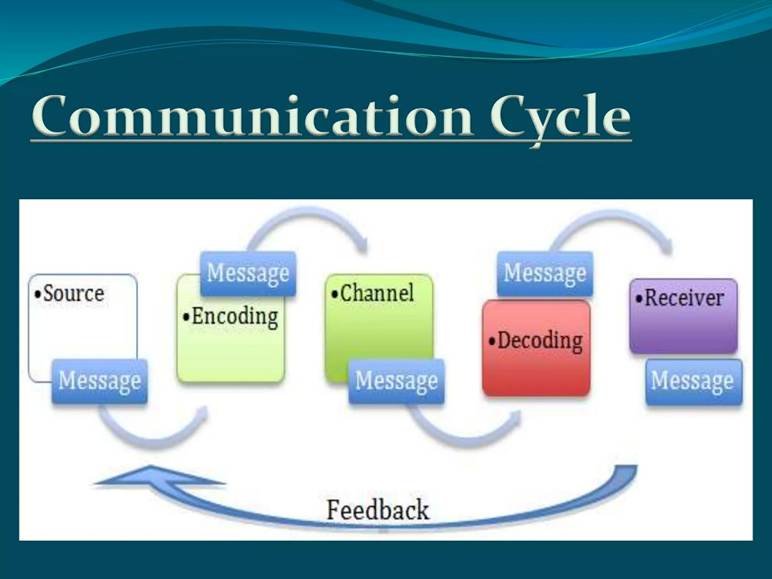
If we study this diagram, we will observe that an important component of the communication cycle is feedback. In order to give proper feedback, it is imperative for the receiver to listen properly to the message conveyed. In other words, it underscores the importance of listening as a skill.
But why is listening regarded as a skill?
Well, there are several reasons.
To begin with, listening is an active process rather than a passive one. Carl Rogers is the pioneer of person-centred therapy. According to him, “We think we listen, but very rarely do we listen with real understanding, true empathy.” In order to listen properly, thus, conscious attention and emotional involvement are essential – merely hearing words is not enough.
Stephen R. Covey aptly remarked, “Most people do not listen with the intent to understand; they listen with the intent to reply.” If we want to genuinely listen, we need to suspend our own thoughts until the other person has finished communicating.
Listening is rooted in empathy. According to Carl Rogers, real listening involves entering the speaker’s frame of reference without judgement. It is an attempt to understand another person’s thoughts and feelings as they experience them.
Kate Murphy, in You’re Not Listening, points out that listening simply means acknowledging the legitimacy of another person’s perspective. We may or may not agree with the opinion of the speaker, but we can still listen with respect and curiosity.
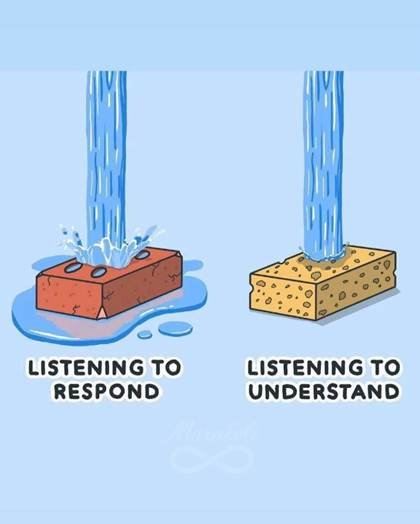
In fact, curiosity is the crux of good listening. Instead of preparing our next response, effective listeners ask questions, seek clarification and remain genuinely interested in understanding the speaker’s experience.
One of the hallmarks of good listener is that she requires patience and self-restraint. This means resisting the temptation to interrupt, complete another person’s sentences or redirect the conversation towards ourselves.
A crucial point to remember about listening is that it extends beyond spoken words. It relies on tone, pauses, facial expressions and body language. This is important because often what remains unsaid is as significant as the words themselves. Hence, one has to listen between the lines.
One thing that listening has in common with other life skills is that like them it can be cultivated. Deliberate practice, self-awareness and a willingness to understand rather than merely respond can make one a more effective listener and communicator.
Examples drawn from real life
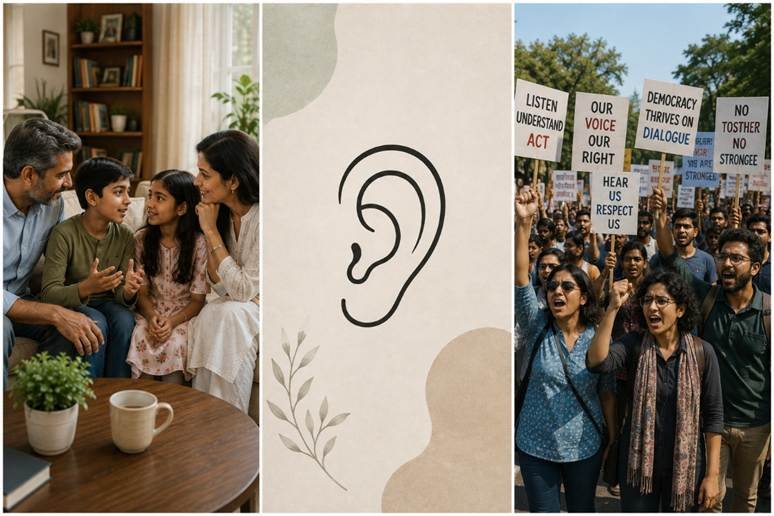
We do not have to go far to understand the practical ramifications of poor listening. In fact, it is found within our four walls of our own homes. Despite wanting the best for their children, the good intentions of parents are not translated into good listening. Career aspirations, choice of partner, lifestyle decisions and personal ambitions often become bones of contention because parents are more inclined towards advising rather than listening. Many young people yearn to be heard rather than judged. If their fears, dreams and anxieties are repeatedly dismissed, they may begin to feel isolated and misunderstood. It is true that suicide attempts cannot be attributed to a single cause and have multiple complex determiners behind them. However, the inability to communicate openly within families can deepen a person’s sense of loneliness and hopelessness. Sometimes, all a distressed individual seeks is someone willing to listen without interruption or judgement.

If we move out of the confines of our homes, listening assumes equal significance in the relationship between the State and its citizens. In a democracy, peaceful protests, public consultations and petitions are all means through which people communicate their concerns to those in power. However, governments often regard dissent as defiance rather than dialogue. Ignored, delayed or suppressed grievances lead to a widening the gap between the state and its citizens. Listening in a personal relationship does not require agreement on every point of discussion. Similarly, listening does not oblige a government to accept every demand. However, it does convey an alacrity to acknowledge concerns, engage in dialogue and respond with reason, all of which are signs of a healthy democracy.


By Richa Verma
Richa is an online English teacher, independent blogger, voracious reader, movie buff who is smitten with wanderlust, and a homemaker. She can be contacted through her email address richavermamh@gmail.com










This article hits home. Listeners are so rare that perhaps more people are running to therapists where they have to pay someone to listen. And that is just half of the game. Asking the right follow up questions is another part. Lack of communication is another reason of the loneliness pandemic…
Well written. And yes…I did notice the “she” as a person… 😉 Nice!!!!
Thanks Bahnika. You hit the nail on the head! You have got the gist of the article very well. 🙂
Apt for our times. Listeners are becoming rarer with the passage of time. It’s time that we take things on our stride and become true listeners, be there for each other. Nice article
Thanks Sampurna. 🙂
A current genuine concern has been so aptly put across in your article…
We need to understand the real intent behind such pieces to be able to implement them in our lives…
Thanks Promita! Your comments always make my day! 🙂
Listening is an art. Not everyone is able to practice this sadly.
Yeah. That’s why people feel lonely these days.