





Introduction
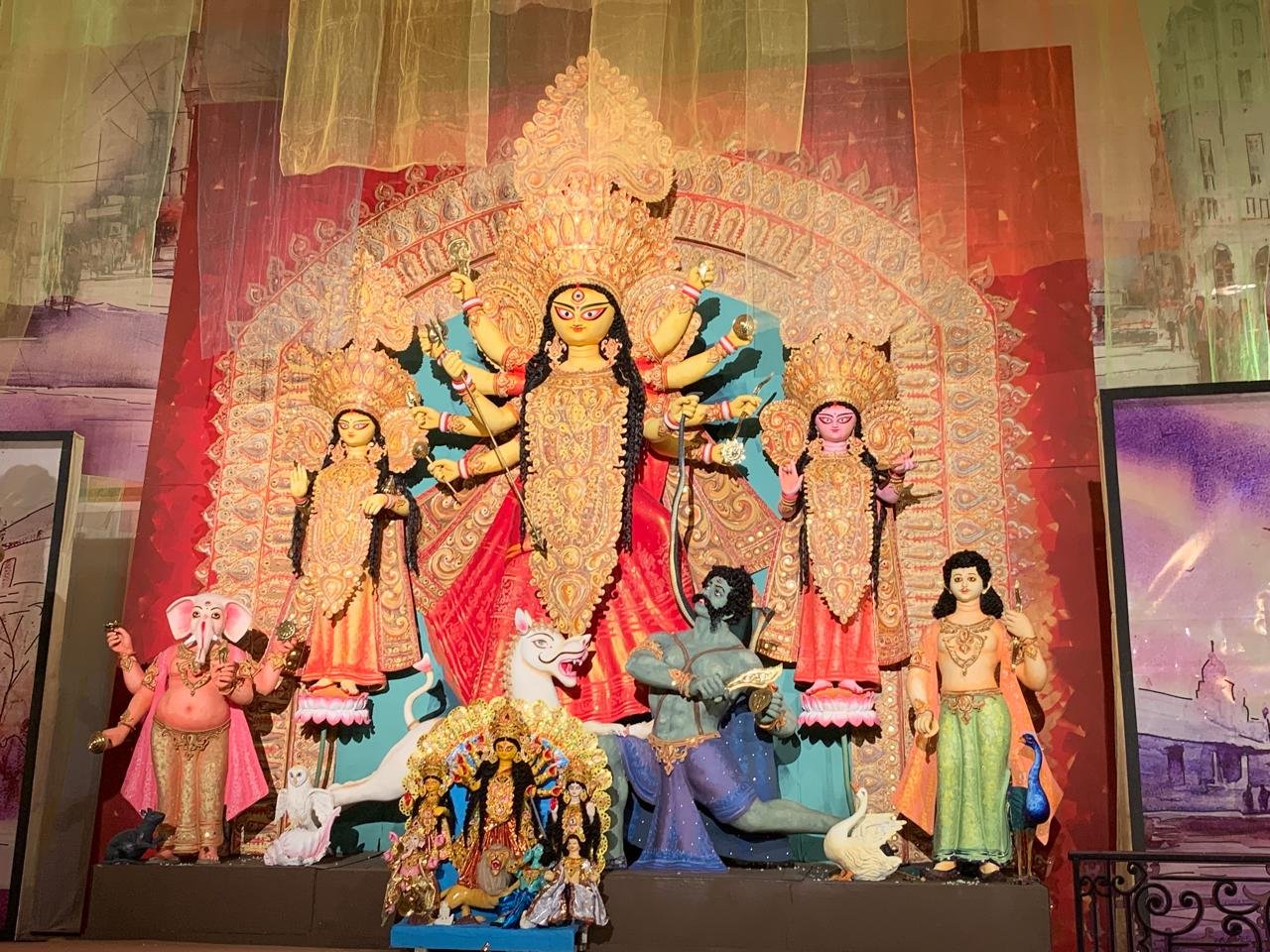
In this Navaratri month, I bring to you, some unknown and extremely unusual rituals followed by devotees at Kodungallur Sree Kurumba Bhagavathy Temple in Kerala. Kodungallur Amma, BhadraKali, the fiercest form of the Goddess, is offered blood and profanity during the Kaavu Teendal festival. Devotees shatter the notions of purity, running through the temple, hurling sticks, and chanting expletives and profane songs.
The Deity
The Kaavu Teendaal Ritual
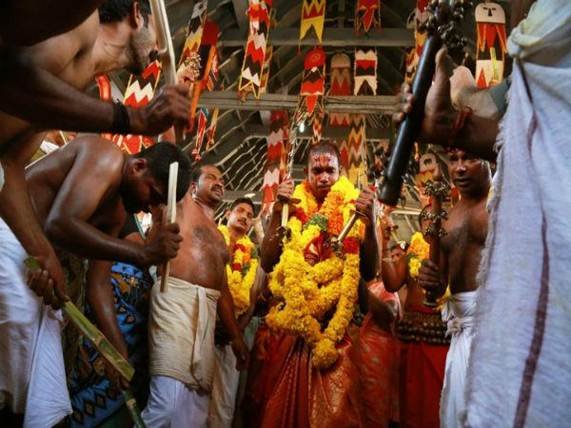
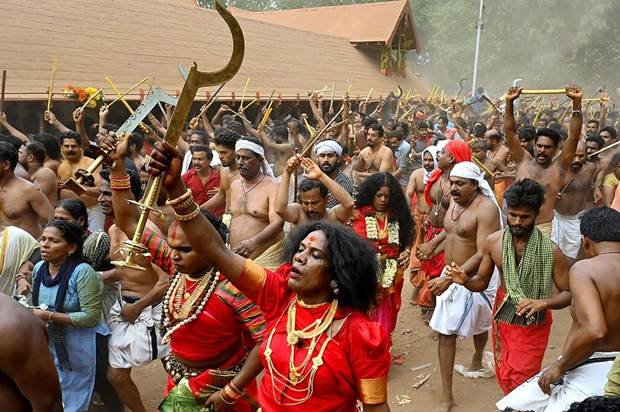
It is the month of Malayalam month Meenam (between March and April), and Bharani star is rising. At Kodungallur, Kerala, the air seems to tremble with anticipation. As Kaavu Teendal ritual begins, the temple compounds fill with a surging tide of devotees. Men and women arrive in red, bells jingling at their waists, ritual swords and sticks lifted above their heads. The oracles, or Velichappadus, are not alone in the frenzy. Pilgrims, both men and women, join the movement, circling the shrine, shouting, singing and surrendering to the charged atmosphere. Metal flashes, feet pound, and voices rise above the percussion. Around them, the crowd swells with pilgrims who have travelled from parts of Kerala, singing, screaming, moving in a trance.
Some oracles strike their foreheads with their ritual blades, others beat the temple’s roof and walls with sticks or fling offerings towards them. Such acts can cause injury, and blood. Yet participants understand the intensity as an expression of devotion to the Mother Goddess, not simply aggression. Bharani Pattu (Bharani songs) makes the scene even more startling. These songs may be sexually explicit, insulting and profane, addressed directly to the Devi whom devotees revere as Amma. To an outsider, such language may sound sacrilegious.
But for the devotees, the goddess is not a distant queen requiring polished words, but a mother before whom people can arrive unmasked. They bring anger, grief, frustration and desire, venting them through cries and expletives as a child might rage before a mother who will still receive them. In this ritual world, the human being is raw, and the mother can bear the truth.
Earlier, the festival would begin with Kozhikkallu Moodal tradition (rooster sacrifice). But that offering has been discontinued. After Kaavu Teendal, the shrine undergoes purification. But the initial frenzy, transgression and cleansing belong to the ritual’s unsettling rhythm.
The Temple History
The stories behind Kodungallur Bharani are layered. One tradition identifies the goddess with Bhadrakali, born from Shiva’s fury to destroy the demon Darika. Armed and terrifying, she defeats him, yet victory does not instantly calm her rage. In popular explanations of Bharani, the songs and ecstatic movements of her attendants help appease her. The oracles’ swords recall the battle, while the uproar celebrates the goddess’s triumph and meets her power without trying to make it gentle.
Another influential tradition links Kodungallur with Kannaki, heroine of the Tamil epic Silappatikaram. Kannaki is the devoted wife of Kovalan, who leaves her for the dancer Madhavi and squanders his wealth. When he returns, Kannaki gives him an anklet so he can rebuild their lives. In Madurai, Kovalan is falsely accused of stealing the queen’s anklet and executed. Kannaki confronts the ruler, proves her husband’s innocence and, overcome by extreme fury, burns the city. Her grief becomes a force of justice, and her anger acquires divine power. Kannaki then travels west to Kodungallur, and she assumes the form of the Mother Goddess, burning with rage.
Kannaki with her Anklet, burning down Madurai
Both make anger a source of power rather than shame. These stories are part of mythology, but the Goddess is worshipped for her Shakti.
About the Temple
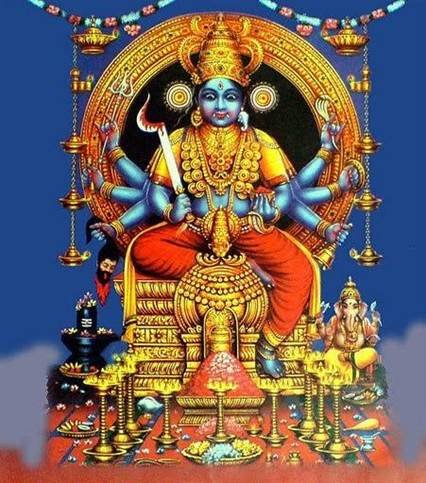
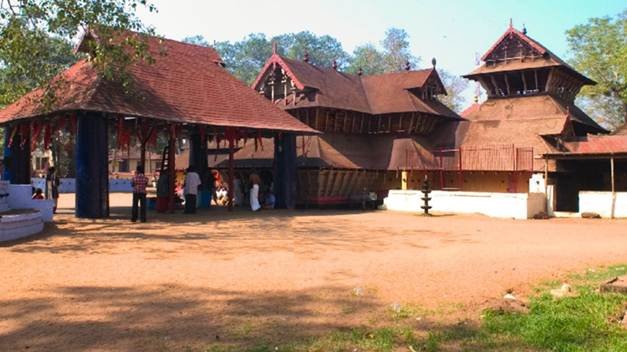
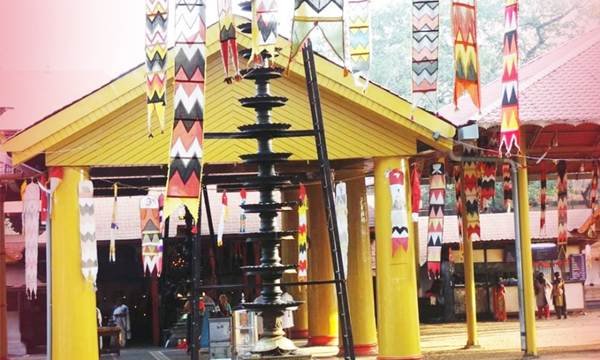
The Kodungallur Sree Kurumba Bhagavathy Temple stands in Kodungallur, Thrissur district, Central Kerala. Its presiding deity is worshipped as Bhadrakali or Bhagavathy. The image is traditionally described as fierce, with eight hands holding weapons and symbols of battle and protection. It embodies a goddess who destroys danger yet shelters devotees.
Bhagavathy and Caste System
The temple is notable for participation by communities with varied caste histories. Bharani’s oracles and ritual participants have included groups historically marginalised within formal temple hierarchies. Scholars interpret Kaavu Teendal as a moment when customary boundaries are challenged, and people otherwise kept at a distance, occupy the ritual space with force and authority.
Kodungallur Amma is thus, mother to all her children, irrespective of higher or lower castes.
Navaratri at the Temple.
Kodungallur’s Navaratri observances offer a gentler contrast to Bharani’s tumult. During the nine nights dedicated to the Goddess, worship centres on lamps, flowers, prayers, devotional music and offerings. Devotees seek blessings, learning and protection in a restrained atmosphere of prayer. The final three days of Navarathri, Durgashtami, Mahanavami and Vijayadashami are set apart for the worship of Goddess Saraswati – the Goddess of wisdom and learning. Followers dedicate these days to the Goddess by keeping their work tools, books and other study materials in the temple for pooja (worship). On the day of Vijayadashami , the day of learning, children who are at the age of three are welcomed to the world of learning. This practice is known as Vidhyarambam which means the start of knowledge.
Beside Kaavu Teendal, Navaratri shows how the same divine Mother may be approached through quiet prayer, and not always noise and transgression.
Conclusion
Kodungallur temple’s blood, blades and expletives may shock many, but they expose an uncomfortable truth, human beings are not always composed or gentle. Sometimes they come to the mother furious, wounded or unable to find acceptable words. Bhagavathy endures it all, facing humanity at its rawest. Before Amma, the mask falls, faith speaks fiercely and vulnerably.
Reference websites
- Kodungallur Sree Kurumba Bhagavathy Temple
- The Last Women Oracles: From the Land of Bharanipattu,Journal: Culture and Religion, 2022
- Sacred frenzy: throngs and trance at Kodungallur’s Kavutheendal ritual
- Performing Power: Play and Gender in Kodungallur Bharani Festival,Nimisha K. Jayan, academic article
- Beyond subjugation and subversion: Spectatorship, shifting practices, and the evolving politics of the Kodungallur Bharani festival

By Preethi Warrier
Preethi Warrier has completed her Masters in Electronics Engineering and is an Assistant Professor. She is one among the winners of the TOI Write India Campaign Season-1, for the famous author Anita Nair. She can be contacted at : warrier.preethi@yahoo.com