





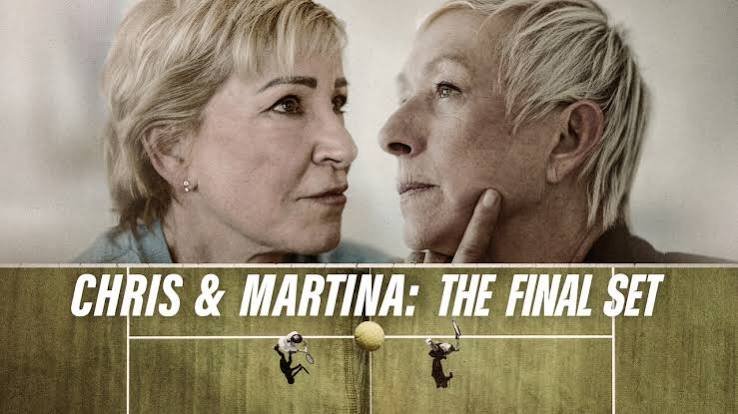

Honest, raw and compelling – that is one way to describe the documentary “Chris & Martina: The Final Set” currently airing on Netflix. But first, a disclaimer: this is not the usual review; it is more of a personal journey since I remember growing up witnessing the intense rivalry between Chris Evert and Martina Navratilova that dominated women’s tennis. Though I belonged more to the Graf-Sabatini era, I remember their predecessors who brought women’s tennis into the limelight. It was indeed poignant to realise that, as much as Chris Evert and Martina Navratilova shaped each other’s tennis, they upped each other’s fightbacks against cancer with no less intensity.
What I didn’t know was that Navratilova, who, I remember, between the two, as the more aggressive player on court, had apparently lacked killer instinct when she first started playing. She was happy to play with friends even if she lost. The two had struck up a friendship and even played doubles, winning two Grand Slams before Evert drew apart when she realised that Navratilova was getting familiar with her game.
Even when Navratilova chose to defect from Czechoslovakia, then under a Communist regime, Evert was one of the three people she had confided in. While Evert’s cool professionalism was revealing, it was Navratilova’s vulnerabilities as a defected Czech viewed as a communist spy in the Cold War-era US, or when her sexuality was openly questioned by a hypocritical US media that never grilled male players even though there were plenty of gay men in the circuit. There were similar moments of vulnerability in Evert’s life as well, particularly when she found herself on the floor of her hotel room even after winning Wimbledon because she realised she had no friends.
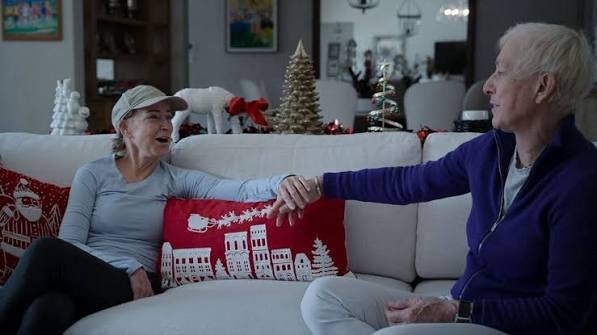
While the two enjoyed an easy camaraderie at the beginning, their respective pursuit of the coveted number one position in women’s tennis led to a bitter rivalry, to the extent that they no longer spoke to each other in the locker room before a match. Meanwhile, Navratilova had shaped herself into a slimmer and fitter version of herself, and her game became clinical, decimating rivals with ease. The gap between the two was steadily decreasing before Evert could barely beat her. However, eventually Navratilova reached out, and the duo reconciled and reconnected.
Then came the day Evert confided in her about her BRCA status and undergoing a mastectomy. Navratilova had cried, unaware she too had cancer in her breast and throat. Here too, both pushed each other to fight back. Martina Navratilova underwent 35 chemo sessions like the champion she was, and Evert drew her strength from her friend when her ovarian cancer came back a second time.
While Navratilova, who always had ” plenty of girlfriends”, prefers to go to her doctor alone with only her pet dog in tow, having sent her partner home, Chris Evert’s second ex-husband takes her to chemo sessions. After three marriages and divorces, Evert has come to cherish her family of three sons and a grandson. A poignant moment in the documentary is when the two discuss the loss of control over their own bodies during the harsh treatment. The two also talk about their sparse hair, due to chemotherapy and the realisation that it too would go as Evert started her treatment the second time. The endearing moment was when Navratilova held up a COVID test report before entering Evert’s home, possibly because of the latter’s low immunity.
While tennis icons of yesteryear like Billy Jean King, Pam Shriver and John McEnroe spoke about how the duo’s rivalry on and off the court brought women’s tennis into the spotlight and stardom for both, the honesty with which both the legends spoke about their vulnerable moments caught me off guard.
The documentary was recommended by my brother, from whom I had picked up my early enthusiasm for sports in my childhood. He chose it for me, perhaps, not only because I had grown up watching the duo play, but also because, all this time, I have been fighting against breast cancer, the second time. For the past few months, as I struggled physically with the side effects of the treatment, I had been wallowing in self-pity. Once again, I stood at another crossroads, totally lacking a sense of direction for my life, feeling like a headless chicken. I felt everyone else was getting past me while I stood in the same place helplessly, waiting for life to roll out the next course of action. I felt I was buying time for myself each time the cancer came back. I watched the documentary when my spirits were at an all-time low.
I learnt that Evert also has the BRCA gene like me. Her younger sister had died of ovarian cancer before she was tested. Her repeated fightbacks and Navratilova’s defiant attitude towards the Big C helped me to draw myself out of the blue funk. I realised that you fight because you never, ever quit. Trust your brother to know exactly what you need.
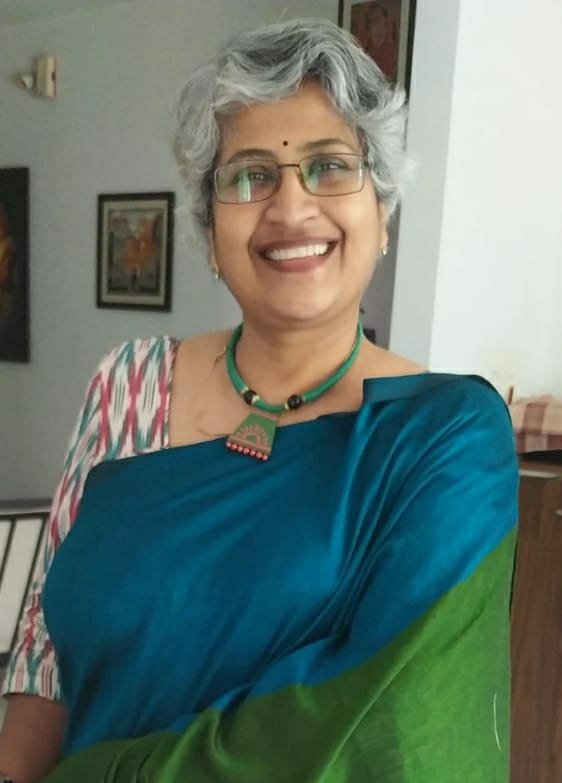
By Anindita Chowdhury
Anindita Chowdhury is a special correspondent of the English daily, The Statesman. She is based in Hyderabad. Apart from reporting, she writes short stories and essays with special focus on history, particularly the social and cultural aspects of the bygone era. She can be contacted at aninditasmail@gmail.com.







To comment on your article is beyond my ability but to say that you are an inspiration to so many of us is the least I could confess!
Another inspiring write up
Truely inspiring. Made me pause and reflect.
So wonderful to know about their friendship and rivalry! I started watching tennis because of them. Everything came back to me and lot more while reading the article!