






There are many legends and myths associated with Rakhi or Raksha Bandhan in our country. It is mentioned in the Bhavishya Purana that the gods were losing a battle against the demons. Shachi (Indrani) tied a sacred thread around Indra’s wrist. It had been blessed by priests and was believed to offer divine protection. Indra thus emerged victorious. Here, the thread was a protective amulet rather than a symbol of a brother-sister relationship.
According to a popular legend, Krishna cut his finger while flying a kite. Draupadi tore a strip from her sari to bandage the wound. Touched by her gesture, Krishna vowed to protect her, which he did during the Cheer Haran at the behest of Duryodhana by providing her endless measure of cloth. Although this story is widely associated with Raksha Bandhan today, it is not explicitly described as Rakhi in the earliest versions of the Mahabharata.
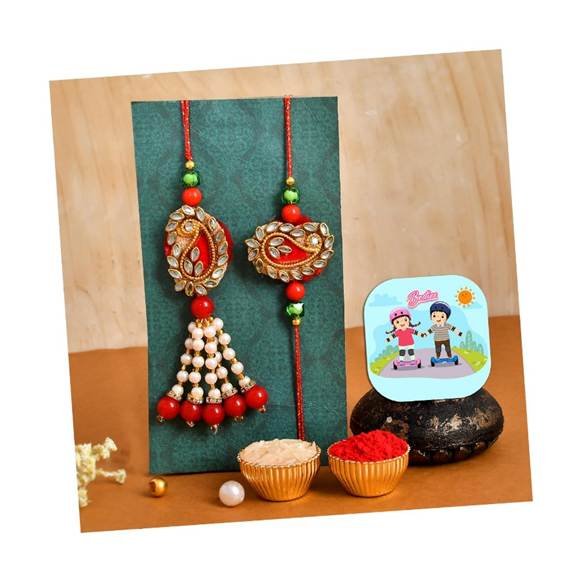
Another legend holds that Yamuna tied a sacred thread on her brother Yama. Delighted by the gesture, Yama granted her the boon of immortality and declared that any brother who received such a thread from his sister would be blessed with a long life.
There is a famous historical tale behind the festival of Raksha Bandhan, too. The widowed queen of Chittor, Rani Karnavati, sent a Rakhi to the Mughal emperor Humayun, seeking his protection against invasion. This story is widely popular in the popular imagination. However, many historians question its authenticity because of a lack of contemporary historical evidence.
As varied as the origin stories of Rakhi are, we cannot compartmentalize it into a single traditional belief in the present-day social context. We may assume that it started as a belief that a brother would provide protection to his sister in times of need. However, the question that begs an answer is this – does this definition hold water in today’s world?
It is not just men but also women who have to relocate outside their parental homes for various reasons apart from marriage, like jobs. They have to juggle with multiple responsibilities, including finance and accounts. They have to be on their toes from morning to night, dealing with their corporate peers and people from multiple backgrounds. How much of a physical reassurance can a brother give his sister in such a scenario? How can he be a protective shield?
As demonstrated by the 2026 web series, Raakh, the mother, Sonali Bendre, tells her daughter that she is her brother’s bodyguard rather than the other way round. We cannot brush aside the grisly details of the web series itself, but can we consider, for a minute, that this is the reality of today’s world? That sisters can be the protective barriers for their brothers rather than vice-versa?
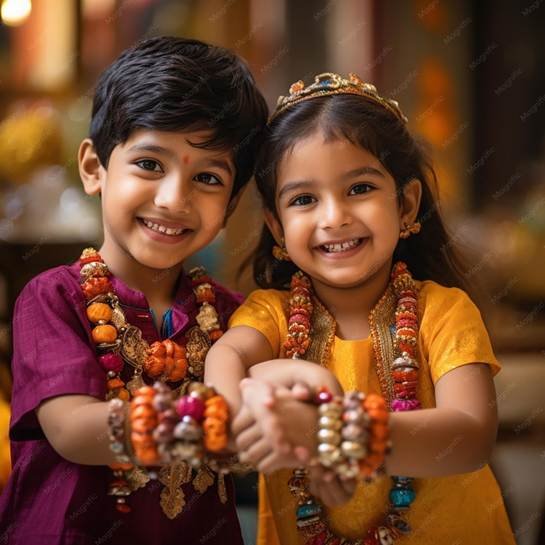
Or better still, why can’t both protect each other according to the context? And protection need not be physical, it can be mental, psychological, social, financial, medical, and so on. Given this broader definition of protection, can we regard Rakhi as a protective amulet which both the brother and sister can tie on each other’s wrists?
In fact, going by that redefinition of Raakhi, not just brothers and sisters, even sisters and sisters can provide protection to each other. So why do we have to consider Raksha Bandhan an exclusive festival of a brother and sister? If at all, it should include all such relationships, including friendships which feel protective.
Secondly, gifts that are meant to be given by brothers to sisters can be exchanged both ways. Why should only the men feel the burden? Why can’t the women share the load? Or it could be left gift-free and reduced to a symbolic gift like Raakhi itself.
I am not saying that there is anything wrong with celebrating Raksha Bandhan in the old traditional way. All I am saying is that even in the tradition, in the myths and social stories, there were no consistent narratives regarding the role of the amulet. Similarly, in today’s modern world, Raakhi cannot be tied to one unilateral definition. It needs to take into account the transmuting realities and change in a similar manner to reflect those realities. After all, tradition without keeping in step with the modern realities becomes shackles. On the other hand, when traditions adapt with the modern realities, they become that much dearer and more indispensable to celebrate in our lives.

By Richa Verma
Richa is an online English teacher, independent blogger, voracious reader, movie buff who is smitten with wanderlust, and a homemaker. She can be contacted through her email address richavermamh@gmail.com






Wonderful Richa. Keeping this tradition alive in today’s world is the only way to show the immense bond between brothers and sisters.
It made me immotional and nostalgic.
Well written article. Congratulation.
Thank you Phua! 🙏🥰
Wonderfully woven together Richa. Nice article.
Thanks Sampurna 😍
Lovely insight. Indeed today the definition of protection has changed a lot. Me and my daughter ties rakhis to each other. I cannot count how many times children have saved their mothers from herself.
That’s great! Thanks for the appreciation ☺️
Appreciate the perspective through which Rakhi has been presented!
Adds inclusivity and intimacy to the festival…
Thanks Promita 😊