





The skies are clear today. Everyone has reached school. But something is different. On each bench lies a new notebook, a new pencil and a new eraser.
Somewhere in a small hamlet, far from the noise of the city, a little girl holds a notebook that feels almost too precious to open. It is the first new notebook she has ever owned. The first pencil that is truly hers lies beside it. She runs her fingers over the clean white pages, almost afraid to spoil them. That evening, sitting in a quiet corner of her home, she carefully writes the last letter of the day.
Then she pauses.
She looks at the notebook again and wonders who sent it. She does not know her name. She does not know where she lives. She only knows that somewhere, perhaps in a city she has never seen, another little girl once held this very notebook in her hands and decided to give it away. And so, before closing the book, she whispers a small thank-you.
To that unknown little girl. A girl she has never met, but who has somehow become a part of her story. Because this notebook has travelled a long way.
It began as an offering at the feet of Bappa during Ganesh Chaturthi. And now, months later, it has found its way into the hands of a child for whom it could make a difference. Perhaps this is what a blessing looks like when it travels. It does not always arrive with bells, flowers or a box
It began with a small offering.
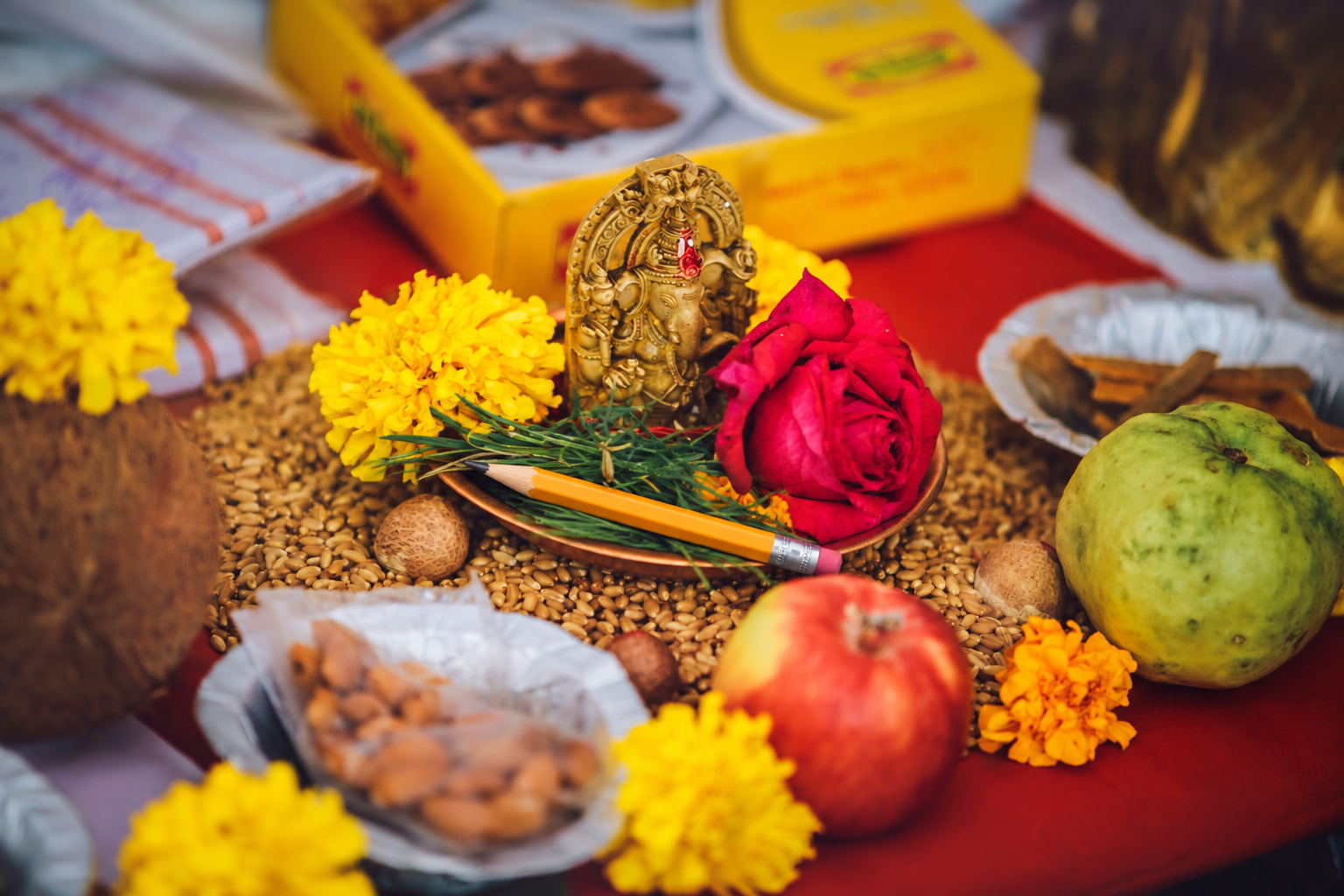
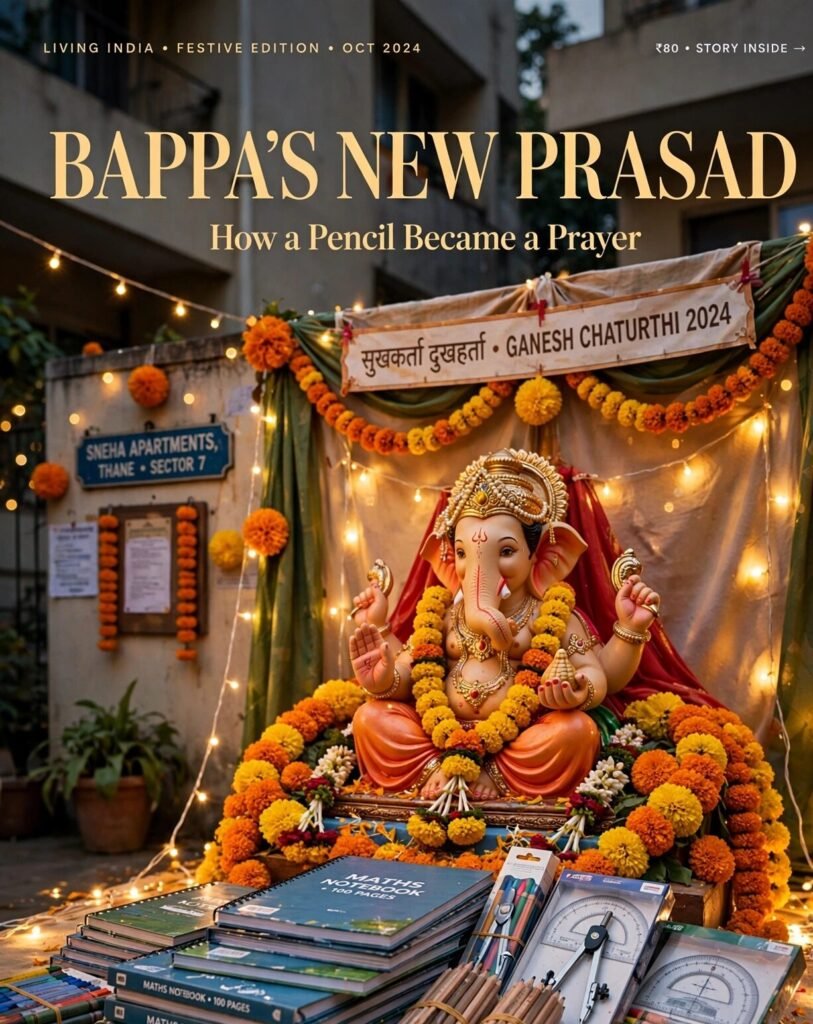
A few months earlier, in a housing society in Thane, a little girl stood before her society’s Ganpati idol. The familiar scene was all around her – the marigold flowers, the fairy lights, the music, the sound of the aarti and families arriving with their offerings.
But this year, something looked different.
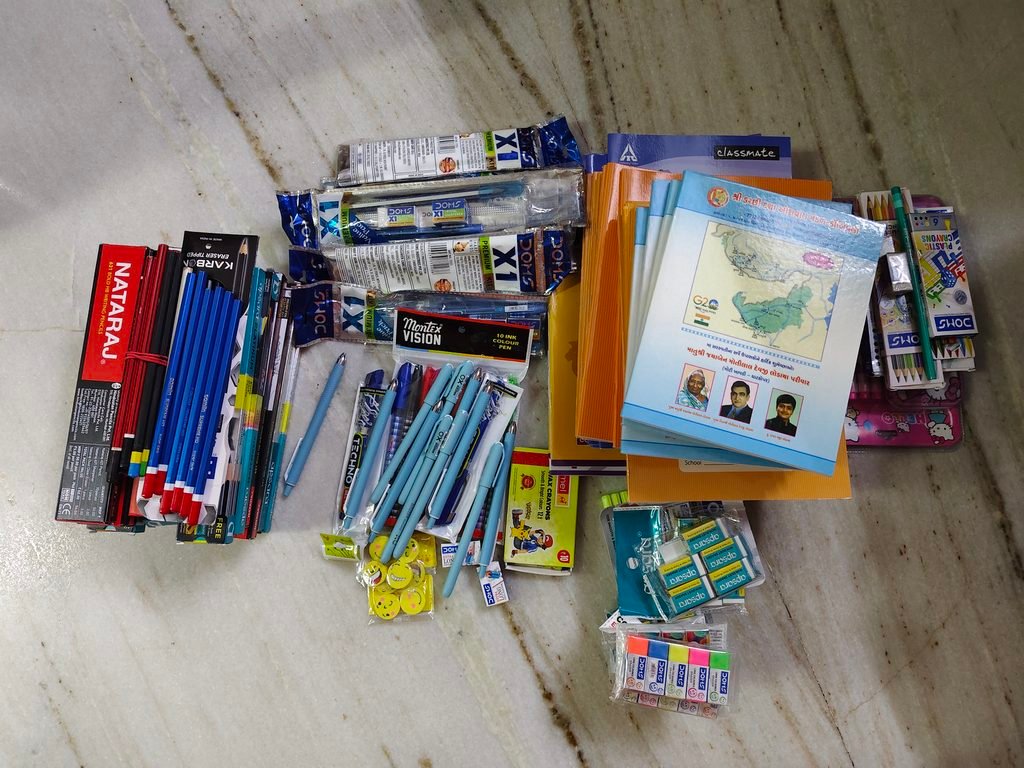
Alongside the flowers and traditional prasad were notebooks, pencils, erasers, crayons, geometry boxes and school bags. The little girl was carrying a notebook. She held it carefully in both hands, walked towards Bappa and placed it near the idol.
“Bappa, yeh meri taraf se,” she whispered.
It was a simple offering.
Ganesh Chaturthi has always been a celebration of abundance. We offer modaks because we love Bappa. We bring sweets and fruits to express gratitude and share our happiness. But after the ten days of celebration, some of that abundance may remain behind. Sweets may go uneaten. Fruits and flowers may be wasted. At the same time, there are children for whom something as ordinary as a notebook or a set of pencils can make a real difference.
Then came a tiny message on the society’s Whatsapp group,
What if, this year, instead of bringing one more box of sweets, every family brought a notebook?
What if a geometry box placed before Bappa could eventually reach a child sitting in another classroom?
The idea was simple. And perhaps that was its beauty. Nothing else had to change. The aarti could continue. The dhol could continue. Bappa could still be surrounded by flowers and lights. Only the destination of the offering would change.
From one child’s hands to another’s.
One notebook may not seem like much. But when an entire community gives, small things begin to add up. A hundred families can bring a hundred notebooks. Children can add pencils, erasers and colours. Someone can contribute a school bag. Someone else can quietly add a geometry box. By the end of the festival, what began as individual offerings had become something much bigger—a collection of notebooks, pencils, colours and school supplies, ready to begin another journey. The offering has travelled beyond the pandal. And perhaps that is the most beautiful part.
The child who receives may never know the person who gave.
A new meaning to an old prayer.
This is not about saying that sweets have no place in Ganesh Chaturthi.
Traditions matter because they carry memories, emotions and generations with them. But traditions can also evolve with changing times. Perhaps this is simply another way of understanding naivedya. When a family gives a school bag, it is not simply donating an object. It is saying, Your education matters too.
And Bappa is smiling.
That is the quiet magic of giving. It does not always need applause. It does not always need a name. Sometimes, it simply needs one person to think—and another person to act. So, this Ganesh Chaturthi, when you stand before Bappa, perhaps look once at the offerings around you. And if there is a little box asking for notebooks, pencils or school supplies, pause for a moment. Place something inside. You may never see where it goes. You may never meet the child who receives it.
And when she looks at those clean pages, she may never know that they began their journey at a Ganpati pandal, in the hands of another little girl who simply whispered:
“Bappa, yeh meri taraf se.”
And perhaps, that is when a pencil becomes a prayer.
And a small offering becomes a blessing that finally finds its way home.
BY Amisha Shah