





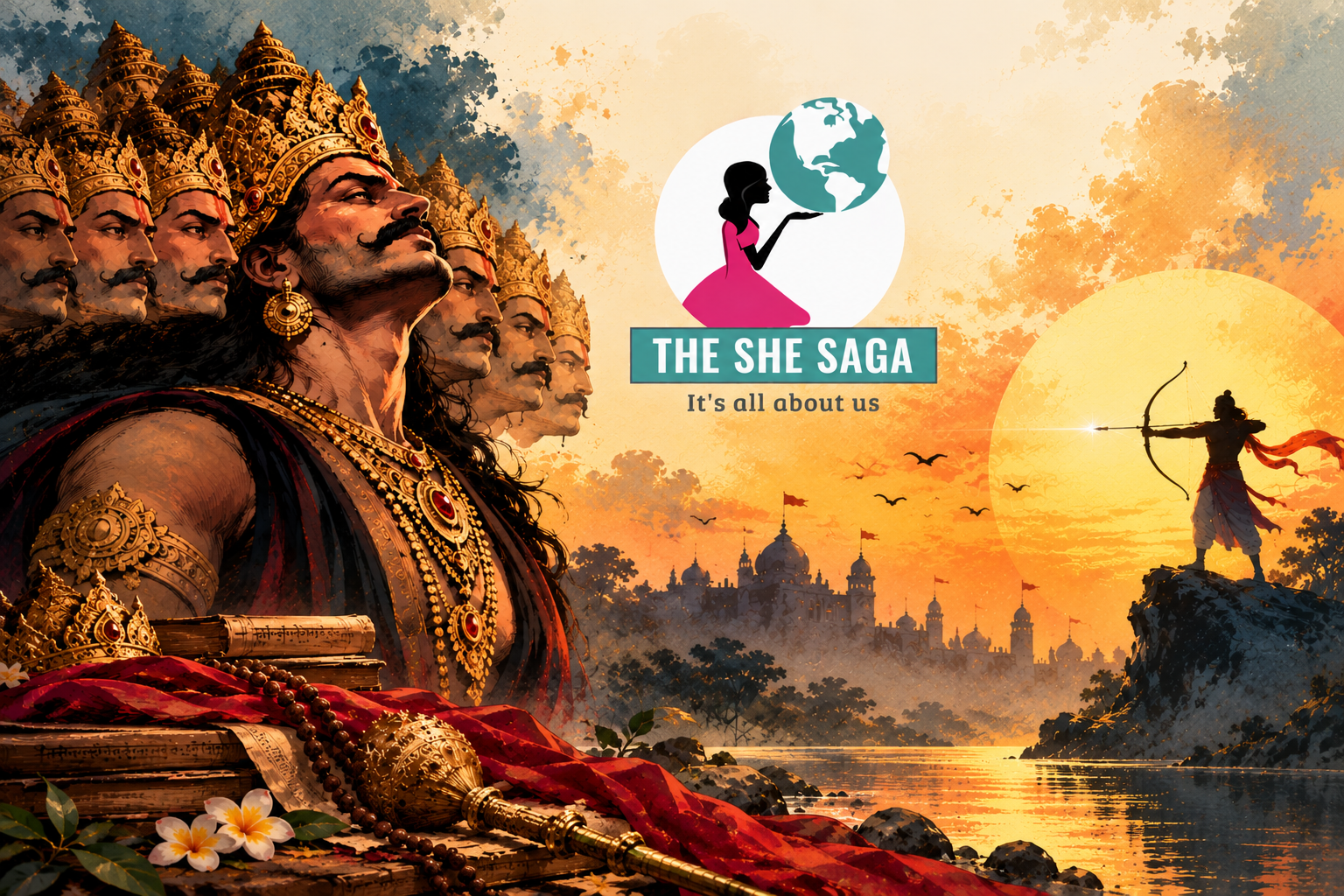

Is Ravana the Real Villain?
Then what about the other villains in Ravana’s life?
Mythology portrays Ravana as the ultimate villain, an entity to be loathed and abhorred. After an austere, rigorous penance and ritualistic worship, yajna, tapasya and aradhana, the three brothers – Ravana, Kumbhakarna, and Vibhishana – had attained the blessings of Lord Brahma. In the later versions of the Ramayana, it is said that Kumbhakarna wilfully wanted Indrasana. But Goddess Saraswati decided to intervene, and Kumbhakarna was actually manipulated into asking for Nidrasana, which went in favour of the Gods. Vibhishana sought righteousness, or dharma, that pleased Brahma, and which he was instantaneously granted, along with immortality. Ravana, the most powerful and influential of the three brothers, asked for protection from gods, celestial beings, demons, and other powerful entities. Please note the flaw in the boon that he sought. He did not seek protection from humans because he considered them weak and unworthy of being a threat to his existence. This character flaw – fatal arrogance or proud dismissal – eventually took his life. Lord Vishnu appeared before him in the mortal garb of Rama and brought an end to his brilliant yet flawed being.
Shonar Lanka – Golden Lanka
Lanka was not called “Sone ka Lanka,” “Shonar Lanka,” or “Golden Lanka” merely frivolously. It was for a reason. The Demon King Ravana was powerful and ambitious. He was an ardent disciple of Shiva. He maintained a kingdom that was prosperous, with buildings embellished by precious jewels, a highly fortified and secure city with magnificent architecture, beautiful gardens, and ornate fountains.
It also reminds me of the famous Meghnad Vadh Kavya, written by the great Michael Madhusudan Dutt, a pioneering literary star, no lesser than a constellation. In this epic poem, the poet has glorified Indrajit or Meghnad, Ravana’s son, and the whole clan of Ravana. He also pointed out the treacherous ways that Rama and his retinue resorted to in order to bring an end to the so-called Demon King Ravana. The Lankans have been portrayed as devout patriarchs who laid down their lives defending their boundaries. Rakshasha King Ravana has been depicted as a lamenting father, with the emotions and sentiments of a mortal grieving the treacherous death of his brave son. He is shown as a superior warrior wrapped in the codes of chivalry, and his laments equate to those of Satan in Milton’s Paradise Lost, another epic that draws a parallel.
Reading such literary pieces undoubtedly reminds us of Milton’s portrayal of Satan in Paradise Lost. The famous quote, “It is better to reign in Hell than to serve in Heaven,” serves as a befitting response to Ravana’s regime.
Michael, in a letter to his friend Rajnarayan Basu, had written, “I despise Rama and his rabble, but the idea of Ravana elevates and kindles my imagination, he was a grand fellow.” This breathes a new dimension into the traditional beliefs of the common man and makes us ponder upon the noble side of Ravana’s character.
The Degree of Treachery Involved in Ravana’s Death – Partial Villains
Rama had a difficult time killing the Demon King. Every time He cut a head off Ravana’s shoulder, he came back to life with a new one. To defeat him, the first treachery was committed by Ravana’s brother, Vibhishana. According to the later Ramcharitmanas tradition, Vibhishana secretly revealed to Lord Rama that the centre of Ravana’s life sap, protecting him from all harm, lay in the pool of nectar placed in Ravana’s navel. This knowledge ultimately helped Lord Rama to shoot an arrow at Ravana’s navel, eventually killing him.
Lord Brahma had gifted a special kind of arrow to Ravana, and only this arrow had the capability to kill him. Ravana had to hide this arrow carefully in the wall near his throne. This deeply guarded and important secret was shared only with his beloved wife, Mandodari. So, even though Vibhishana had guided Lord Rama towards the ambrosia in Ravana’s navel, he did not, however, know the whereabouts of the ghatak (murderous) arrow.
Hanuman was then sent in disguise to extract the relevant information from Mandodari. He tricked her into a conversation that led to the revelation of the secret hiding place of the said arrow. Mandodari was also gullible enough to let out the darkest and most potent secret that led to the destruction of her mighty husband.
The Curious Irony of Divine Boons and the Ways Out
To digress a bit, let us also not stop wondering at the dichotomies and heavenly designs of the Gods to take down the most powerful of the devotees in Hindu mythology. Every time a devotee appeased the Supreme God, he received a boon, most of which were based on prayers and desires for immortality. No one wants to die, it seems, especially when one is sitting on an elevated seat at the top of creation. Nevertheless, there would always be a catch in the boon that would later prove to be fatal for the all-powerful mortal. Like Ravana, even Hiranyakashipu was protected against humans and animals and from all weapons. His death could not have happened indoors or outdoors, in the daytime or at night, on this earth or in the sky. But then Narasimha appeared during the transitional twilight hours, half-human and half-animal, and killed Hiranyakashipu with his claws, which are outside the definition of a traditional weapon. Fascinating!
There was also the near-immortal Bhasmasura, with a terrifying boon, all set for a rampant destructive spree. But ironically, his own boon killed him when he was tricked by the divine beauty Mohini into touching his own head. Cursed be the boon that caused anything he touched to turn into ashes.
Seen through the above lens, the boons in Hindu mythology seem to be well-crafted wordplay. They are like contracts that aimed to establish the fact – no boon/blessing is superior to Dharma and the cosmic order.

By Bidisha Dutta
An avid traveller and a lover of literature, Bidisha Dutta works as an Editor with a renowned publishing firm. . Writing and reading is her second nature, and she just cannot sit in peace without these. She can be reached at bidishadutta2000@gmail.com.





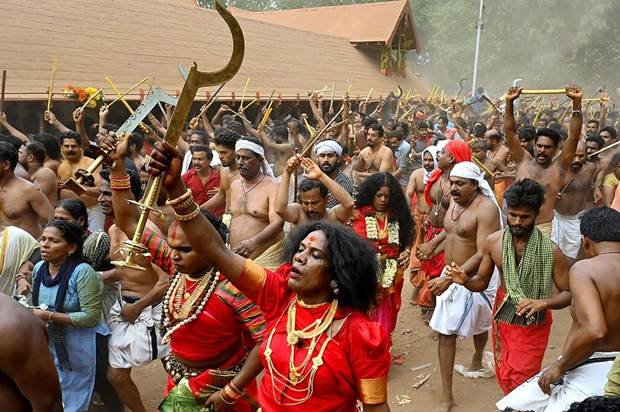
In some places in South India and Sri Lanka , Ravana is worshipped. It is true that he was killed by trachery but then the gods have always tricked the demons who sought immortality because once immortal they misused their powers. It goes to the credit of Ravana that he never forced himself upon Sita without her consent.
I agree, and there are so many instances that come up in the mythological stories that do not reach the mass. His greatness deserves to be worshipped!
Interesting read. I love the way the Gods always find a loop hole to defeat the demon. Which brings us to the realisation that no boon is water tight.
True, since childhood can’t tell you how fascinated I was always by the thoughts of the Gods and Goddesses at manipulating their own boons :-)…
A very interesting reversal of the lens that we use to understand and accept Rama and Ravana!
Indeed it is only by challenging mythology and history that we can unearth the motivations behind the manipulations…