





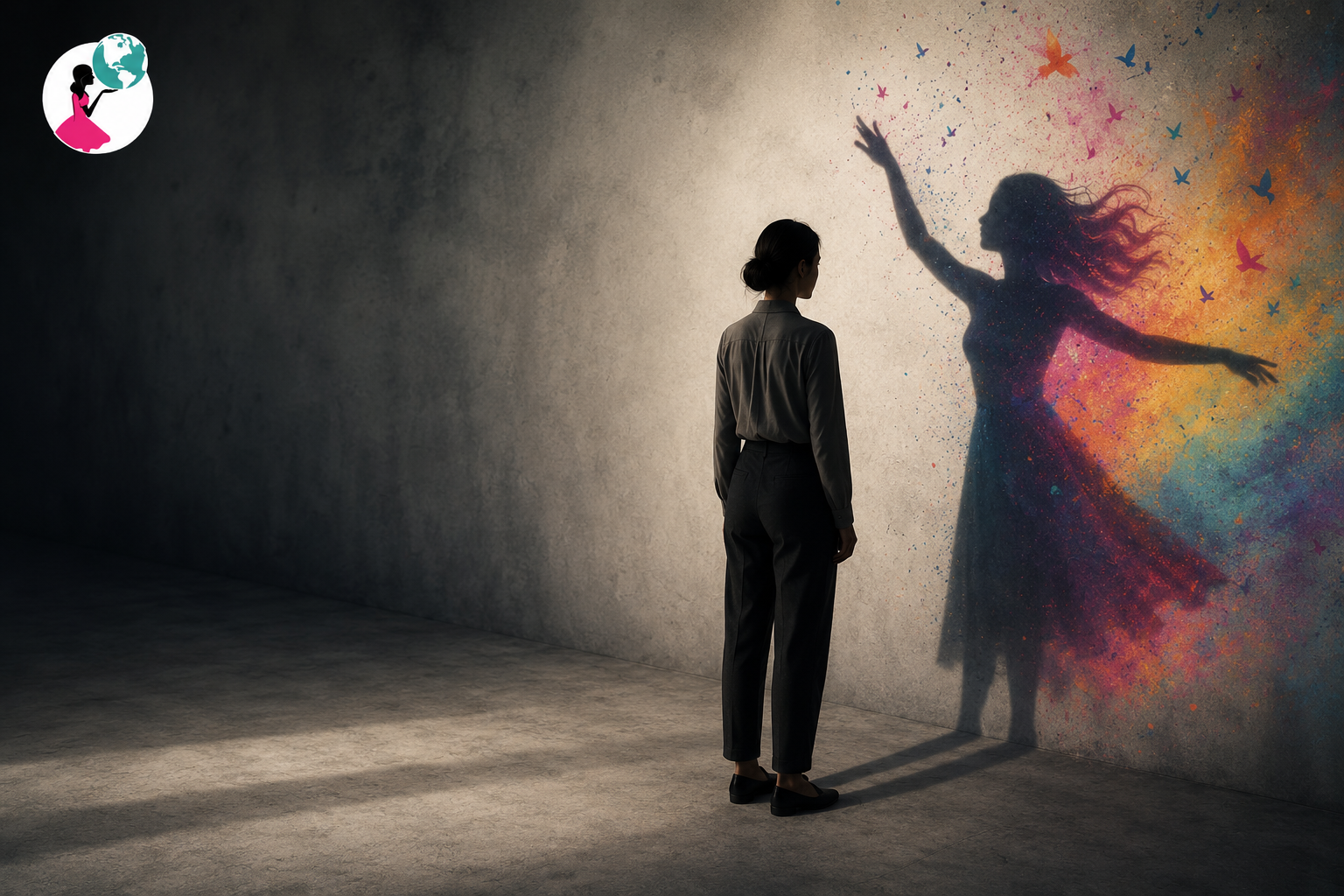

Every society has its unwritten rules, some of which are spoken aloud and most are not. Both men and women are expected to behave in certain ways with different sets of approved routes. Ambition and desire must stay within assigned boundaries and the differences should be corrected before it becomes visible.
Those who fit the mould are rewarded with acceptance, while those who do not, are reminded subtly or otherwise, that life will be easier if they learn to perform. Growing up in a small town in the 1990s, I witnessed one such performance.
There was a male teacher who stood out because of what he represented instead of what he taught. His mannerisms were considered feminine by local standards and he occasionally painted his nails in bright colours. Today, that might barely raise an eyebrow in many places, but back then, it was enough to fuel months of gossip. While children noticed, adults noticed more.
People speculated endlessly. He was mocked at, avoided or was treated as a curiosity to be discussed in hushed voices. Nobody knew who he truly was and yet everyone seemed convinced they did.
What the people around him never had to speculate was his temperament. He was feared. Students entered the classroom with caution as punishments were severe and anger seemed to simmer beneath every interaction. There was a certain hardness to him that never appeared to soften.
Years later he married and had a child. Those who knew the family spoke of a household burdened by tension. Even female colleagues often found themselves subjected to a level of hostility that felt deliberate rather than incidental.
As a child, I viewed these as separate facts. But as I grew up, I am no longer certain. To be clear, I do not know whether this man was queer as nail polish or mannerisms are not evidence and gossip is not to be trusted. The town’s assumptions may have been right or they have been spectacularly wrong.
The truth of his identity is less interesting than the possibility of his experience. What does it do to a person when they spend years being told, directly or indirectly, that parts of themselves are unacceptable? Not everyone shatters in the same way. While some become quieter, sadder and learn to disappear within perfectly respectable lives, some becomes angry. Or even more precise, “ballistic”.
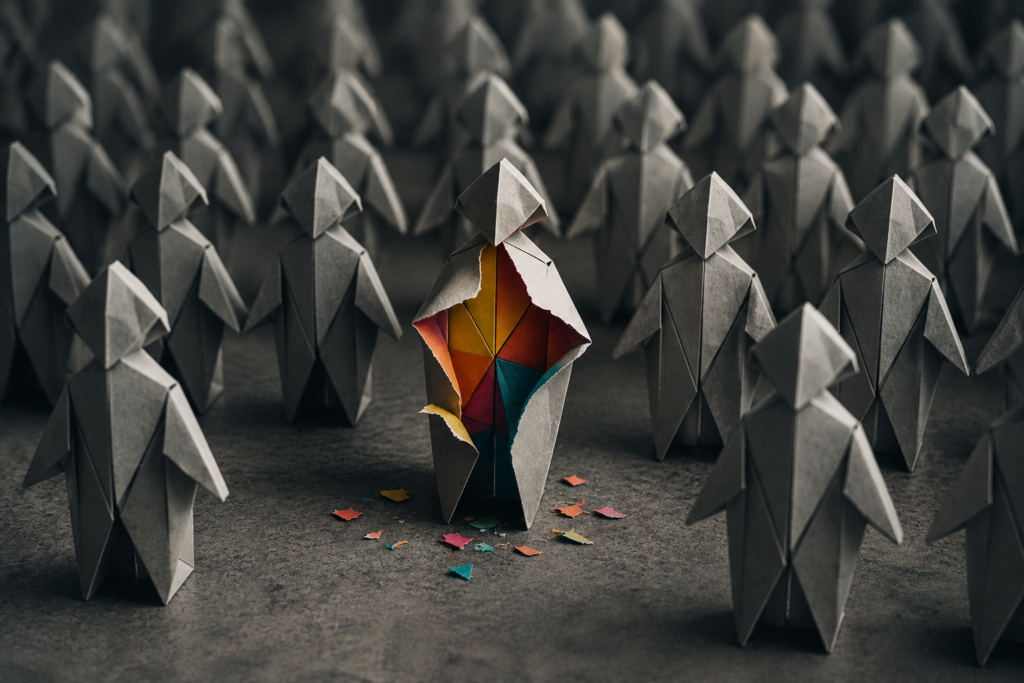
The popular theories often portray repression as a private tragedy resulting from a lonely person, a hidden secret or a life marked by a silent suffering. Unfortunately, repression is rarely private as the pressure has to go somewhere and results in seeping into domains beyond the self.
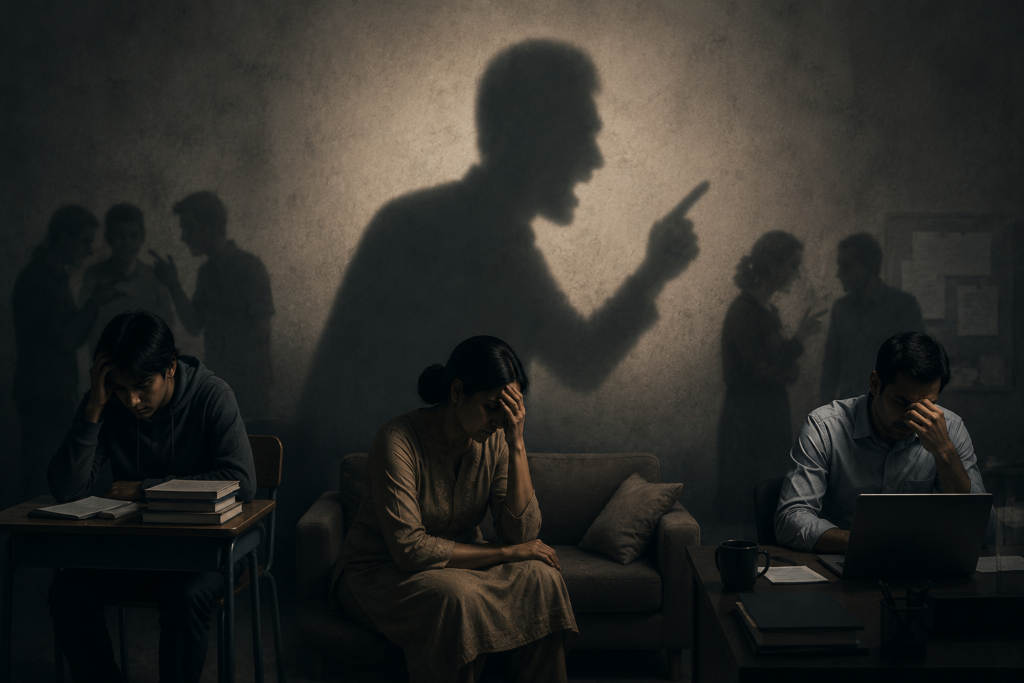
A person denied the freedom to be themselves may spend years policing themselves and that instinct to scrutiny can extend outwards where control and judgement become habitual and resentment searches for targets. Consequently, a spouse, a colleague or a classroom full of children pays the price. Sadly, the victims do not have any idea that they are standing in the path of a war that began long before they arrived.
This is not unique to questions of sexuality or gender. The pattern appears wherever people are forced to amputate essential parts of themselves. The society can demand conformity which is not always synonymous with peace. What is buried does not disappear but occasionally changes form to become anxiety, addiction and cruelty.
The irony is society often create the very behaviour they later condemn. They celebrate emotional suppression and then wonder, where the rage comes from. Customarily they punish the difference and then act surprised when bitterness takes root. And most shockingly the society demands masks and then complain when people become impossible to know.
However, none of this excuse the harm. The humiliation of the student, the suffering of the spouse and the hostility endured by the colleague remains unattended and quite often gets intensified with time. It is understandable when these victims do not owe sympathy to the person causing it.
The absolution does not lie in the explanation, but understanding the mechanism might create a difference. Because the question is larger than one teacher in one small town. I wonder at the number of people carrying identities they were never allowed to inhabit. It’s time to pause and think about the lives that have been built around maintaining appearances rather than pursuing truth.
We unabashedly have talked about the cost of being different. Perhaps we should also speak about the cost of forcing people not to be. After all, a society does not escape the consequences of repression simply because it successfully hides the people being repressed.
The only question is whether it remains within the person or it spreads to everyone else, because the closet may hide the person, but not the consequences.

By Bahnika Sen
Bahnika Sen is a trader, fitness expert, and writer. She can be contacted at: bahnika23@gmail.com







The personality of such a person would be like a pressure cooker except that there is no safety valve and therefore the cooker bursts.
It actually did burst eventually
I really liked the thought expressed. We encounter such people in different walks of life, those who are different and trying to fit in, or are expressing their anger or hostility otherwise. This is actually something that begs in depth analysis for many.
True. And they are perenially in denial mode which actually is concerning
In each one of us, there are repressed parts, which reveal themselves in awkward situations and in the most unexpected ways…and then we keep wondering what happened!
Thought-provoking piece…
Thank you so much. Self awareness is much needed.
Your piece makes one ponder
Thank you so much.
Very well written
Thank you so much