





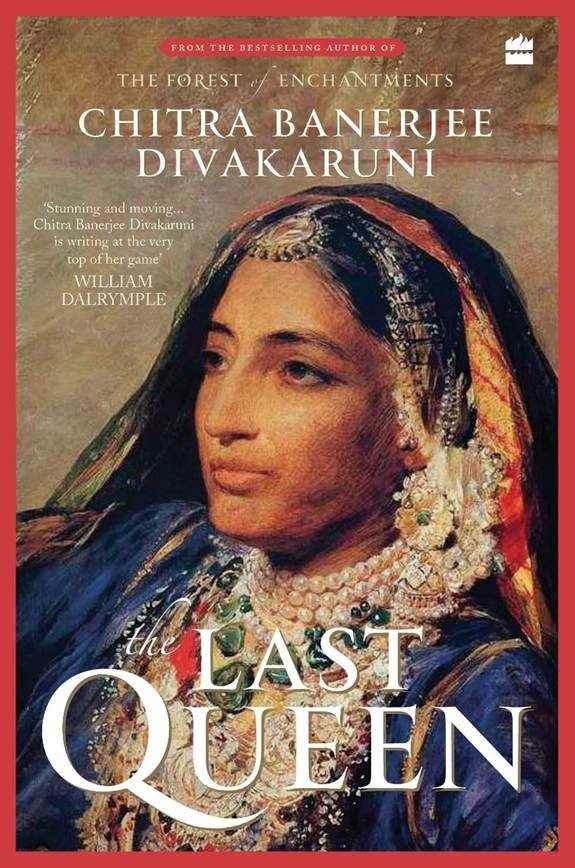

TITLE: The Last Queen
AUTHOR: Chitra Banerjee Divakaruni
PUBLISHED: 20 January 2021
About the Author
Chitra Banerjee Divakaruni was born in India and came to the United States to continue her education, receiving a Master’s degree from Wright State University in Dayton, Ohio and a Ph.D. from the University of California, Berkeley.
She is the award-winning author of 18 books. Her themes include the Indian experience, contemporary America, women, immigration, history, myth, and the joys and challenges of living in a multicultural world. She has won numerous awards, including an American Book Award and the International Premio Scanno Prize. Divakaruni also writes for children and young adults.
She currently teaches in the nationally ranked Creative Writing program at the Univ. of Houston. She serves on the Advisory board of Maitri in the San Francisco Bay Area and Daya in Houston, organizations that help South Asian or South Asian American women in abusive situations. She is also closely involved with Pratham, an organization that helps educate children (especially those living in urban slums) in India.
About the Book
“In The Last Queen, Chitra has written an unforgettable story about the fearless, much-feared Queen whom history seems to have forgotten. Jindan is heroic. Her strength and spirit are a lesson to us.” – Shabana Azmi
The Last Queen, brings alive one of the most fierce and fearless women of the nineteenth century, an inspiration for our times – Rani Jindan Kuar.
It is no wonder that The Last Queen won the 2022 International Association of Working Women Award for Best Fiction of the year and was longlisted for the 2022 Dublin Literary Award!
Synopsis
It is a typical rag-to-riches story of Jind Kaur, who rises from the ranks of a kennel keeper’s daughter to become the last and favourite queen of Maharaja Ranjit Singh of Lahore. However, their love story is not as rosy as she would want to believe. She quickly learns that the royal court and family are mired in court and zenana politics and she must find allies to keep her place intact in the newly found sasural.
It is tragic that she becomes a widow at a tender age, just when her son Dalip is one year old. She finds herself to be the queen regent because the young prince is too young to play the role of the king. She is a staunch, astute, courageous and revolutionary woman who gives up purdah and addresses the military on her own. She also shows herself capable of taking care of court politics very well.
She leads the Sikhs to two wars against the English, after which the British separate her from her son, and imprison her in one of the havelis. She escapes and seeks refuge in Nepal.
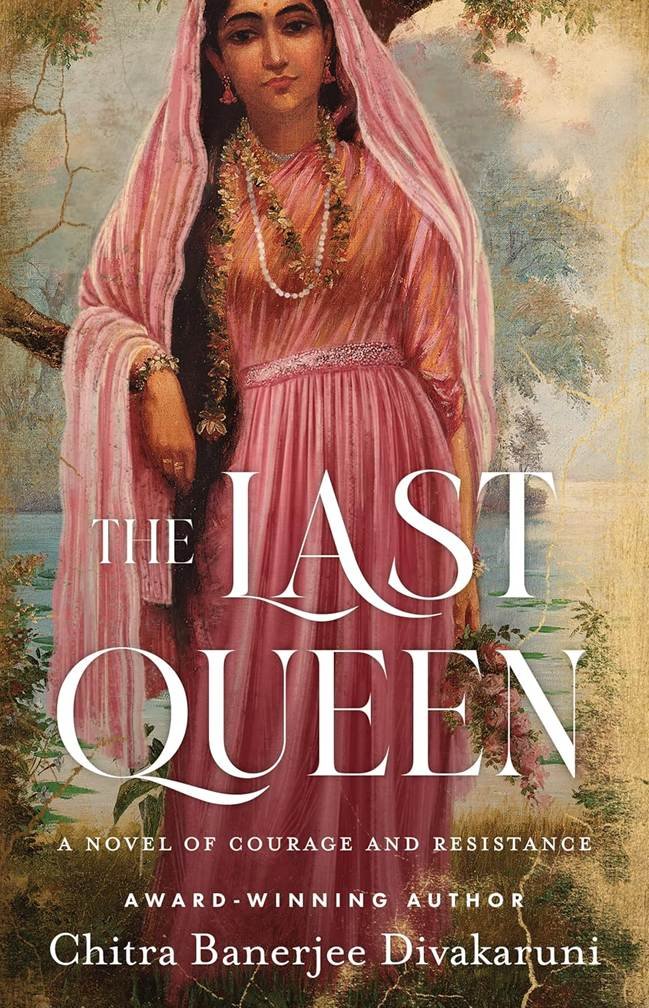
She is horrified about the indoctrination and conversion to Christianity of Dalip, but gradually wins him back to Sikhism so that the seed of a future king is sown in him while she is on her deathbed.
Themes
Divakaruni has done it yet again – taken up a marginalized but strong woman in a historical context and made her story centre stage. Divakaruni repeatedly chooses women who have remained on the margins of mainstream history. Jindan Kaur is remembered far less than Maharaja Ranjit Singh, despite her immense political role. The novel restores agency and voice to a woman whose contribution has often been overshadowed. Rather than treating Jindan as a supporting historical figure, the novel makes her the lens through which history is experienced. The emphasis is on both her public achievements and her private struggles
The first-person narrative is a testimony to the fact that it is not just the story of Punjab and Lahore chaffed away by the British but also the story of how a formidable woman was able to keep the flame of patriotism alive even by giving her all.
The first-person narration allows readers to experience history emotionally rather than merely observe it. Political events become deeply personal because they are filtered through Jindan’s thoughts and emotions. The annexation of Punjab is presented not merely as a political event but as a personal loss. The narrative constantly balances the queen’s public responsibilities with her private role as a mother. The novel portrays patriotism through personal sacrifice rather than grand speeches. Jindan’s resistance continues despite repeated setbacks, exile, imprisonment and separation from her son. The emotional cost of colonial rule is shown through one woman’s life. The novel humanizes history by showing how large political events affect individual lives.
Recommendation
I would give this book 5 / 5 for the lucid narrative style, choice of the protagonist, exposure of her emotional world and her fearless patriotism despite death threats. It is a must read for all those who want a feminist perspective on a historical tale.

By Richa Verma
Richa is an online English teacher, independent blogger, voracious reader, movie buff who is smitten with wanderlust, and a homemaker. She can be contacted through her email address richavermamh@gmail.com







Very interesting. Now I feel like reading it. I think I will read this.
Please do if you can. Thanks.
A compelling and well-crafted review! I’m yet to get a taste of this book …
Thanks Promita! If you can lay your hands on it please do read it. It’s an interesting book. 🙂
The book was a fascinating read, having dealt with the female perspective of war and how it changes things drastically, especially for women and their children. Even though I admire the indomitable spirit of the queen and the king, the romance part was something I really couldn’t digest, especially the age gap. The queen being a girl and the king a full-grown man, perhaps it was a common thing back then, but nowadays things like these should not be encouraged at all. It’s like taking away a child’s innocence.
True. We should not encourage such age gap now. But in the given socio-political context, the romance was voluntary and initiated by the girl. It wasn’t forced down her throat though her father would have liked it to transpire. The girl chose her life partner in an era when choice was a rare privilege. She truly loved him, with whatever fate she had thereafter.
Yes, there were many such stories back then, if we were to see them child marriage and age gap marriages were quite often. We can’t apply modern notions to what happened in the past, but yes now we do have the choice and the idea of what is right and wrong.
Wow…sounds so interesting. I second that. How the cost of diplomatic failures are borne by the common people. I had similar feeling while watching Main wapas aunga too.