





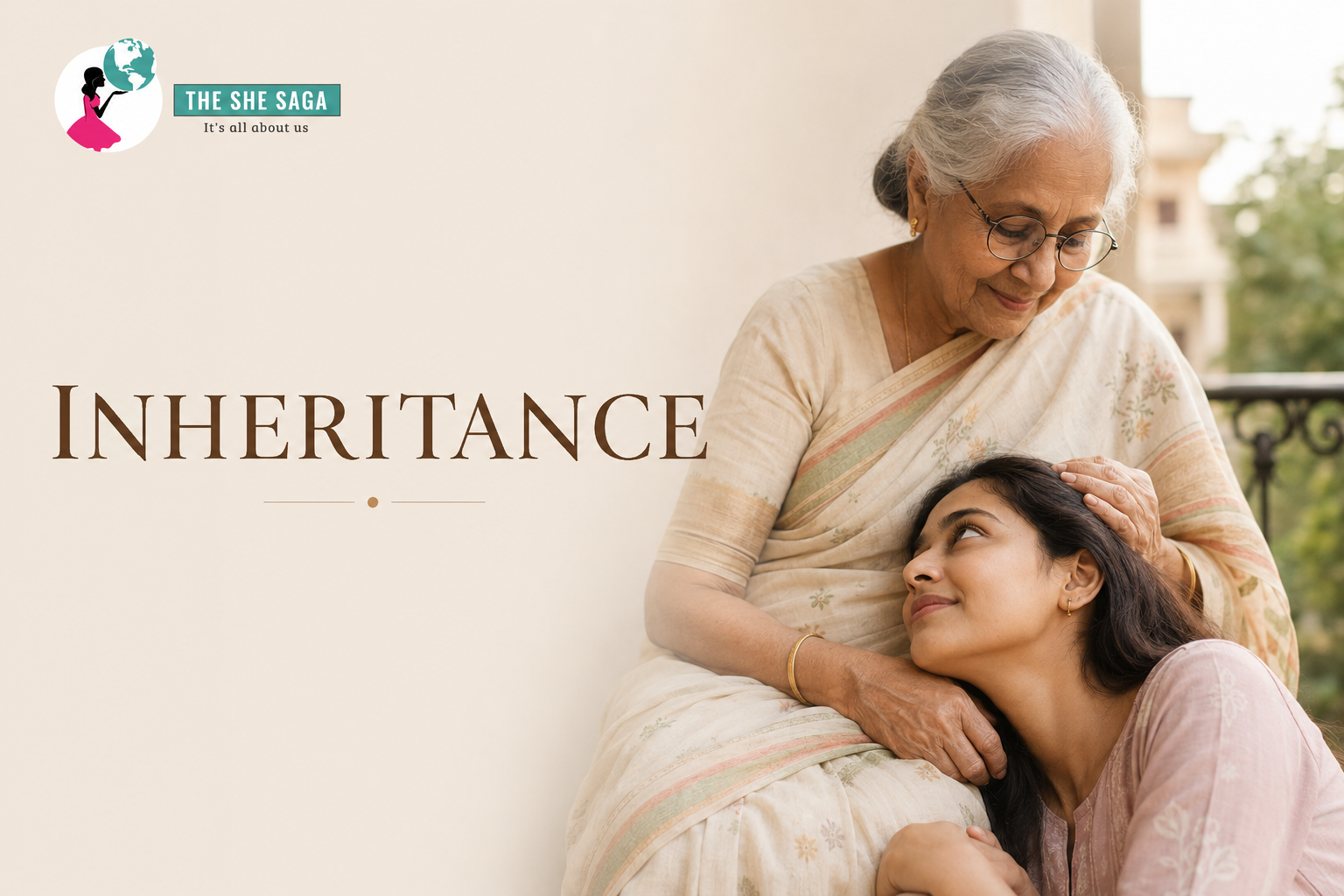

“Dimma amar biye te thakbe na?” (Grandma won’t be at my wedding?) Diya’s voice quivered, almost unable to believe the words that just came out of her mouth. Dimma was her best friend. Or, had been.
Dimma was no typical grandmother. She was a force of nature. But not the stern Lalita Pawar type. She was gracious. Kind. But not a doormat.
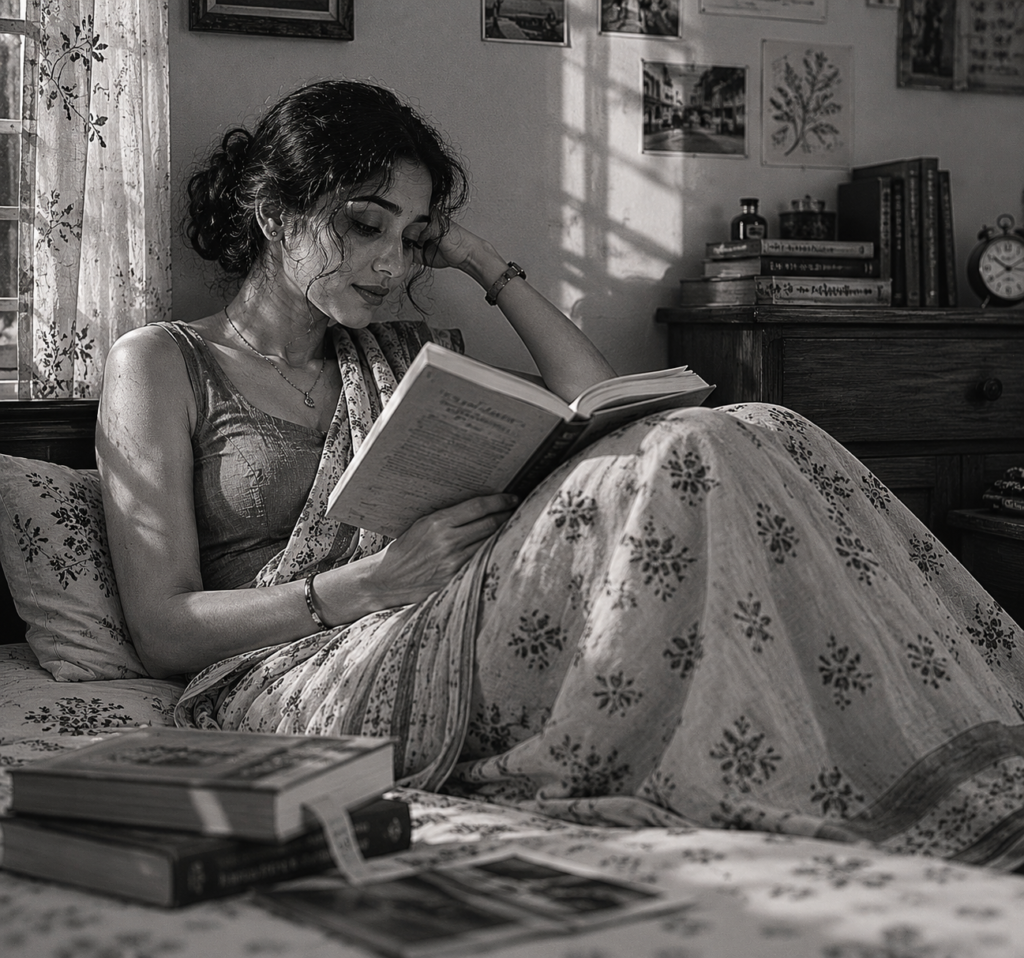
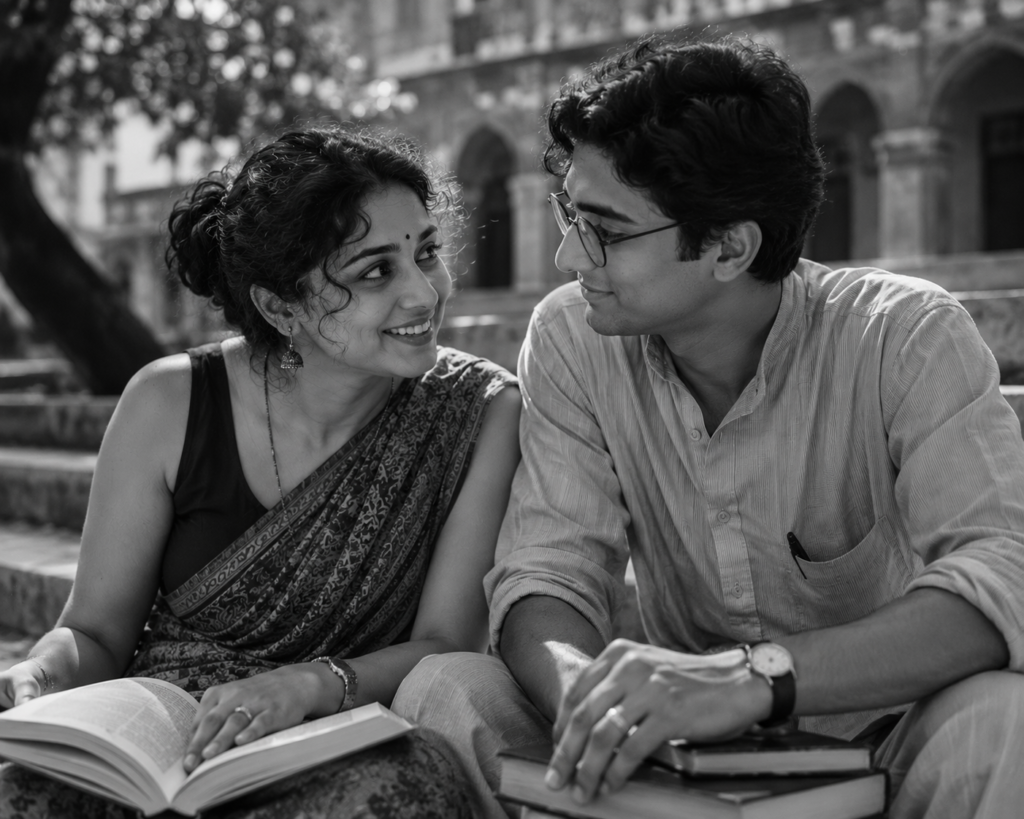
In the 1950s, when women were expected to do little more than marry and pop out one kid after the other, Dimma went to university. She met Dadan there and had quite the love story of her own. When her parents objected to her choice of partner, she went to the extent of threatening them, saying that she would spread a rumour about her being infertile in the para, and no boy’s mother in her right mind would then agree to get her son married to her. Diya was convinced that it wasn’t the threat of having an unmarried daughter at home, but rather the threat of that unmarried daughter being her crazy Dimma that had ensured the wedding arrangements were made quickly. Dimma was married to Dadan before she could pull another stunt that would leave the family shame-faced.
Dimma had a solution-oriented approach to most problems, a quality Diya believed would make her a great corporate employee these days. When her mother-in-law protested against her half-sleeve blouses, Dimma, with her unbeatable debating skills, somehow managed to convince her that increased comfort also meant increased efficiency at work. So, wearing half-sleeved blouses was no longer in fashion, but a tool to increase productivity in housework. If only the economists had approached Dimma for her advice on the Economic Planning of India, Diya thought and smirked.
Growing up, Diya was always found in Dimma and Dadan’s room. Maa had told Baba before getting married that she wouldn’t like living too far from her parents, and Baba had willingly agreed. So, they bought a flat in the same vicinity, and Diya practically hopped from her house to Dimma’s as soon as school was over. While she enjoyed Dadan’s stories, mostly classics, Dimma’s were more of her favourites. Because they were real. About her childhood, her relationship with Dadan, Maa’s childhood, and everything in between.
She once told Diya that in the initial days of her marriage to Dadan, he had argued with his mother about why Dimma shouldn’t be stopped from participating in routine work when she was on her period. Dimma had stopped him midway, leaving him quite disappointed. He believed that his progressive wife wasn’t so progressive after all. Post-dinner, when Dadan confronted her, asking her why she hadn’t put her foot down like she usually does, Dimma had said, “Because it’s one time of the month when nobody taunts me about curling up on my bed and reading my novels. I can always lock the room and read for hours at a stretch.” Dadan was left quite flabbergasted and then had a hearty laugh.
Diya always brought her friends to meet Dimma and Dadan. So, bringing Resham wasn’t any different. Resham had come home for the first time during Durga Puja of 2023. It was the last year of Diya’s college in Pune, so she invited Resham over to her house in Kolkata for the four-day vacation they had managed to get. Dimma always bought Diya a new saree to wear for Ashtamir Anjali, and this time she got one for Resham too- a copper-coloured tussar with small shiuli flowers all over.
“It was all over the Instagram saree pages. I thought supporting a small business would be good, didn’t I?” she had said.
Over the next few years, Resham would come over on many occasions and to family gatherings. At Dadan and Dimma’s 50th anniversary celebration, Dimma had remarked to Diya, “ Resham kintu khub buddhimoti” (Resham is quite intelligent). While other grandmothers might have used the phrase “khub bhalo meye”, Diya knew that coming from her cerebral Dimma, this was a far superior compliment. After all, Dimma had never tried teaching her to be a very ‘bhalo’ meye in the first place.
Which is why she told Dimma first. Before Maa-Baba. After all, whenever the world seemed unreasonable, Dimma was usually the one who made sense of it.
Dimma was darning one of Dadan’s old kurtas while Diya rested her head on her lap.
“Dimma?”
“Hmm?”
“Can I tell you something?”
Dimma looked down at her over her reading glasses.
“When have you ever asked for permission?”
Diya laughed nervously.
“Resham and I are together.”
Dimma continued threading the needle.
“As in?”
“As in… we’re in a relationship.”
The needle stopped. For the first time in Diya’s life, she saw Dimma struggle for words. The silence stretched.
Finally, Dimma cleared her throat.
“You’re very fond of her, I know.”
“No, Dimma.” Diya sat up. “Not like that.”
This time it was Dimma’s heart that sank. She stared at Diya, hoping she had misunderstood. And then, with an almost desperate calmness, asked,
“Did something happen? Did some boy hurt you?”
“No.”
“Then?”
“Then nothing. I love her.”
Dimma had spent her entire life teaching Diya that love should never be complicated. Yet suddenly, it seemed to be.
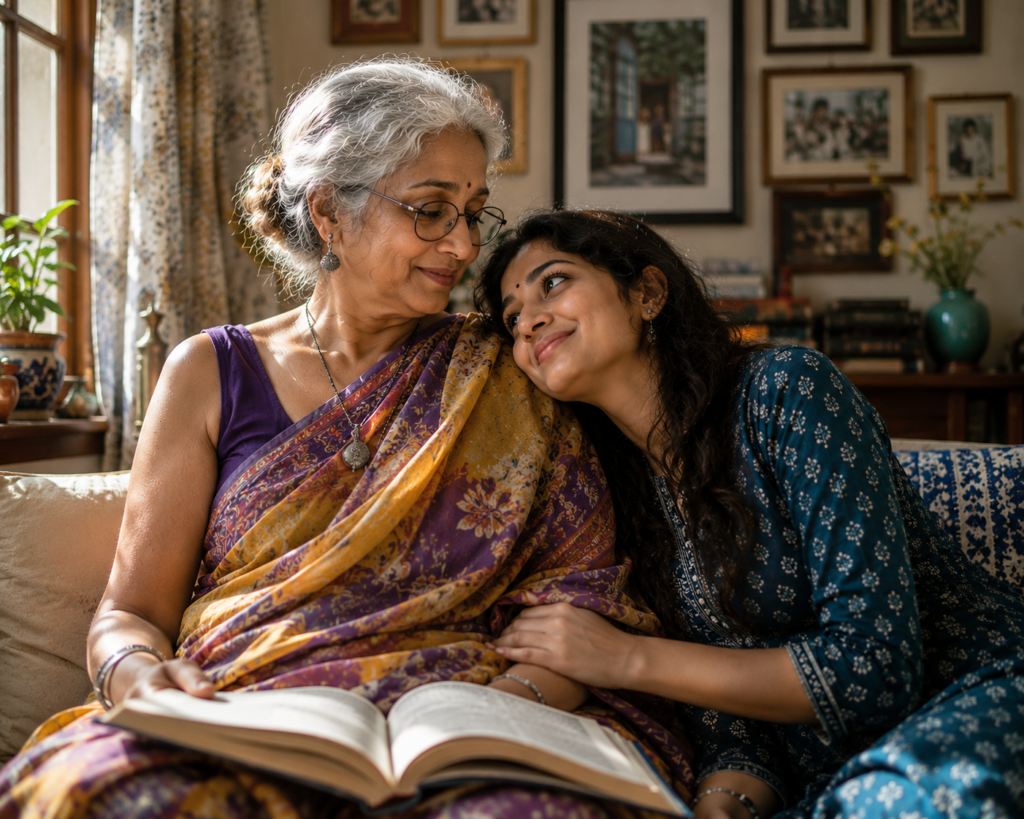
“Diya,” she said carefully, as if handling a fragile object, “you are confused.”
The tears came before Diya could stop them.
Diya couldn’t believe Dimma had refused to be at the wedding. Nobody tried to offer her much comfort. Maa, Baba, and Resham all knew too well that nothing they could say would make Diya feel better about the absence of her most loved person on an important day like that. Dadan’s offer to accompany her while distributing wedding invitations meant he had given his consent. But all Diya could do was give him a tight hug.
Two weeks to the wedding, Rani didi came up to Diya.
“Mashi is calling you”.
Rani Didi worked at both Diya’s and Dimma’s houses. Diya expected the worst. Maybe Dimma was calling her to meet her for the last time. Maybe she was going to break all ties with Diya. Tell her that if she goes ahead and marries Resham, Dimma would no longer be her Dimma.
Dimma was folding the dried sarees kept on the bed. “Eshechish?” (You have come?) she said, as Diya walked in, without turning her head.
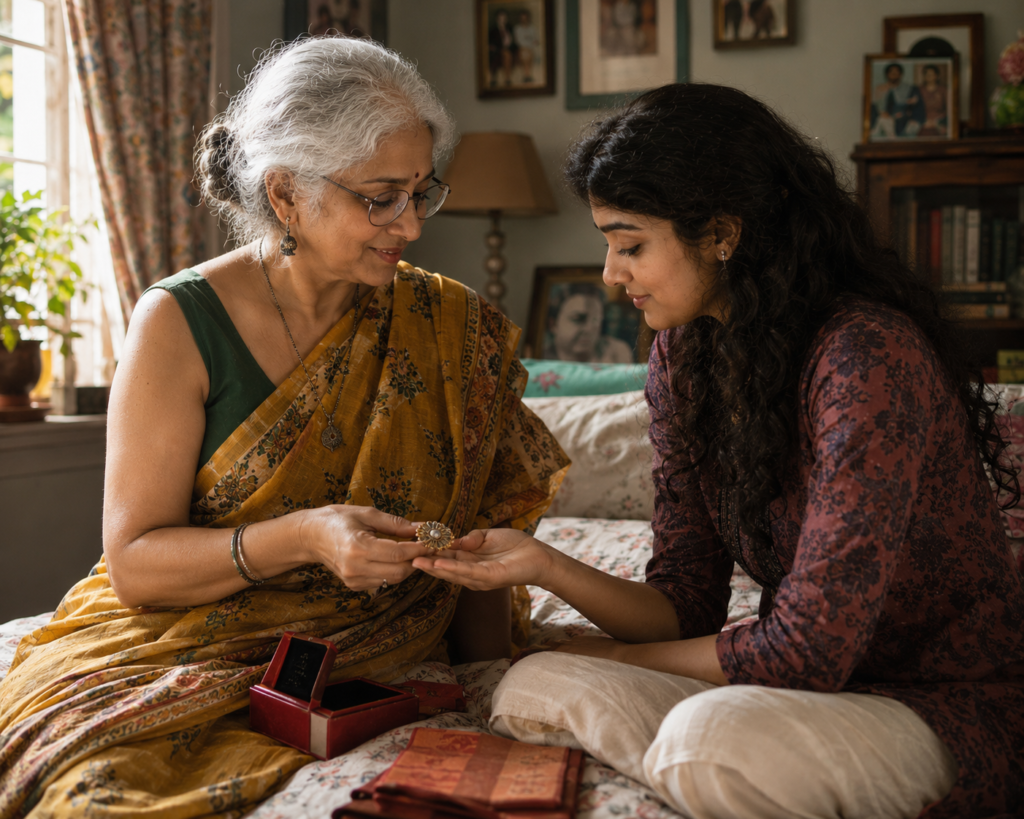
Diya sat on the bed. Dimma stopped what she was doing, walked up to the almirah, and took something out of a small red box. She came up to Diya and said, “Haath ta paat.” (Open your palms.)
When Diya opened her palms, Dimma placed a small brooch on them. “Your Dadan gave this to me on our wedding day. Tui biye te porish.” (Wear it on your wedding day.)
Diya almost jumped and hugged her Dimma tightly. Hugging her back, Dimma sighed.
“I may not understand everything, Diya. But I do understand what it feels like when people think they know what’s best for your life. When I chose your Dadan, everyone thought I was making a mistake. It seems I have become old enough to make the same mistake myself.”
She paused.
“I raised you to think for yourself. It would be rather foolish of me to stop trusting you now. I would rather sit through a wedding I don’t understand than miss the wedding of my favourite granddaughter.”
Diya started sobbing. Dimma wiped her tears away.
Standing up, she said, “Ebar bol toh, biye te kon saree ta porbo?” (Now tell me, which saree I should wear to the wedding?)
By Mohona Chowdhury
Mohona Chowdhury is an Economics student with a passion for exploring contemporary issues through a sociopolitical lens. A lover of diverse musical genres, she is also a student of classical music and finds solace in the works of Tagore, literature, and cinema. She occasionally expresses herself through poetry. Feel free to connect with her at mohonasmail@gmail.com.







Damn!! now I am missing my Dida.
Wow! Such an emotional story woven so beautifully!
Wow. Loved this
Beautifully written
Such a heartwarming tale, which testifies to the truth that it is possible to practice that which one preaches (teaches)!
Loved the nuance of emotions embedded in the story…
Beautifully woven
Wonderful read. Tightly woven, tugs the emotional heartstrings!