





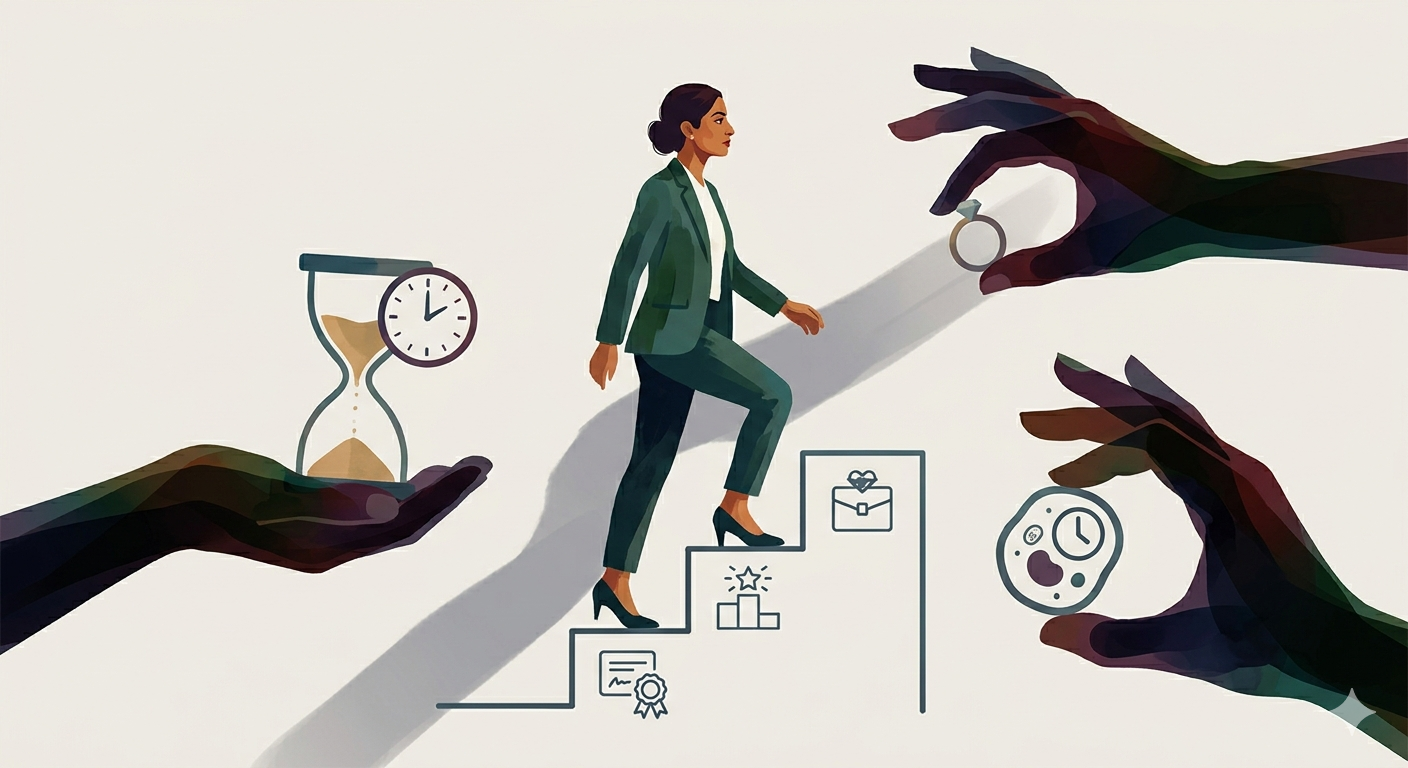

Sometimes inequality doesn’t arrive as a rule.
Sometimes it arrives as a very polite question.
I realised this during a conversation that has stayed with me ever since.
When I resigned from my previous role, I had the expected discussion with my boss. We talked about the usual things. Why I was leaving, what the new opportunity looked like, and whether there was anything the organisation could do to retain me.
It was a thoughtful, professional conversation.
And just as the meeting was ending, he asked one last question.
He said,
“Have you discussed this with your husband? Is he okay with the move?”

For a moment, I didn’t know how to respond.
Not because the question was hostile. It wasn’t. In fact, it sounded almost practical… even caring. But as I walked out of that room, one thought stayed with me.
Would a man ever be asked that question when he resigns? Would anyone pause a male employee and say, “Have you checked with your wife before making this career decision?”
Probably not.
Because while a woman’s career decision is treated like a family referendum, a man’s is simply called ambition. And that moment made me reflect on something that quietly shapes many women’s lives and careers.
Not discrimination in the loud, obvious sense. But something much quieter.
Assumptions.
The small, well-meaning assumptions that often shape a woman’s choices long before she has the chance to make them herself.
And once you begin noticing them, you start seeing them everywhere.
The Career vs the Timeline
A young female colleague in my team resigned recently. Her decision surprised several senior leaders in the department. Why?
Because her current job was in her hometown. She lived with her parents. It was comfortable and stable. But the new job she accepted offered a substantial salary hike and better growth. The only catch was that she would have to relocate to another city.
A fairly normal career decision.
Yet one of the reactions I heard was this:
“She is already approaching 26… how will she start a family if she keeps job hopping like this?”
Twenty-six.
Apparently that is the age when a woman’s career decisions must start aligning with her family planning schedule.
And it struck me then:
When a man relocates for growth, we call it ambition. When a woman does the same, we start calculating her biological clock.
Predicting Her Future
Another moment happened during a team meeting on role redistribution. The team leaders were discussing manpower planning with the department head. Even the language gives us away sometimes. Manpower. Manpower planning. The “man” is everywhere.
During the discussion, the only female team lead suggested creating a backup for a junior woman employee who handled an important portfolio but had no backup.
This employee had been with the department for more than four years. Earlier that year, she had gotten married, and the team had faced some challenges when she was on leave for the wedding. When the suggestion was made, her reporting authority responded very casually.
He said, “Well, we will always have a warning of five to six months before she goes on maternity leave.”
The room laughed. Then someone suggested that she might also consider moving to another job.
And a senior colleague immediately said, “She just got married. Her husband is in the same town. And they are not too young. Why will she look for a job now when the time is ripe for a baby?”
At that moment, I remember thinking- Corporate offices sometimes have their own version of aunties. Except here, the gossip is replaced with career predictions. Because sometimes,
A woman’s future is planned before she has even planned it herself.
The Promotion That Disappeared
And then there are the assumptions that quietly affect growth. The appraisal season had arrived, and promotion discussions were underway. Competition was tough.
During one such discussion, someone said:
“Let us not put her on the promotion list this year. She just had a baby last year. I know she is still managing her responsibilities well, but she may not be ready for more burden.”
The interesting part? The woman in question had never said she wasn’t ready. She had never asked for fewer responsibilities. She wasn’t even part of the conversation where this decision was being made.

Her readiness had simply been assumed on her behalf.
Capability was never the question. Readiness was simply decided for her.
The Pattern
Over time, I realised something. The barriers many women face today rarely arrive as dramatic “no’s.” Instead, they appear as quiet adjustments. Opportunities gently redirected. Expectations subtly lowered. Decisions already made.
Sometimes in rooms where the woman concerned is not even present.
And perhaps that is the most complicated part.
These assumptions are rarely malicious.They are often wrapped in concern, protection, practicality. But protection without asking is still a decision made on someone else’s behalf.
A Small but Powerful Shift
The encouraging thing is that change does not always require grand gestures. Sometimes it begins with something very simple. Replacing assumption with a question.
Instead of deciding what someone might prefer, instead of predicting what stage of life they must be, or instead of planning their future for them.
Just ask: “What would you like to do?” Because that question restores something incredibly powerful.
Choice.
Women don’t need careers to be simplified for them. They don’t need ambition to be softened for them. They don’t need protection from the harshness. The need is much simpler.
Just the space to choose their own path.And perhaps real progress begins the moment we pause before an assumption
Because sometimes inequality doesn’t shout. It simply speaks in very polite sentences.
–Sreeparna Sen



3 Responses
This is the story most of us have encountered in our lives and in our workplaces. Things are changing but the changes are few and slow. Thanks for bringing up this impactful topic!
I almost burst out laughing when I read the line – ” Corporate offices sometimes have their own version of aunties.” I don’t belong to the Corporate Sector and this is quite a revelation . It is sad that even in this day and age people don’t realise that women have the right to choose for themselves.
This is the bitter reality. Brilliantly put