





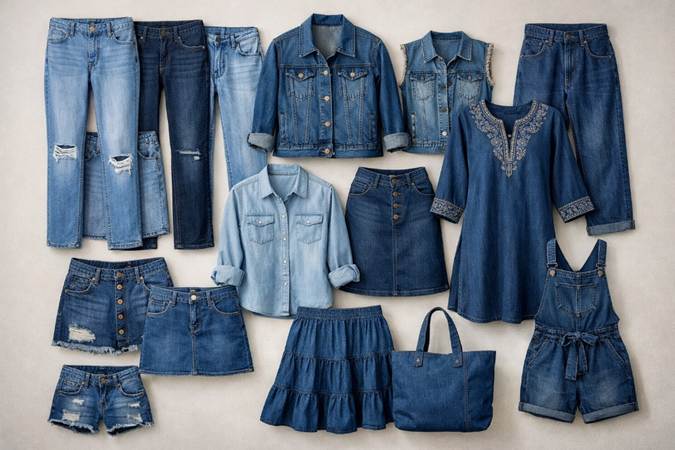

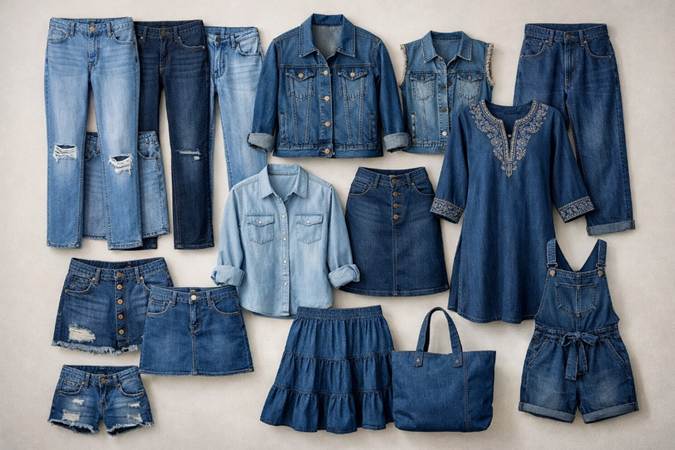
Today, we are going to talk about denim – an ordinary, ubiquitous presence in our wardrobes that we take for granted. It is worn to work, to college, to travel, sometimes even to formal gatherings where they would once have been unthinkable. Because denim is so common, it rarely feels significant. It is simply part of everyday life.
That ordinariness is recent. In the late nineteenth century, denim was associated with physical labour. It was valued for its strength and durability, not for its aesthetics. The people who wore it were miners, factory workers, and farmers – those whose social position was tied to manual work. Over the decades, however, the meaning of the fabric shifted. It appeared in cinema, became linked with youth culture, and gradually entered mainstream fashion. Today, denim crosses class, profession, and geography with surprising ease.
The story of denim is therefore not just about clothing. It is about how social meanings change -how an object once tied to labour can come to represent rebellion, and later, everyday normalcy.
Workwear and the World of Labour
The origins of denim lay in durability rather than fashion. In the 19th century, denim emerged as a fabric valued for its strength, practicality, and resistance to wear and tear, worn primarily by miners, railroad workers, farmers, and factory labourers whose work required sturdy clothing.
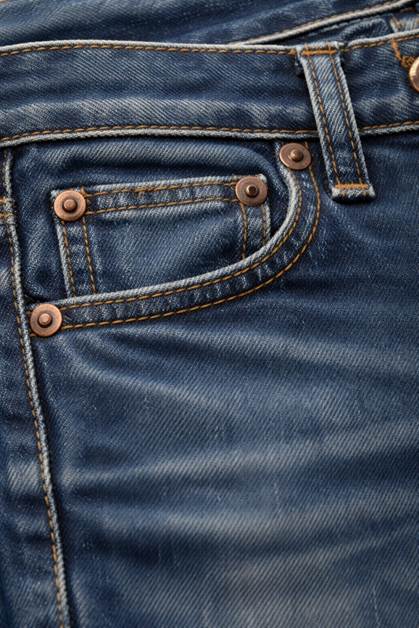
Levi Strauss denim trousers gained prominence during the California Gold Rush when durable work pants were needed for miners. In riveted construction, copper rivets reinforced stress points in work trousers, making them suitable for heavy physical labour.
Jeans reinforced with metal rivets at stress points to make them stronger for manual labour.
As Daniel Miller and Sophie Woodward (denim researchers, authors of Blue Jeans: The Art of the Ordinary) say: “Jeans began life as clothing for workers- practical garments designed to endure the physical demands of manual labour.”
This means that denim came to be associated with the working class. Denim became a visual marker of manual labour and blue-collar identity. The reason was its functional design – practical features like strong seams, heavy cotton twill fabric and multiple pockets for tools. Denim also became the symbol of industrial modernity – denim clothing reflected the expanding world of factories, railroads, and mechanized labour in the late nineteenth century. This sprang out of necessity rather than style. Workers wore denim not as a fashion choice but as a practical solution to demanding work conditions.
Rebellion, Youth Culture, and the Politics of Cool
Post World War II, denim began to move away from the world of labour and entered youth culture. Youngsters adopted jeans as a way of distinguishing themselves from older generations. Denim then symbolized non-conformity and resistance to authority.
The transformation of the image of jeans was helped by popular cinema, with actors like James Dean and Marlon Brando wearing denim in films, shaping its rebellious appeal. Films such as Rebel Without a Cause (1955) presented jeans as a symbol of youthful defiance and independence.
By the 1950s, jeans had become strongly linked with teenage identity and rebellion. Some American schools banned denim, as it was seen as disruptive and anti-establishment. During the 1960s and 1970s, denim became closely associated with counterculture movements, including student protests and the hippie movement. Jeans symbolized freedom, individuality, and rejection of traditional social norms. Over time, denim evolved into a cultural symbol of “cool”, associated with informality and relaxed attitudes.
The meaning of denim continued to expand beyond youth culture into political expression.
One notable example is International Denim Day, observed every year on the last Wednesday of April. The event began after an Italian court overturned a rape conviction, arguing that the victim’s tight jeans implied consent. The ruling triggered widespread protest; women in the Italian Parliament wore jeans to work in solidarity with the victim.
Today, Denim Day is observed globally as a protest against victim-blaming and sexual violence, showing how denim can function as a symbol of resistance and social activism.
Globalization and the Democratization of Style
It was imperative that a garment so versatile could not be locked within its national boundaries. In the late twentieth century, denim moved beyond its American origins and became a global fashion staple. This was assisted by the expansion of international trade and global fashion industries across continents.
Jeans became a staple for people of different classes, professions, and age groups. Once associated with labour and rebellion, denim gradually became mainstream everyday clothing. Its simplicity and durability made it adaptable to different climates, cultures, and lifestyles. Denim fashion worldwide got an impetus from the global media, cinema, and popular culture.
Denim clothing began appearing in multiple forms—jeans, jackets, skirts, shirts, and dresses. In many countries, denim was incorporated into local styles and cultural contexts. For example, denim Kurtis in India. The garment became a symbol of informality and modern lifestyle across societies. Denim blurred traditional boundaries of class and status, as people from diverse social backgrounds wore the same fabric.
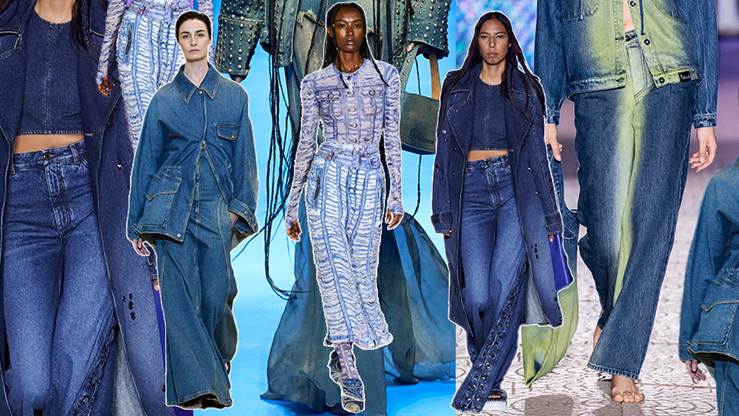
It was no wonder that designer brands also entered the denim market, introducing premium and luxury denim, like Diesel. At the same time, affordable mass-produced jeans ensured that denim remained accessible to the wider public. Today denim functions as a global uniform, worn in workplaces, educational institutions, and casual social spaces. This widespread adoption illustrates how a garment once tied to labour and rebellion evolved into a democratic form of dress shared across cultures.
Conclusion
Denim’s story shows how the meaning of clothing can change with society. What began as sturdy workwear for miners and labourers gradually moved into youth culture, later becoming part of everyday fashion worldwide. Over time, the same fabric came to be worn by people from very different social backgrounds. Today denim appears in workplaces, classrooms, streets, and runways alike. Its journey illustrates how a simple garment can travel across class, culture, and geography. In doing so, denim quietly reflects changing ideas about work, identity, and modern life.

By Richa Verma
Richa is an online English teacher, independent blogger, voracious reader, movie buff who is smitten with wanderlust, and a homemaker. She can be contacted through her email address richavermamh@gmail.com




7 Responses
Interesting article. Good work. Its popularity remained all time high though the environmentalist these days oppose using it on the ground that making jeans cloth waste lots of water.
Interesting article, jeans are all time and all class favourite
Thanks Preeti. 😊
The evolution of Jeans has been traced so insightfully! Nice one…
Thanks Promita 🤗 . Always look forward to your kind comments.
I remember my cousins wanting to wear denims and being labelled as rebels. Because tailored pants were the standard. Beautifully penned
Thanks Bahnika. It’s true that denim is considered to be synonymous with rebellion.