





Who decided that a woman’s choices are a commentary on men? Who convinced you that her lipstick is a billboard and her outfit is payment for attention? At what point did women stop being human beings with inner lives and become showroom models meant to impress someone else?
The claim that women dress or wear makeup for men is one of the most mindless and self-centered ideas society exhaustively repeats.
Let’s flip the question for one second and see how ridiculous it sounds. Do you think men who work out, buy tailored suits, style their hair, or spend money on expensive shoes are doing it only for women? Or could it be for their careers, their confidence, their status among friends, or simply because they like how it makes them feel? When a man spends two hours at the gym every day, is that purely a mating ritual, or could it be for mental health, discipline, competition, or personal goals? By this logic, a man dressing well for a job interview must be trying to impress the interviewer romantically rather than presenting himself as competent and professional. Does that actually make sense, or does it just expose how flimsy the argument is?
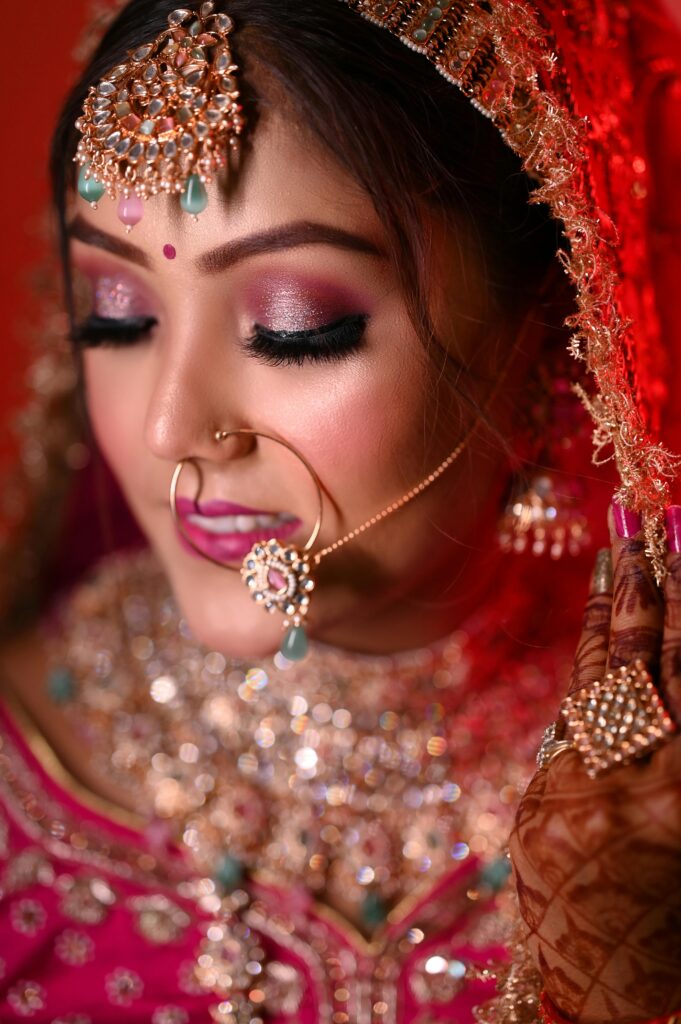
Now apply that same logic to women. When a woman puts on makeup alone in her apartment on a quiet Saturday just to try a new look, what man is that for exactly? The neighbor? The delivery driver who never shows up? Or the mirror? When a woman experiments with eyeshadow because she likes the color and it matches her mood, are we really expected to believe this is a tactical campaign aimed at the entire male population?
That explanation isn’t just wrong; it’s absurd. Why is self-expression respectable in men but suspicious in women?
If appearance were only about attracting men, most of what women do would make no sense. Women wear makeup to women-only events, girls’ nights, bridal showers, baby showers, office meetings filled entirely with women, and family gatherings where no men are present. Women also wear makeup to places where male attention is completely meaningless, such as the gynecologist, the dentist, hospitals, and routine appointments. Women experiment with makeup alone at home, trying a new glitter pigment under yellow bulbs with no one else around. Older women continue to get their hair done simply to feel put together, and young girls play with makeup out of curiosity and joy, not performance. None of this corresponds to the compulsion to seek male approval.
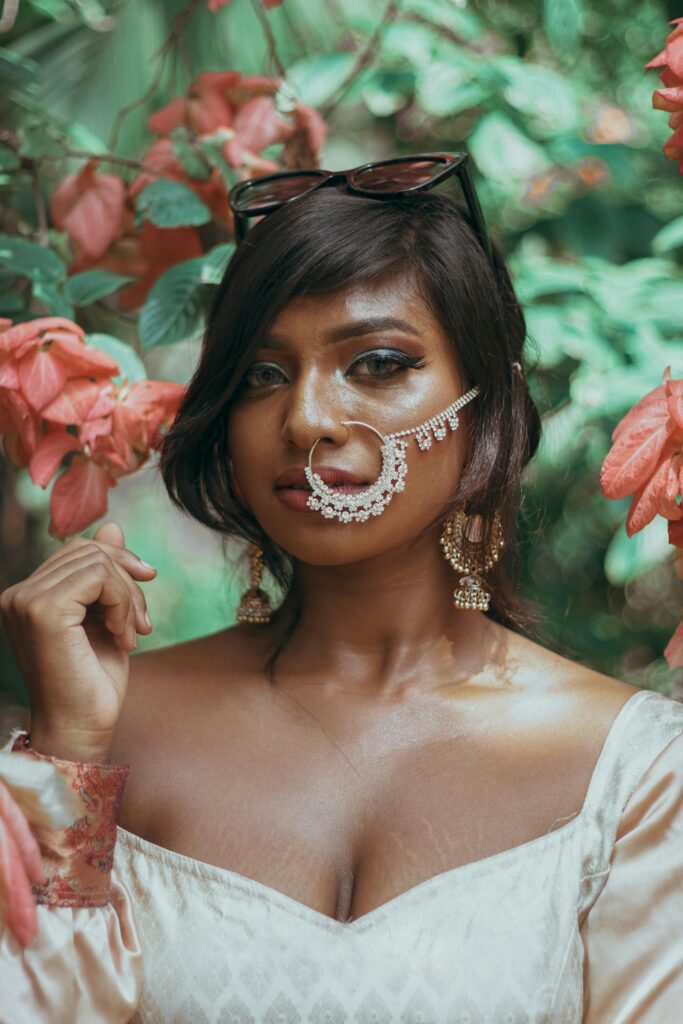
If women truly dressed for men, then why are we never dressed “right”? No matter what we wear, we are criticised. If we wear makeup, we are called fake. If we don’t, we are told we look tired, sick, or unprofessional. If our clothes show skin, we are judged as thirsty and attention-seekers. If we cover up, we are labelled brainwashed, backward, or oppressed. So…which version is for men exactly? Or is the truth that this was never about pleasing men at all, but about keeping women doubtful, insecure, and compliant?
And even if the entire purpose were attraction, then the multi-billion-dollar beauty industry would simply be one giant, inefficient dating app. Does that pass a basic logic test, or does it collapse into a patronizing assumption that denies women their own choices?
Studies directly contradict this myth. Psychologists call it “enclothed cognition.” In an oft-quoted experiment, participants were adorned with a white coat. Believe it or not, calling a lab coat a “doctor’s coat” made people pay better attention than calling it a “painter’s coat.” Same coat, different mindset. Clothing-activated identity. Yes! The clothing changed how people felt and how they performed. So, when a woman puts on a sharp blazer, power heels, or even a bold lipstick, she isn’t signalling availability. She’s stepping into a confident role, a mindset, a sense of authority. That shift happens internally, with or without witnesses.
Other studies show that appearance directly affects mood and mental performance. Research published in the International Journal of Cosmetic Science demonstrated that women who applied makeup experienced higher self-esteem, better mood, and improved cognitive performance afterwards. This means makeup is not decoration for others…it’s self-regulation. It’s a mental warm-up. Calling that “doing it for men” ignores actual science and replaces it with ego and assumption.
Even color psychology proves the point. Studies in sports show that athletes wearing red often perform better because red is subconsciously linked to dominance and confidence. So when a woman wears red lipstick or a red dress, is it really a passive signal begging for attention, or is it a power move she’s making for herself before a big meeting, presentation, or event?
Strength doesn’t need witnesses for its validity.
The pandemic clarified this. During lockdowns, women continued to wear makeup and dress professionally for Zoom calls where only their upper body was visible, sometimes where only their own tiny square was noticeable. Who was that for? Their cat? Their couch? Or was it about maintaining identity, structure, and professionalism in a world where everything felt unstable? If attraction were the goal, none of that would make sense.
But self-motivation and mental discipline explain it perfectly.
And then there’s the elegant paradox above all: comfort. The rise of athleisure…leggings, sneakers, hoodies proves that when women choose freely, they often prioritise comfort and functionality over looking “pleasing.” Grocery runs, school pickups, working from home – no audience, no performance. If women dressed only for men, this would not be the dominant trend. Evidence just flipped the lie’s entire script.
The belief that women dress for men does not come from observation or rational conclusion; it comes from a swollen ego, entitlement, and complete ignorance. It assumes that women’s actions must be oriented outward rather than inward. It turns confidence into arrogance and self-care into vanity. It says more about how women are situated in the observer’s mind than about women’s own motivations.
Let’s be clear: makeup is rarely for men. It’s reclamation. It’s self-preservation. It’s a moment of therapy or control. Often, it’s just a woman appreciating her own face. The desperate need to believe it’s all a flattery for you speaks to a fragile ego and cognitive narrowness, not reality. She does it for herself. If that truth rankles, it’s your own entitlement showing.
Yumna Zahid Ali
Karachi, Pakistan




6 Responses
WHAT A WONDERFUL AND EYE OPENING ARTICLE….MS YUMNA IS A GENIUS
The argument is very well-rounded and supported by addressing it from all sides and indeed offers a persuasive (and in this case, the most authentic) perspective! Loved reading it…
A very thought provoking article indeed