





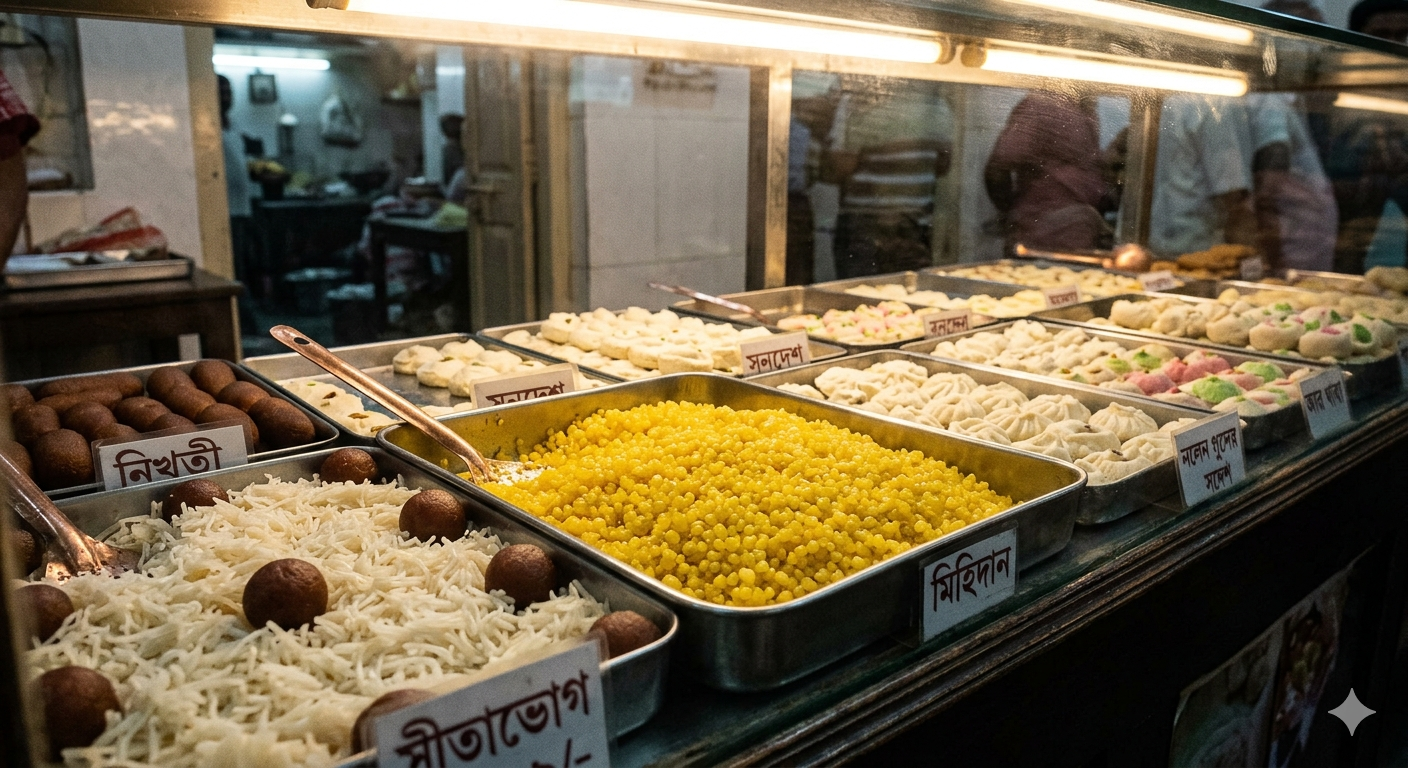

The bond between Bengalis and sweets is almost eternal. In Bengali households, sweets or mishti often marks both beginnings and culminations. The world revolves around them. And roshogolla happens to be the most popular and famous as well. However, there’s more to roshogolla and mishti doi. Let’s take a look at some of the other famous sweets of Bengal other than roshogolla and mishti doi.
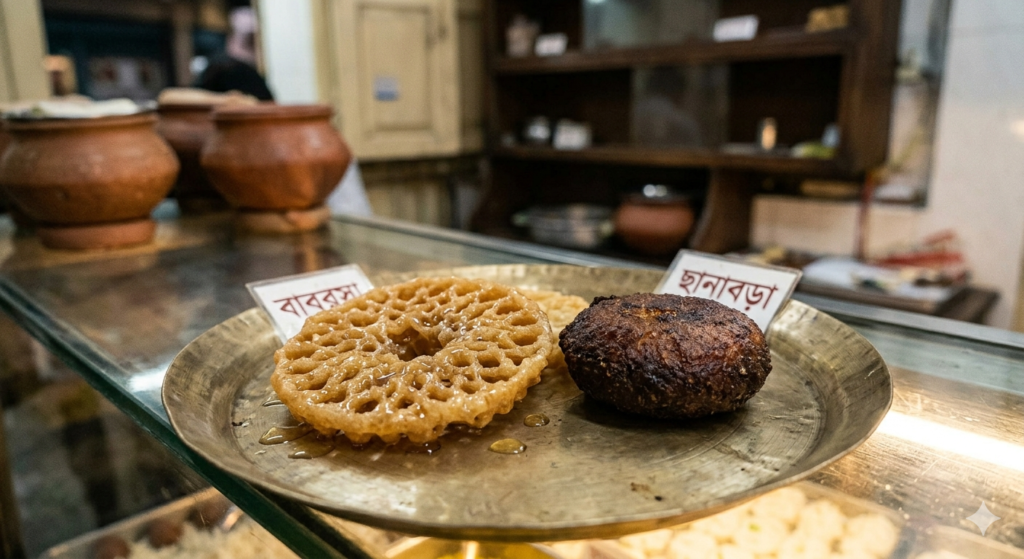
- Babarsa
Babarsa is one of the most underrated sweets of Bengal. It is often said to be the counterpart of Rajasthan’s Ghewar. The name might remind us of Babur the Mughal Emperor, but unfortunately it has got nothing to do with him. Babarsa is unique to Khirpai, a small town in the Paschim Medinipur district of Bengal.
In Bengal’s history, this sweet is really significant. Babarsa reflects Bengal’s sweets’ rich cultural past with its unique cooking method. Babarsa is known for its taste and intriguing history. Though it is still mostly unknown outside of Bengal, this crispy, ghee-fried dish, drizzled with honey or syrup, has become a staple in Bengali cuisine.
- Sada Bonde (White Boondi)
Originating in Kamarpukur, the sada bonde or white boondi dates back almost to the early 19th century. This simple white boondi has now earned a GI (Geographical Indication) tag. Kamarpukur is a place made famous as the birthplace of Sri Ramakrishna Paramhansa. Local legends say that Ramakrishna himself was fond of this sweet.
- Sitabhog
Hailing from Burdwan, the Sithabhog is yet another speciality that is to die for. Those sweet, sugary white strands with the perfectly geometrical round brown balls dashed into it — it is one of the most exclusive sweets made in Colonial Bengal. Traditionally, Sitabhog was made from Sitashol rice (probably from which its name was derived), but nowadays it has been replaced by Gobindobhog rice which is easier to procure. This one too has earned a GI tag.
- Nikhuti
The favourite sweet of many Bengalis originated in Shantipur , Nadia . This sweet is made with cottage cheese , flour , cardamom and fried in clarified butter .During initial days pepper was added to give it a unique flavour . The original ‘ Nikuti ‘ is oblong shaped and that traditional shape is still retained in many sweetmeat shops. Now in many shops one can find round shaped Nikhuti. Jagabandhu Das, a noted sweet maker from Krishnanagar associated with the historic Adhar Chandra Das & Sons shop (est. 1902), is credited with innovating various sweets, including popularizing modern versions of Nikhuti.
- Mihidana
Mihidana, a renowned sweet from Burdwan, West Bengal, carries a rich legacy that dates back over a century. This sweet treat is celebrated not just in India but also globally for its unique texture and taste. Known as the micro-cousin of the traditional Boondi, Mihidana derives its name from the Bengali words “Mihi,” meaning fine, and “Dana,” meaning grain. These fine, bright yellow grains are soaked in sugar syrup. These have captured the hearts of many since their creation. On March 31, 2017, Mihidana, along with Sitabhog, was awarded the prestigious Geographical Indication (GI) tag, cementing its connection to the region and its heritage.
- Chhanabora
If you are a Bengali, you must have listened to “Chokh Chhanabora“, which means gasp in astonishment. Chhanabora, a unique sweet from Murshidabad, stands out in this illustrious lineage. Originating from the historic streets of Murshidabad, Chhanabora is a delicacy that captivates both locals and visitors. The sweet’s distinctive taste comes from its main ingredient, chhena (cottage cheese). the preparation method is also distinct from other processes. Chhanabora involves deep frying and soaking in sugar syrup. This combination results in a treat that is hard on the outside but soft and delicious on the inside.
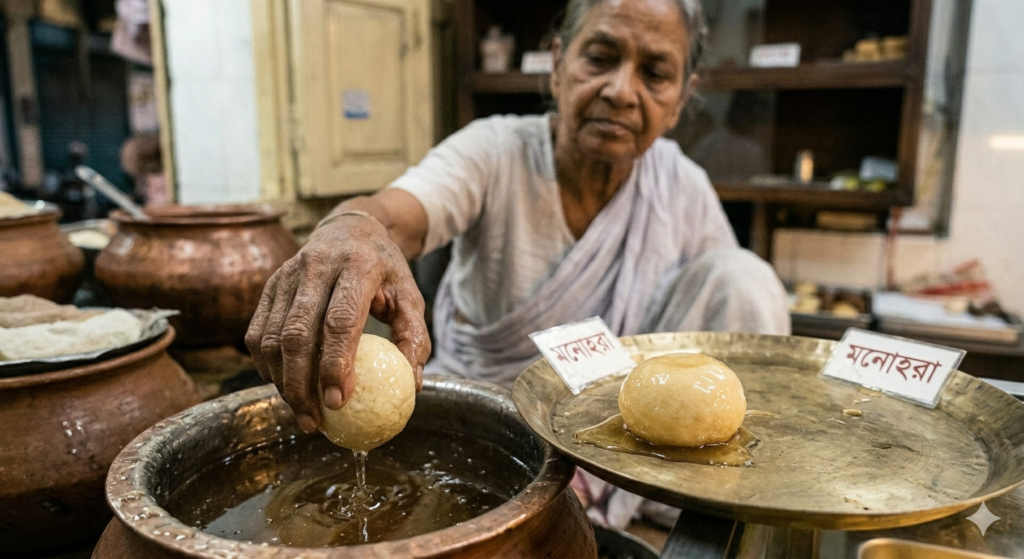
- Monohara
Monohora, a one-of-a-kind sweet that comes from the village of Janai in the Hooghly district of West Bengal. A confection that has enchanted sugar lovers for generations, Monohora means “one who steals the heart” in its native language. The sweet is believed to have been invented by a Moira (confectioner) from the Moira Para (neighbourhood of the Moiras) in Janai. According to legend, a zamindar (village head) tasked a Moira to prepare a special sweetmeat. When the zamindar was delayed in returning, the Moira worried that the Sandesh would spoil. To preserve it, he coated the Sandesh in thick sugar syrup. Upon tasting it, the zamindar declared that the sweet had stolen his heart, hence naming it Monohora.
Apart from the above-mentioned ones some other include nolen gurer shondesh, abar khabo and jolbhora. So, if you think Bengal’s sweet palette is all about roshogolla and mishti doi, its time to take rejig.

By Sampurna Majumdar
Sampurna Majumder is a communications professional born and raised in Kolkata. Fascinated by creativity from a young age, she has a deep love for music, literature, and world cinema. An avid reader and traveler, she holds a Master’s degree in Literature from the University of Delhi.


6 Responses
As usual, you are an expert at food history!
Thanks Richa
The diabetic me is now craving for all sweets you have mentioned
Hahaha ….. Please have them 😋
Loved to read the piece. Very interesting, informative and tempting
Thanks a lot Kabita