






She was to be wedded in two days. It was a grand affair. After all, she was already thirteen. Much past the marriageable age. Her Baba and Ma had been constantly taunted by their family.
“A man’s dharma is to marry off his daughter as soon as possible. Here she is growing roots!”
“Do you think Heaven will open its doors for Shaunak moshai?”
Followed by tittering.
***
Her grandmother called the bride-to-be, in the evening as she was getting ready to cook a meal for the widows, like her, in the family. The widows were a burden the family carried. After all, in Bengali families, it was very clear that a widow was not to participate in any auspicious occasions. Be it a puja or a celebration. In fact, if even their shadow was cast on anyone or any place during such an event, it would bring the wrath of the Gods.
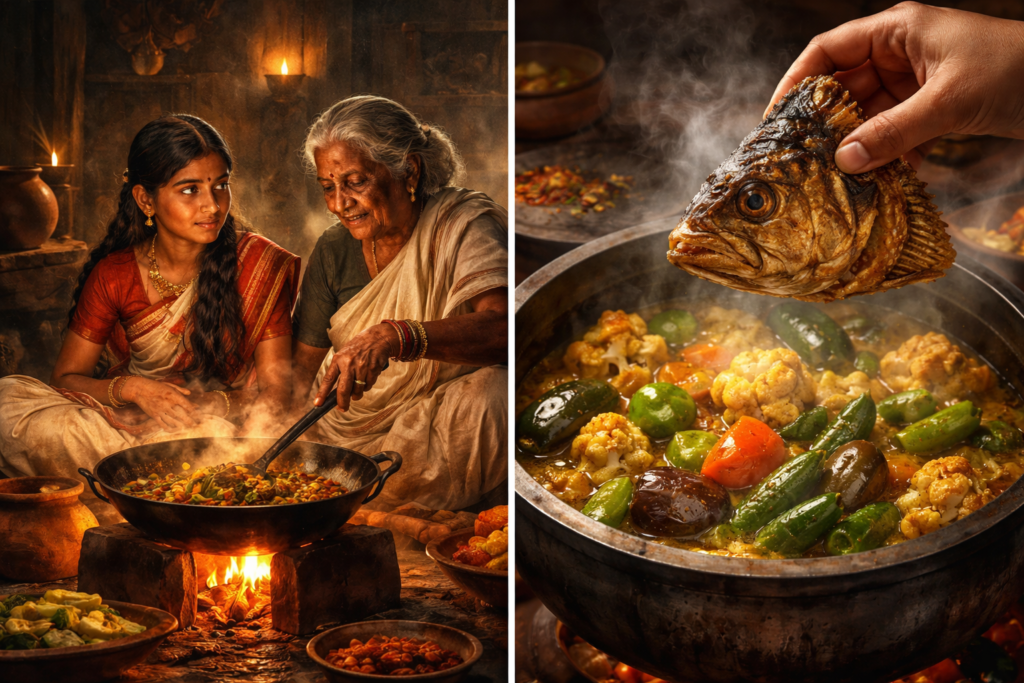
Grandmother did not bother to even peel the potatoes. She chopped them into large chunks, along with brinjals, pumpkin, cauliflower (stems and all), sheem, jhingey, and sweet potatoes.
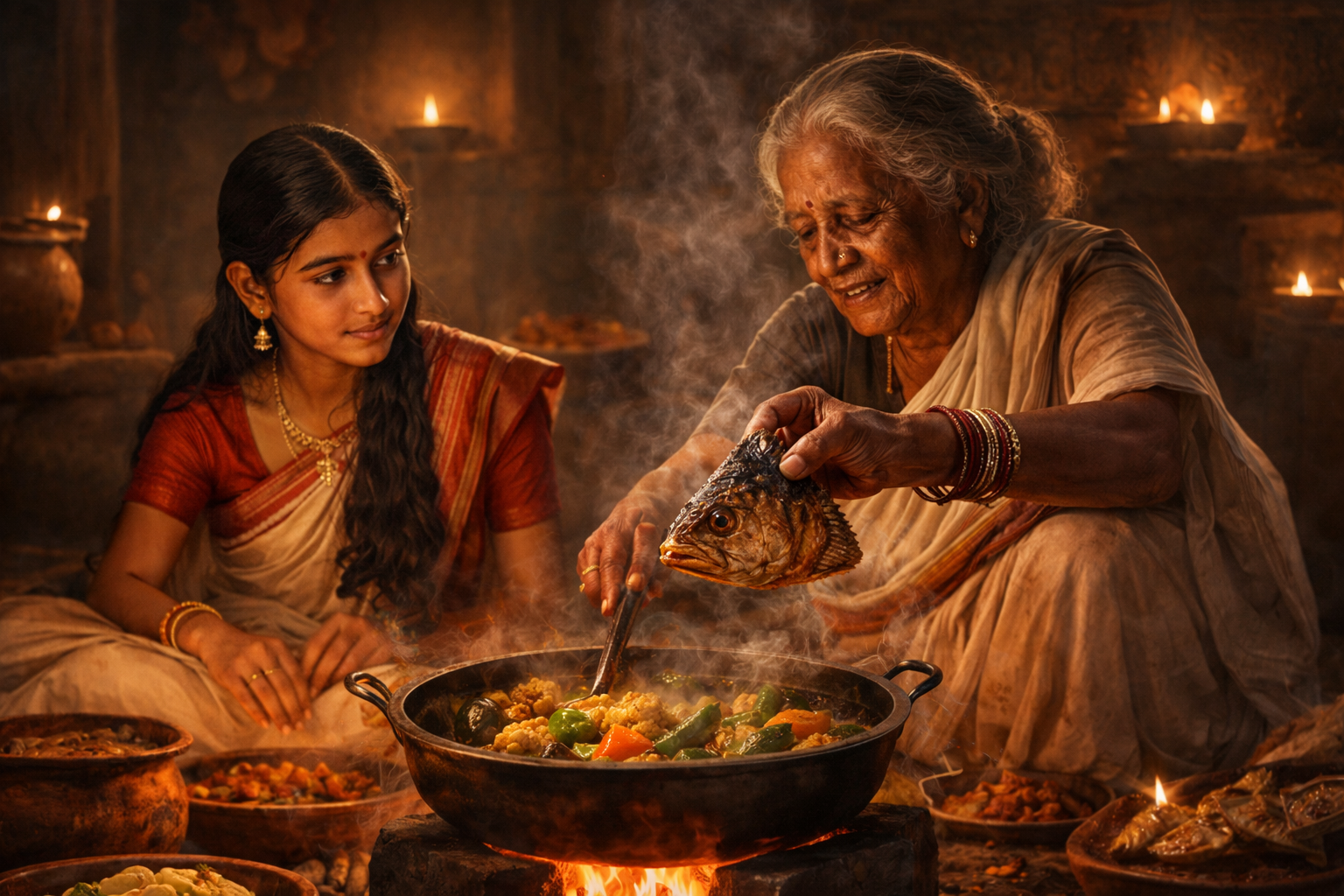
“Sit down, girl. I thought of teaching you something, for survival, now that you are finally going to get married.” Pakhi sat down close to her dearest granny.
“Remember, love permeates the air long before your husband can even see you. Like a faint perfume.”
Pakhi was taken completely unawares.
She watched her grandmother place an iron korai, on the hearth. Some golden yellow mustard oil was poured in. As it heated, a mix of five types of spices was added, making an aromatic sizzle; the vegetables were tossed in.
“ Always groom yourself well and use a pleasant fragrance that can be identified from far.”
“Like your Chandan?” Granny just guffawed.
She picked up her iron khunti and briskly stirred the vegetables.
She popped in some turmeric, green chillies, well-ground ginger and cumin paste. The flavours were now tantalising.
She covered the dish with a big plate, letting the vegetables cook.
Turning her attention, she took in the girl’s innocence and youth; her dark deep eyes, sharp nose and full mouth.
“Do you know some nice songs? Some dance, where you can sway your waist and hips, beckon with your eyes?”
“What are you saying thakuma?” said the embarrassed girl.
“Its important to hold your man’s attention.”
“Did your Granny teach you… this?”
“I wish she had,”said the old lady with a sigh. “But I have realised there are twenty-five essential steps to keep your man.” She paused before going on.
“When your husband holds your hand, don’t pull it back; let it stay. It’s the connection between your hearts,” and she held the soft hands in her calloused ones.
“Then, he will hold you tight, like a child holds on to his sandesh. Let him! Let your heart be calm and not race like an unbridled horse.”
By now, the aroma of all the vegetables, slowly cooked to perfection, wafted through the kitchen.
“Mmmmm that smells delicious… what is it Thakuma? You have put in a million ingredients. Can I have some?”
“What? Why should you be eating plain vegetarian stuff. Lets get some fish for you… And there are only twenty five ingredients. How you exaggerate!”
“Aye Bhola, bring some fried fish and a fish head for my Pakhi. The cook would have kept them ready for the fish curry. Don’t ask, just get it.”
“And what if Mashima asks me… or the Cook punches me?”
“Tell them it is my order!” huffed the septuagenarian.
Nodding, Bhola went off whistling some tune, under his breath.
“Pakhi, if you can have the cream, never settle for anything less. If you can have fish, why should you have grass and its like? Please remember and apply it to all aspects of life”
“Twenty-five steps for grooming, twenty-five ingredients in your recipe, what’s so special about twenty-five?”
“There are twenty-five tatvas in Samkhya philosophy. So,”
“Thakuma, really?”
“Just joking!” And they both laughed.
“ What will happen after my wedding? I don’t want to go to my in-laws’ house. Can’t I stay here?” she asked innocently.
“It’s the law of our society. The bride goes to the groom’s house, takes care of it and becomes its heart. You will do a wonderful job, I know. Just keep your groom in your hand.”
“How? Should I hold his hand and not let go?” she asked, her eyes growing big with such preposterous plans.
“Metaphorically, yes! Be generous in giving, be it your love, time, attention, heart or body. Leave no room for doubt!”
Bhola barged in, huffing, holding a small basket close to his chest.
The aroma of freshly fried Catla fish smelled divine. He removed the banana leaf covering it and let the ladies catch a glimpse of the crisp, golden pieces. The head, triangular, crisp, promising delicious, juicy bites, looked back at them. Politely urging the onlookers to partake of it urgently.
“Give it to Pakhi! Well done, Bhola!” said the grandmother in the most lovingly patronising voice.
The young girl was confused with all that was going on, the tantalising aromas enveloping her senses and then to be handed some crisply fried fish along with the fish head- a delicacy reserved for a few, added to her quandary. She looked at her grandmother, who had turned to stir her vegetables.
“Thakuma, like we add the fish head to dal to make it more delicious, can we not add it to your vegetables. How would that taste?”
“Adding fish to a dish not only enhances the flavour and taste, but also the nutritional value.”
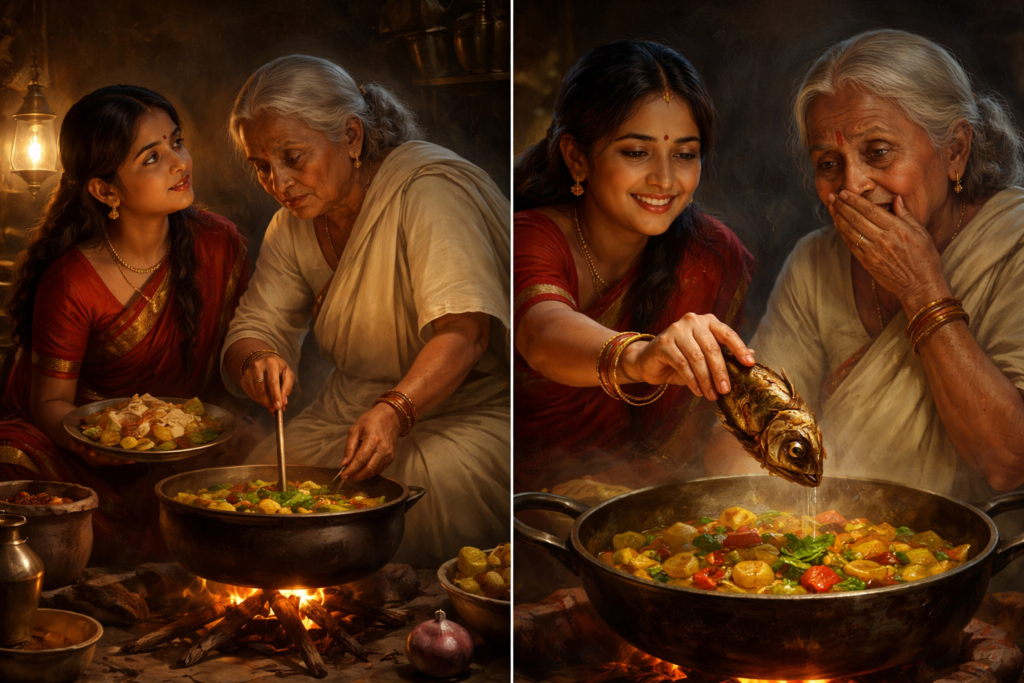
“So let’s,” she said. And in a deft motion, she added the head to the cooking vegetables.
“Hai Bhagwan!” cried the old lady, as she watched her granddaughter stir the pot…
“The flavours are unimaginable, taste some,” said Pakhi, and delicately placed a morsel in her grandma’s mouth.
Years of only smelling fish from afar had become a strict self-discipline, drummed into her. The well-being of the ancestors depended on it.
The forgotten taste was rekindled. And what she held in her mouth was better than anything she remembered consuming.
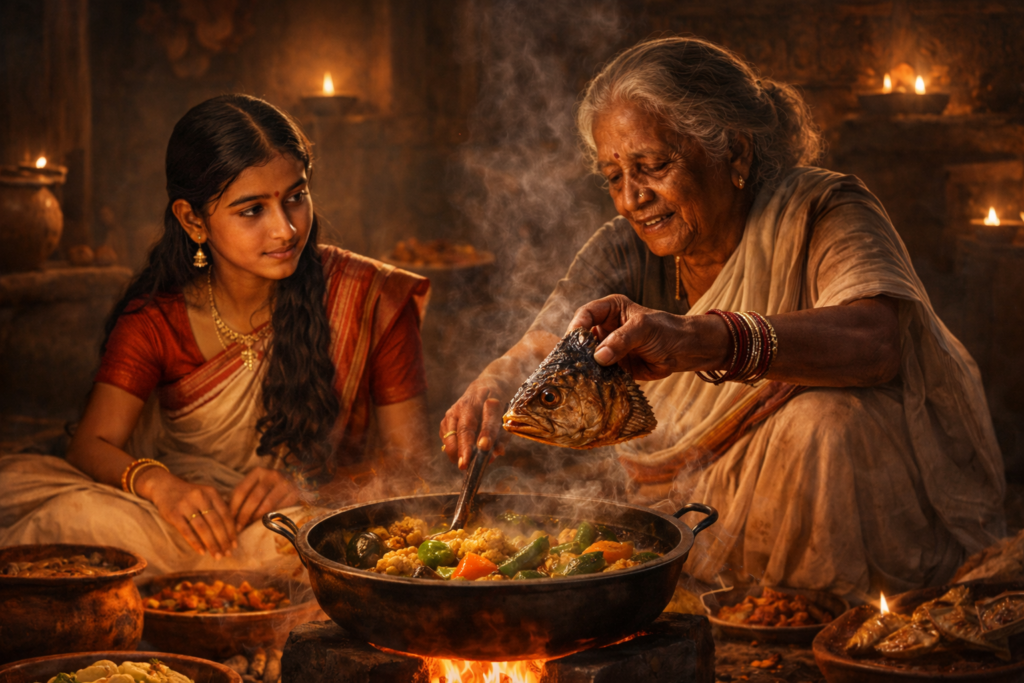
Looking into the bright, eager eyes before her, she could only smile.
A big fat teardrop appeared at the corner of her eye, before it slowly rolled down. Followed in quick procession by many others.
“Shhhh! Don’t cry Thakuma! We won’t tell anyone. Should we call your dish Chachra? Sister of chochori?”
ANAMIKA KUNDU

12 Responses
Hearty warming
Thanks Anamika for bringing to the fore one of the practices followed in Bengal(and many other Indian states) where a widow was denied 3 proper meals a day, she had to survive on a meagre meal and not be expected to partake any delicacies, especially non vegetarian food was strictly forbidden. With this simple story you have been able to put across the ill practices prevalent in the society of yesteryears.
Beautiful artistry of cuisine emotions and gyan all intricately weaved to present a very soul touching narration.
You are true mater at this Anamika.
The kitchen came to life with the intricacies you conjured.
The detailing of chorchori (or Chachra) that was lovingly cooked by Thakuma took me back to village kitchens and the loving grandmother grand daughter tender kitchen moment was so beautifully encapsulated and very touching.
Bravo for this beautiful piece.
More power to your ink and pen.
Beautiful artistry of cuisine emotions and gyan all intricately weaved to present a very soul touching narration.
You are true mater at this Anamika.
The kitchen came to life with the intricacies you conjured.
The detailing of chorchori (or Chachra) that was lovingly cooked by Thakuma took me back to village kitchens and the loving grandmother grand daughter tender kitchen moment was so beautifully encapsulated and very touching.
Bravo for this beautiful piece.
More power to your ink and pen.
Very sweet and heartwarming tale.The relationship between bride to be and granny is quite endearing and touching
Very sweet and heartwarming tale.The relationship between the bride to be and her grandmother is quite touching and endearing
Very sweet and heartwarming tale.The relationship between the bride to be and her grandmother is quite touching and endearing
Very sweet and heartwarming tale.The relationship between the bride to be and her grandmother is quite touching and endearing
Very sweet and heartwarming tale.The relationship between the bride to be and her grandmother is quite touching and endearing
What a beautiful piece penned by you…so vivid the imagery and so lucid the language! I was transported through time to the scene as it might have been for some women. Loved it!
What a beautiful piece penned by you…so vivid the imagery and so lucid the language! I was transported through time to the scene as it might have been for some women. Loved it!
What a beautiful piece penned by you…so vivid the imagery and so lucid the language! I was transported through time to the scene as it might have been for some women. Loved it!