





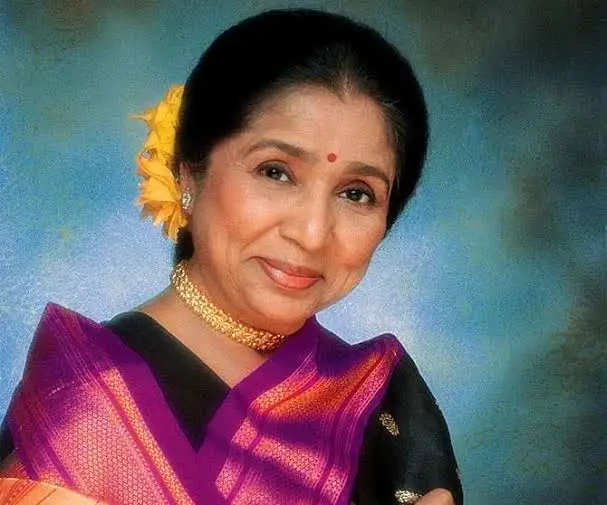

There are voices we grow up with. And then some voices grow into us.
For most of us, love first arrived wrapped in the divine softness of Lata Mangeshkar. Her songs taught us what it meant to be good girls in love. To wait. To yearn. To surrender. Love was devotion, almost sacred. It was gentle, patient, and often silent. Songs like ‘Dekha Ek Khwab‘ made love feel like a dream we were supposed to grow into – gracefully, obediently. And somewhere between ‘Panna Ki Tamanna Hai’ and countless other melodies, we learnt that longing itself was beautiful, as long as it was dignified.
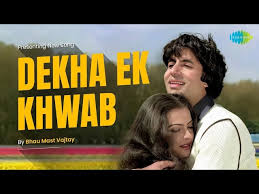
Love, we believed, meant sacrifice. Meant choosing softness over desire. Being chosen, but never demanding.
And then came Asha Bhosle.
If Lata ji was the dream, Asha ji was the awakening.
Her voice didn’t just sing of love, it lived it. Teased it. Questioned it. Played with it.
The first time you truly hear ‘Chura Liya Hai Tumne Jo Dil Ko’, it does something unsettling. It’s not just the melody, it’s the mischief. The way her voice wraps itself around Zeenat Aman’s gaze, those unapologetically sassy eyes, that quiet confidence. There’s desire there, not hidden, not softened. It’s bold. It looks back at you.
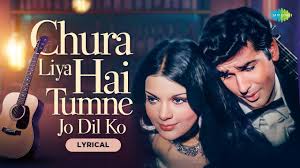
And suddenly, love is no longer about being chosen. It’s about choosing. Wanting. Taking.
Then comes ‘Piya Tu Ab To Aaja’. That iconic Aaah Aaah Ahhh Ahhh – how do you even explain what that did to a young heart?

It was electric. It was forbidden. It was thrilling. It made your pulse race in a way you didn’t quite have the language for yet. Watching Helen own that space, her body, her desire, it made you wonder what it meant to be that fearless. To be that expressive.
Of course, we never said it out loud. We were still raised to be good girls.
But something had shifted.
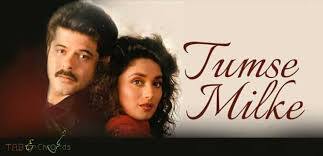
Even in her more romantic songs like ‘Tumse Milke, Aisa Laga Tumse Milke‘, there was a certain playfulness, a lightness. Love didn’t have to be solemn. It could laugh. It could flirt. It could breathe.
And then there was ‘Yeh Reshmi Zulfon Ka Andhera‘ – a song that doesn’t rush love, but lingers in it. Her voice there feels like a slow caress, like shadows brushing against skin. It invites, without pleading. It suggests, without surrendering. There is power in that pause, in that knowing. A woman aware of her allure, unafraid of it.
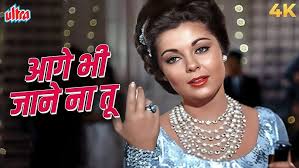
Or ‘Aage Bhi Jaane Na Tu‘, where her voice feels like a whisper against time itself. There’s a quiet sensuality in the uncertainty, in the fleeting nature of the moment. As if she’s saying this is all we have, right now… so feel it, completely. It’s not desperate. It’s deeply present.
And yet, what makes Asha ji unforgettable is not just her boldness ,but her range.
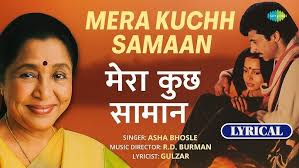
Because just when you think she is all fire and flirtation, she breaks you with something like ‘Mera Kuch Samaan‘ from Ijaazat. That song is not sung, it is felt. The pauses, the fragility, the almost broken way her voice carries memory… it understands heartbreak in a painfully intimate way. It’s not loud grief. It’s the kind that sits quietly inside you, long after love has left.
And then ‘In Aankhon Ki Masti Ke’, what a masterclass in understated power. There is no pleading here. No validation sought. Just a woman who knows her presence, her worth, her impact. Her voice doesn’t ask, it declares, softly.
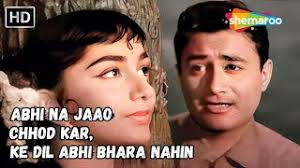
But if there is one song that has stayed, always, it is ‘Abhi Na Jao Chhod Kar’. Perhaps because it captures that one universal truth about love, that it is never enough. That even in its fullness, we crave a little more time, a little more presence. Her voice in that song holds you there, in that delicate space between wanting to stay and knowing you must leave.
Listening to Asha Bhosle while growing up was confusing, liberating, and deeply personal.
She didn’t replace the ideals we learnt from Lata ji; she expanded them.
She made space for a different kind of woman. One who could be soft and sensual. Devoted and daring. A woman who didn’t just wait for love, but experienced it – fully and unapologetically.
And maybe that’s her greatest gift.
She didn’t just give us songs.
She gave us permission.

By Vedaprana Purkayastha
The Founder of The She Saga Foundation, Vedaprana, is a Social Entrepreneur and a Psychological Counselor. She writes on topics that touch her heart and stir her soul. She can be contacted at vedaprana.p@gmail.com






Well written. Her voice flowed free. It was liberating.
A fitting tribute to a legendary persona. With her an era has indeed ended.
Lovely piece! Draped in the modest saree she really dared women to be sensuous
What a wonderful tribute to the legendary singer who made emotions more engaging…enabling us to embrace its spectrum…without reservation but with refinement!
Loved the article!