





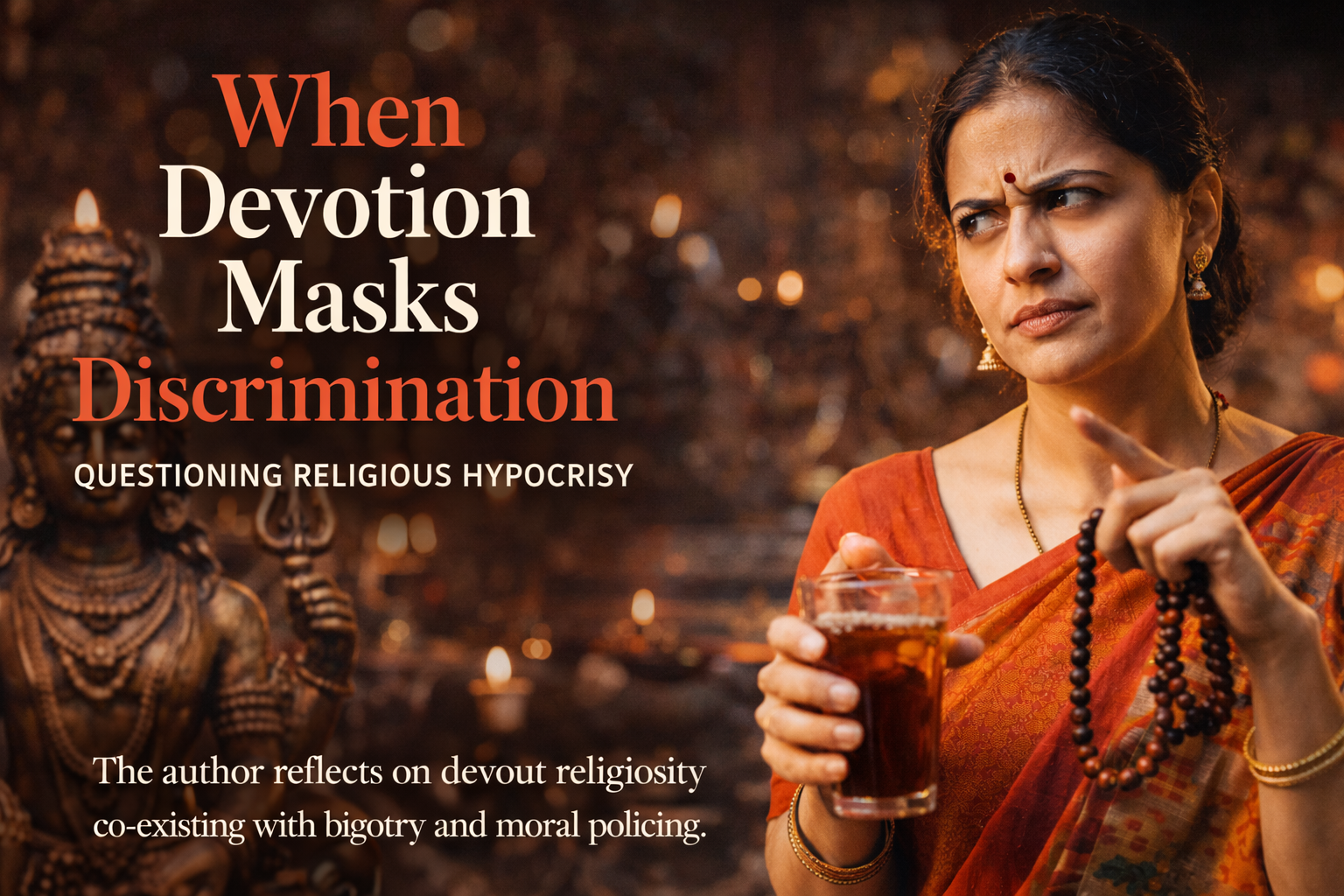

Over the years, from what I’ve observed is that some of the most deeply religious, devout people have some of the dirtiest hearts and corrupt minds. I do not mean to generalise. In fact, far from it. What I’ve noticed, (and I speak entirely from my own personal experience) is that many of those who always indulge in chants and pujas; following religious austerities; living by the book; subscribing to religious magazines; ardently glued to all pravachans and religious discourses, often tend to be bigoted, sexist, manipulative, and quite rotten from within.
Picture this. On one hand they chant hymns and mantras while on the other, they discriminate on caste, class and religious lines. On one hand they spend their time in prayers and rituals while on the other, don’t bat an eyelid to judge women based on their relationship status, clothes, choice of lifestyle; in fact, these zealots are the ones who spit venom at such people they consider transgressive. On one hand, they have this “holier than thou” attitude while continuously being judgemental about those who do not conform.
And I can’t help but begin to look at all of this bhakti and devotion as nothing more than a farce!
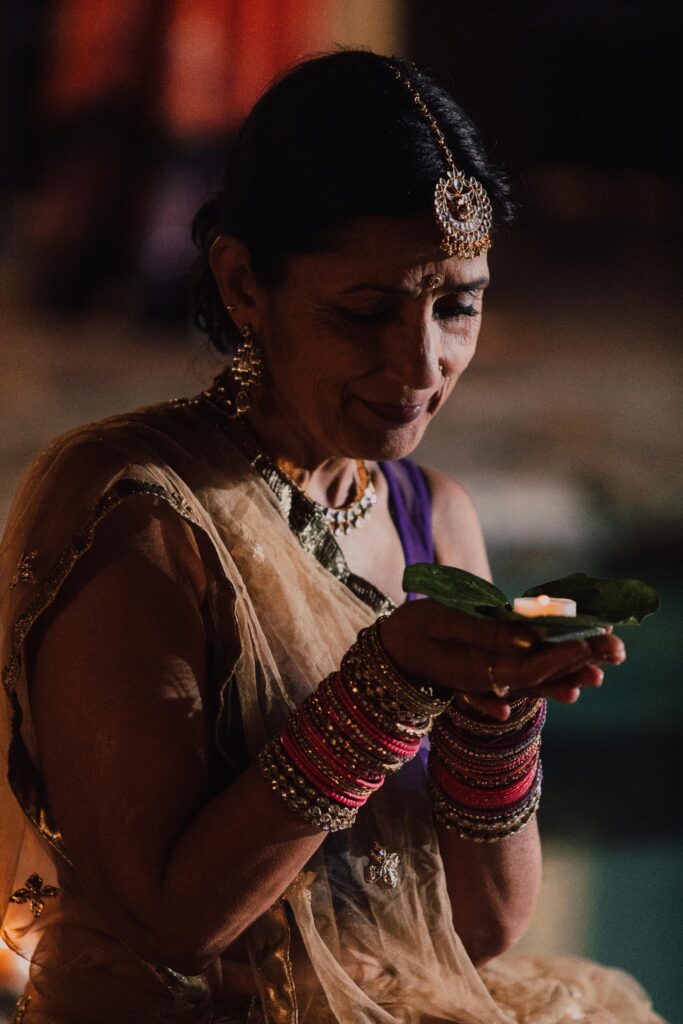
Forgive my cynicism; but I have to admit that as I grow older, and begin to see situations and people through a lens of a few decades of experience (good, bitter, bad), I cannot but ignore the superficial nature of it all. The other day, I noticed someone bragging about their family’s rich lineage in learning the scriptures. Of how their days begin with verses from the holy texts, followed by an elaborate ritual of worshipping the deities and how every religious festival is observed with ritual purity. I could not help but notice the insistence on purity. As if religious obeisance purifies human beings, thus separating them from the rest of the polluted hoi polloi! And I could not help but reflect on the pompous bragging in terms of a case of purity and pollution which I do not think has anything to do with love for God other than create a sense of othering, the pure versus the not-pure!
Is it a cover-up to hide their sinful heart? Is it a facade to keep their vile minds carefully hidden? Is it their clever ploy to keep their corrupt heads covered in holy wrapping paper lest they get exposed?
I’m not sure. But over time, I’ve grown quite suspicious of such people. And often find myself in their crosshairs as and when I show my disagreements. Their religious bragging, their claim to superiority based on religious obsession makes it all quite insufferable.
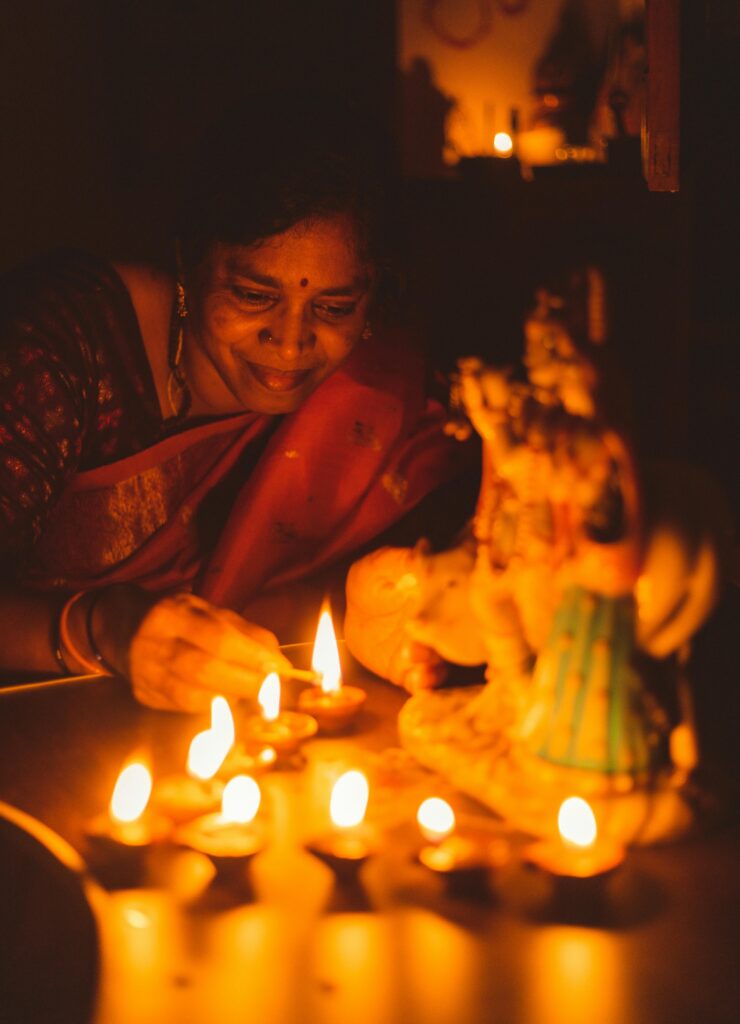
I’m not against religious beliefs, rituals, prayers, or anything like that. I mean, do whatever gives you peace, whatever rocks your boat. But to use it as a tool to project an image which derides others who do not subscribe to such beliefs is deeply problematic for me. This idea that their devotion and piousness makes them better than those who are not religious, is a matter of irritation and disdain for me.
That religion has always been consumerist in nature may sound blasphemous to the devout but I feel that too much zeal in religious matters tends to corrupt the mind. I’ve always believed, going by the teachings that devotion to God should make you humble, and liberate the mind.
Unfortunately, all I witnessed was arrogance and conservative thinking in most of the devouts!
Having grown up on a diet of religious zeal and rituals, I’ve seen many zealots up close and personal. That’s why perhaps my rational mind was always at war with my religious conditioning. Perhaps, now in my 40s, I’m moving away from the banality, the hollow echoes of religious cacophony, having seen through the polluted minds of the deeply religious. Because at the end, after having done all the rituals, reciting all the necessary verses, reading all the verses, when we die, what would we leave behind? How devout were we? Or how we touched lives in meaningful ways, living on our own terms, showing courage to so many? Because when I die, I’d rather people gain courage from my life than shower meaningless praises of how deeply pious a woman I was.

By Anasuya Shreedhar
Anasuya Shreedhar is a writer with a keen interest in food, exploring its relationship with gender and caste. She had a PhD in Women’s and Gender Studies from Ambedkar University, Delhi and currently teaches Gender Studies to MA students at IGNOU.









You have hit the bull’s eye. Even I have no problem with religious practices unless they become ‘regressive’ practices and attitudes.
This is too good
A very pressing and pertinent concern has been raised…to look closely….not only outside us but deep within…
lisinopril 10 mg
lisinopril 10 mg
metoprolol tart
metoprolol tart
sildenafil actavis
sildenafil actavis
doxycycline for chlamydia
doxycycline for chlamydia
otc antibiotics
otc antibiotics
sildenafil 100mg indications
sildenafil 100mg indications