




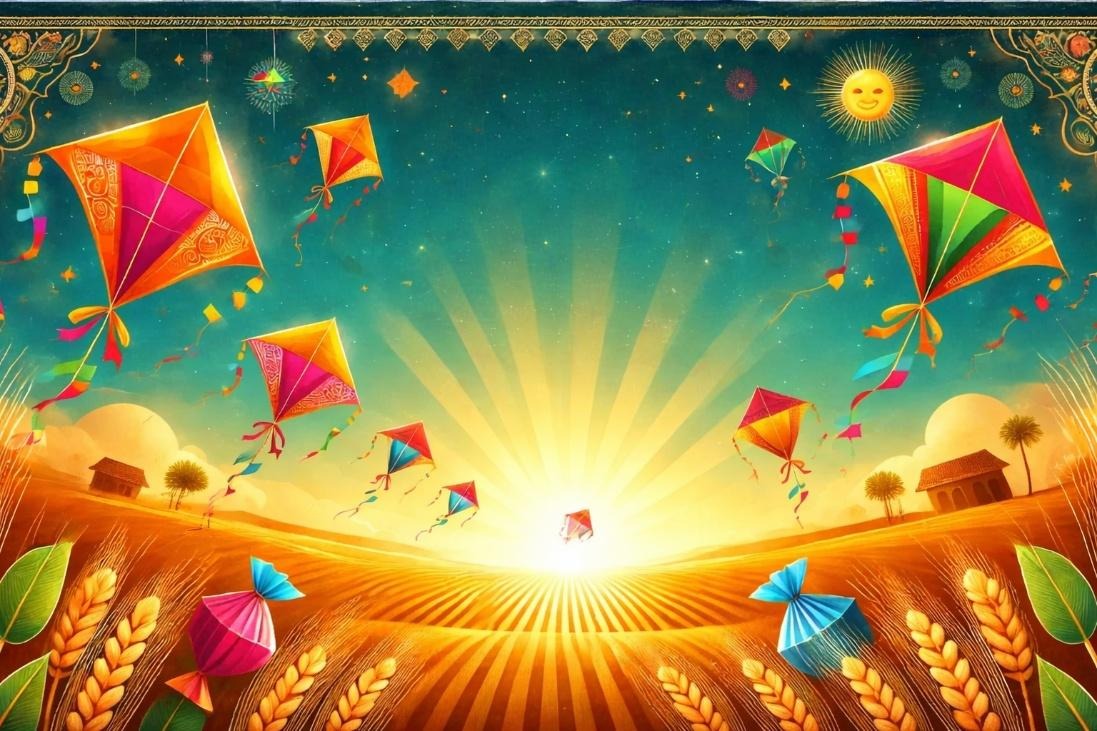

Makar Sankranti (also called Uttarayana, Makara, or Sankranti) is a Hindu observance and mid-winter harvest festival in India and Nepal. It marks the transition of the Sun from Sagittarius (Dhanu) to Capricorn (Makara). This transition also marks the Sun’s movement from south to north and is dedicated to the solar deity, Surya. The festival is celebrated annually on 14 January (or 15 January). It is one of the few Hindu festivals based on the solar calendar and therefore falls on almost the same date each year.
The festival is symbolic of a new beginning, since it heralds the end of winter and the start of longer, warmer days. The festival is deeply connected to themes of family, tradition, renewal, nature, and the harvest season. Though the meaning remains the same, the festival is observed under different names and customs in different regions of India.
Mythology behind Makar Sankranti in India
In Hindu mythology, Makar Sankranti celebrates Lord Surya’s visit to his son, Lord Shani, symbolising reconciliation and familial harmony. Another folktale connects it to the triumph of the goddess Sankranti over the demon Sankarasur, reinforcing themes of victory and renewal. In South India, it marks the victory of Lord Vishnu over asura Bali.
The Sun’s transit to the Northern Hemisphere is mentioned in the Hindu epic Mahabharata. Bhishma, the military commander of the Kauravas, is mortally wounded in the battle of Kurukshetra. Lying on a bed of arrows, he declares that he will give up his life when the Sun begins its northward journey.
Makar Sankranti Across India
Makar Sankranti is celebrated across India under different regional names and customs. In Tamil Nadu, it is celebrated as Pongal. In Assam, it is known as Magh Bihu / Bhogali Bihu. In Punjab, the eve is celebrated as Lohri, followed by Maghi. Bonfires are lit, and people sing and dance around them while offering food items such as popcorn, rewri (another sweet made with til and jaggery), and peanuts (groundnuts) to the fire as an act of gratitude toward the gods. In Gujarat, the festival is widely known as Uttarayan. In Maharashtra, Karnataka, Andhra Pradesh, Telangana, Odisha, Uttar Pradesh, Madhya Pradesh, Chhattisgarh, Bihar, and Rajasthan, it is commonly called Makar Sankranti. In Kerala, devotees of the god Ayyappan observe Makaravilakku with a pilgrimage to the Sabarimala temple.
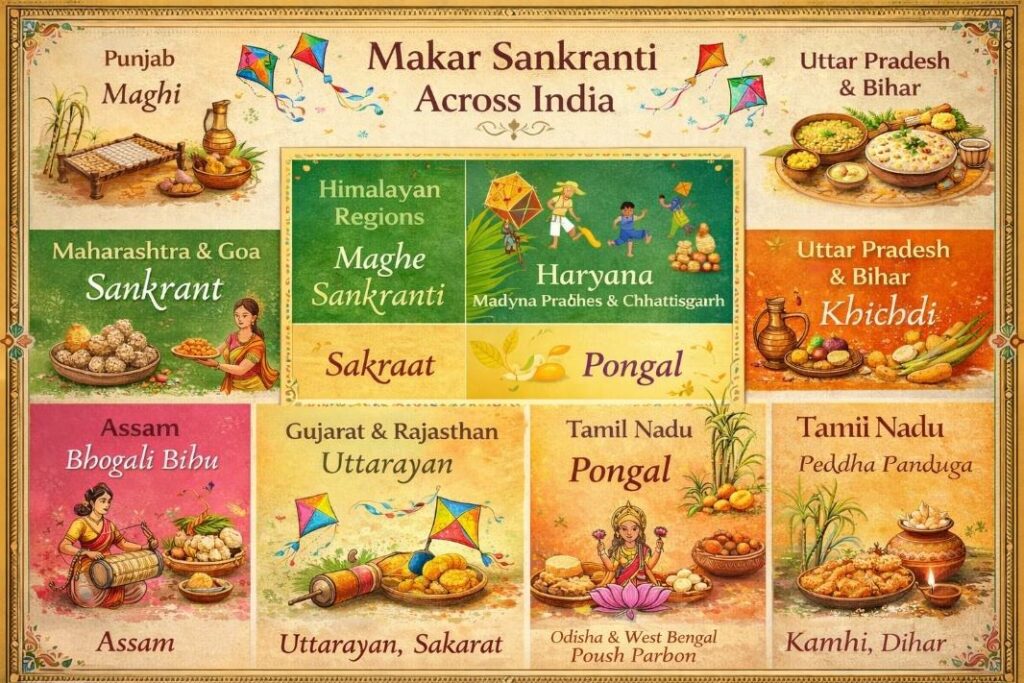
Despite different names and rituals, the underlying themes remain the same — the Sun’s transition into Capricorn, thanksgiving for the harvest, and the symbolic beginning of longer days.
Symbols and Traditions
The Sun is regarded as a symbol of light, energy and new beginnings and the transition into Capricorn is considered to be an auspicious moment. People share sweets with each other as a gesture of harmony and positivity. Sesame (til) sweets symbolize warmth, bonding and goodwill. It is also celebrated with a feast that includes a dish made of green gram, rice and jaggery.
Some observers celebrate by bathing in rivers and lakes, especially at the confluence of holy rivers. They pray and make offerings dedicated to Surya (the Sun deity). It is a time of celebration and expressing thanks to Mother Earth or nature when winter starts to recede.
There are community gatherings, fairs, and festive meals. People even make bonfires in some regions marking the end of winter.
Kites and the Winter Sky
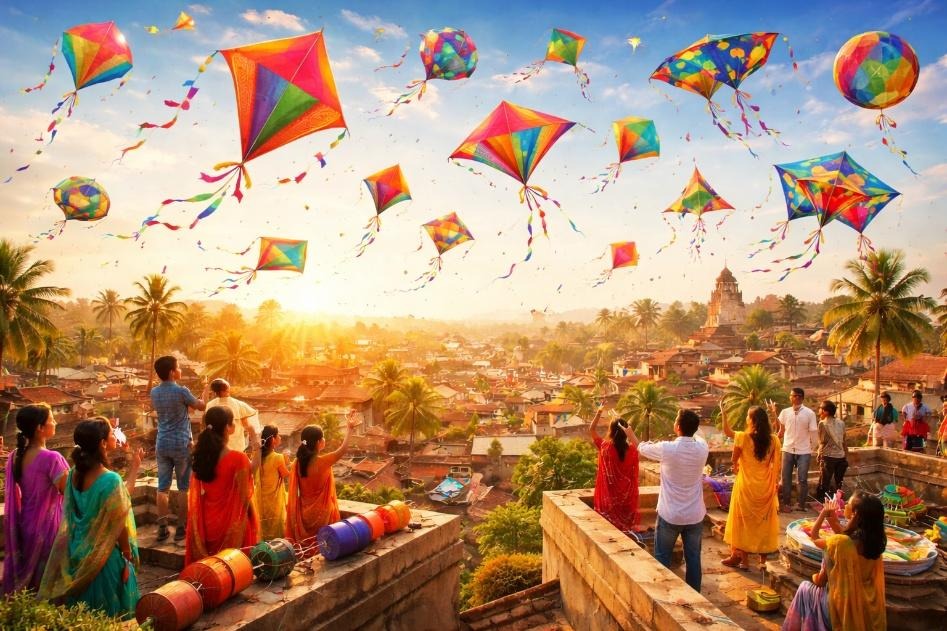
Kite-flying is a popular part of Makar Sankranti celebrations in many regions, especially Gujarat and parts of North India. The clear winter sky becomes filled with colourful kites of all shapes and sizes. Families and communities gather on rooftops to fly kites together. We can see colourful kites in the sky, with grandparents helping their grandchildren tie and fly the kites. Kite-flying is seen as a joyful way to welcome the Sun’s northward journey. Special threads and traditional paper kites are prepared for the festival. The activity creates a sense of celebration, togetherness, and friendly competition. Music, food, and festive atmosphere often accompany kite-flying events. In some places, large kite festivals are also organised.
Personal Reflections
I became aware of Makar Sankranti during my childhood when we would wait for this day to feast on tilkut, til ke laddoo, chooda dahi, and khichdi chokha. The day brings forth the feelings of warmth, nostalgia, calm, gratitude, and renewal. There is a feeling of gratitude for nature, food, simplicity, and the rhythms of life. The festival makes me pause and breathe. Getting together with friends and family is expected and enjoyed.
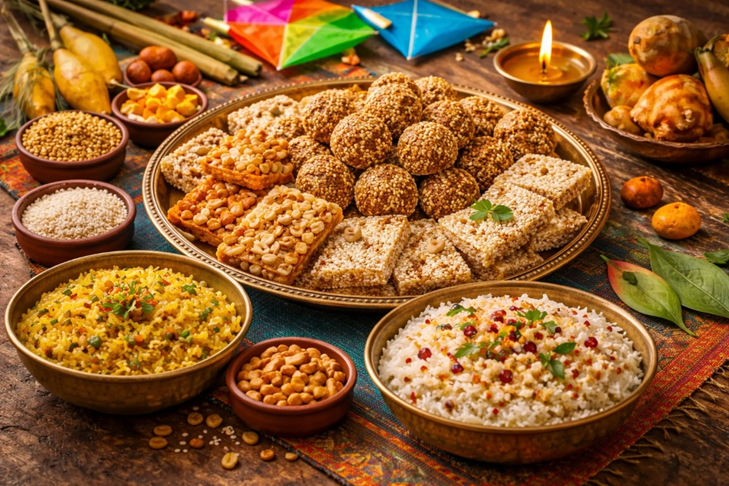
Since it is the festival that marks renewal and new beginnings, I generally make a small and doable resolution to follow through the year. It need not be grand but may be something as simple as being more consistent with my yoga classes. There is a realization of being a part of a pan-Indian tradition known by different names. It also leads to admiration of the cyclical rhythm of seasons and time.
Conclusion
Makar Sankranti is a gentle reminder that some traditions stay constant even as life changes. There is a quiet appreciation for the simple rituals that bring grounding and meaning. We recognize that festivals like Makar Sankranti connect us to something larger and older than ourselves. There is a sense of comfort in the cyclical rhythm of seasons and time. We carry the spirit of warmth, gratitude, and renewal into ordinary days beyond the festival. We honour small beginnings and gentle intentions rather than grand resolutions. There is an acknowledgement of belonging — to family, place, memory, and culture.

By Richa Verma
Richa is an online English teacher, independent blogger, voracious reader, movie buff who is smitten with wanderlust, and a homemaker. She can be contacted through her email address richavermamh@gmail.com