






Let me start with a story heard from my grandmother.
The Race Against Dark
Twilight was fading fast as the two fishermen prepared to walk back home with baskets heavy with a good catch.
“Three huge Rohu for me,” Madhab said, tilting his basket to show the haul. “How did you fare?”
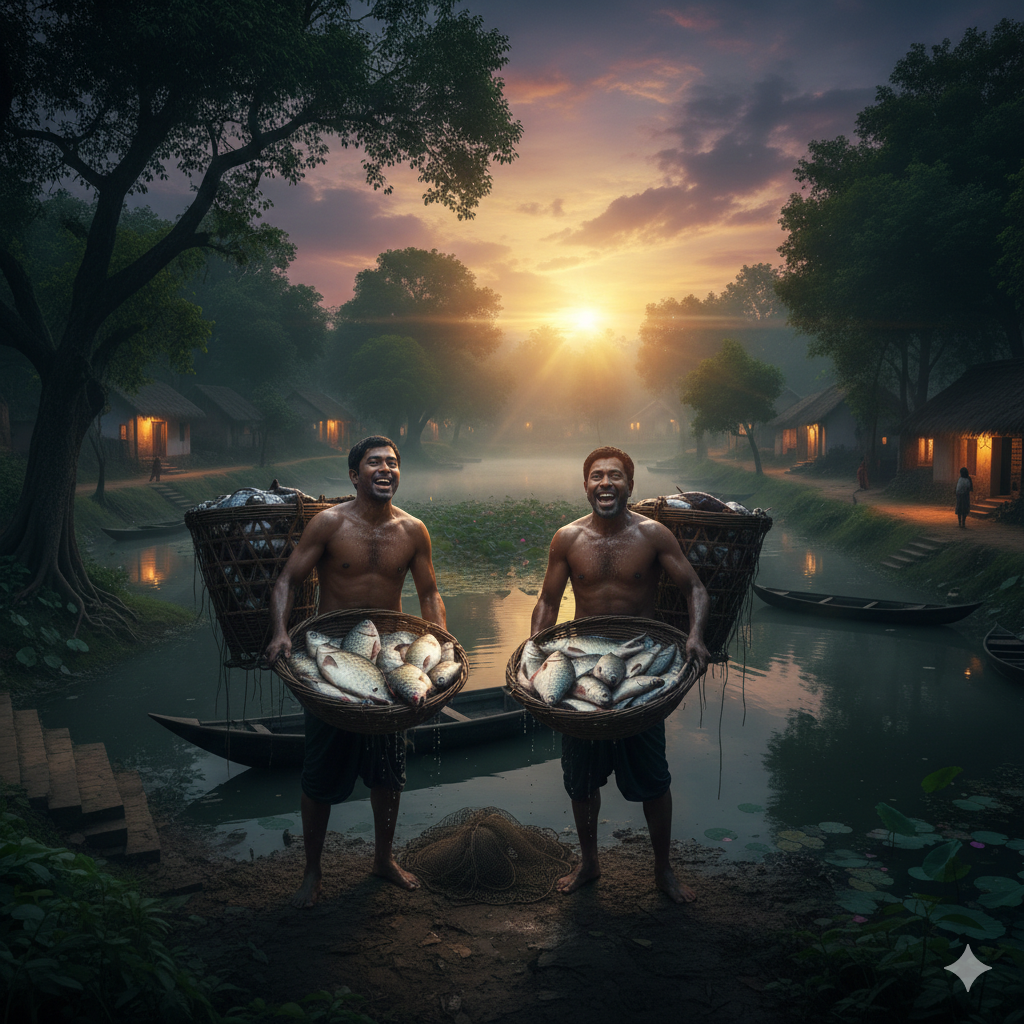
“Five,” Jadu replied. “Two large, three medium-sized. But let’s stop talking and move faster. We need to clear this jungle before the sun finishes dropping. You know why…”
Madhab opened his mouth to voice a question, but Jadu’s sharp look and a raised palm silenced him. He thought of his grandmother’s tales. Tales of how the dying light unleashes restless spirits, who prey on the living. Fairy tales, he assured himself and let out a laugh.
Jadu led the way, clearing their path of the bushes and the branches. Between the lake and their hamlet was a twenty-minute long, lonely stretch of dense, dark woods.
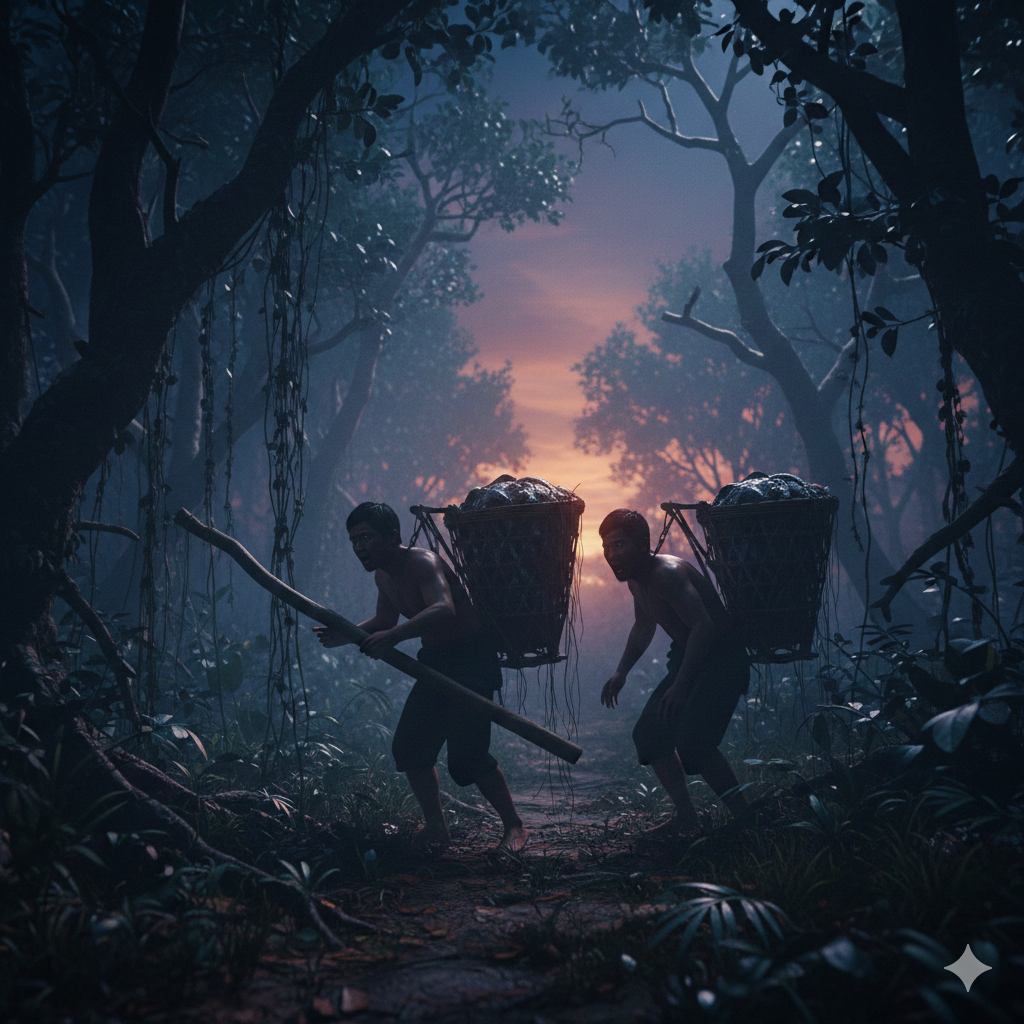
Tired, the men trudged toward home. The sky was a deep purple, heralding the arrival of dusk. Jadu hollered for Madhab to keep up. They were never usually this late, but the thrill of the hunt had been addictive. The men had left home in the early hours of the morning. Experience had taught them that the best catch always comes at daybreak, when the world is quiet and tranquil, and the fish are still sluggish. They had spent the entire day preparing bait, casting their nets, and hauling up heavy, silvery masses of wriggling fish. The haul was far better than on any other day. Dripping wet, they shivered as a sudden breeze blew their way, raising goosebumps on their skin.
Suddenly, Jadu froze. A heavy, dragging sound came behind them, as if something was struggling to keep pace. A sickeningly pungent, rancid odour seemed to suffocate them. Then came the sound. A chilling, nasal whine. “De… mach de…” (Give… give me fish).
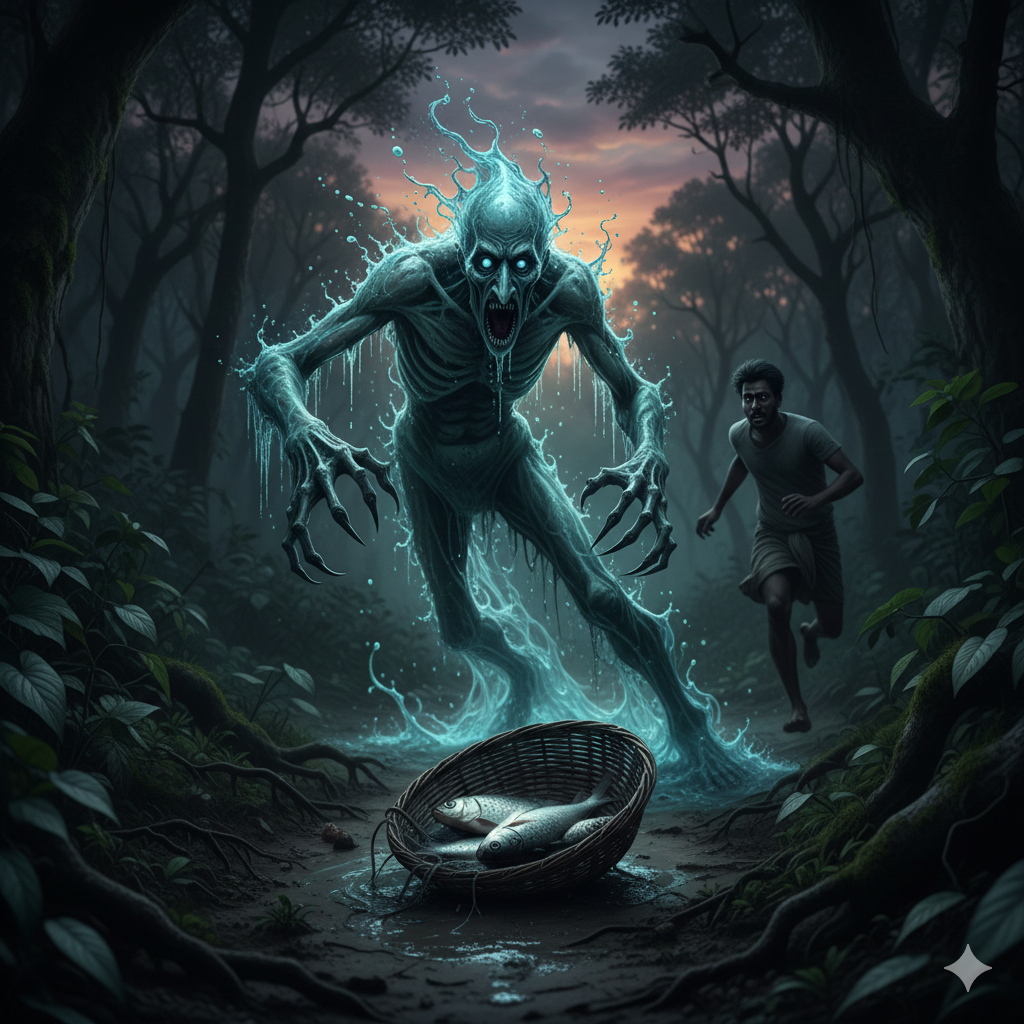
Jadu knew what it was – the Meccho Bhoot, a fish-hungry spirit they had heard of but had never encountered.
Without wasting a second, Jadu commanded, “Drop the fish and run as fast as you can.” But Madhab stood there, paralysed with fear. His grandmother’s stories played on a loop in his mind. He could visualise the spirit twisting his neck and then, feasting on the remains. He tried to chant the Ram Nam, instead he let out a cry.
The voice spoke again, closer now – “Maanch de… Pala.” (Give fish… or run.)
Jadu yelled. “Drop the fish and run!”
Madhab woke up from the trance, dropped the fish and ran after his friend.
That night, Madhab burned with a high fever, thrashing in his sleep, mumbling about Meccho and fish.
His mother maintained a night-long vigil, burning incense sticks to ward off any spirits that might have followed her son home. By dawn, the fever broke. Madhab sat up, and made a silent vow. He would always respect his grandmother’s words – Never linger by the water after sunset if you carry a catch. Sprinkle a pinch of salt over the fish to guard them, and ensure you reach home before the last of the light is gone.
From Folklore to 2026
It is 2026. I was returning from a friend’s place with leftovers when her father stopped us. He came forward and sprinkled some salt over the containers. I stood there, puzzled.
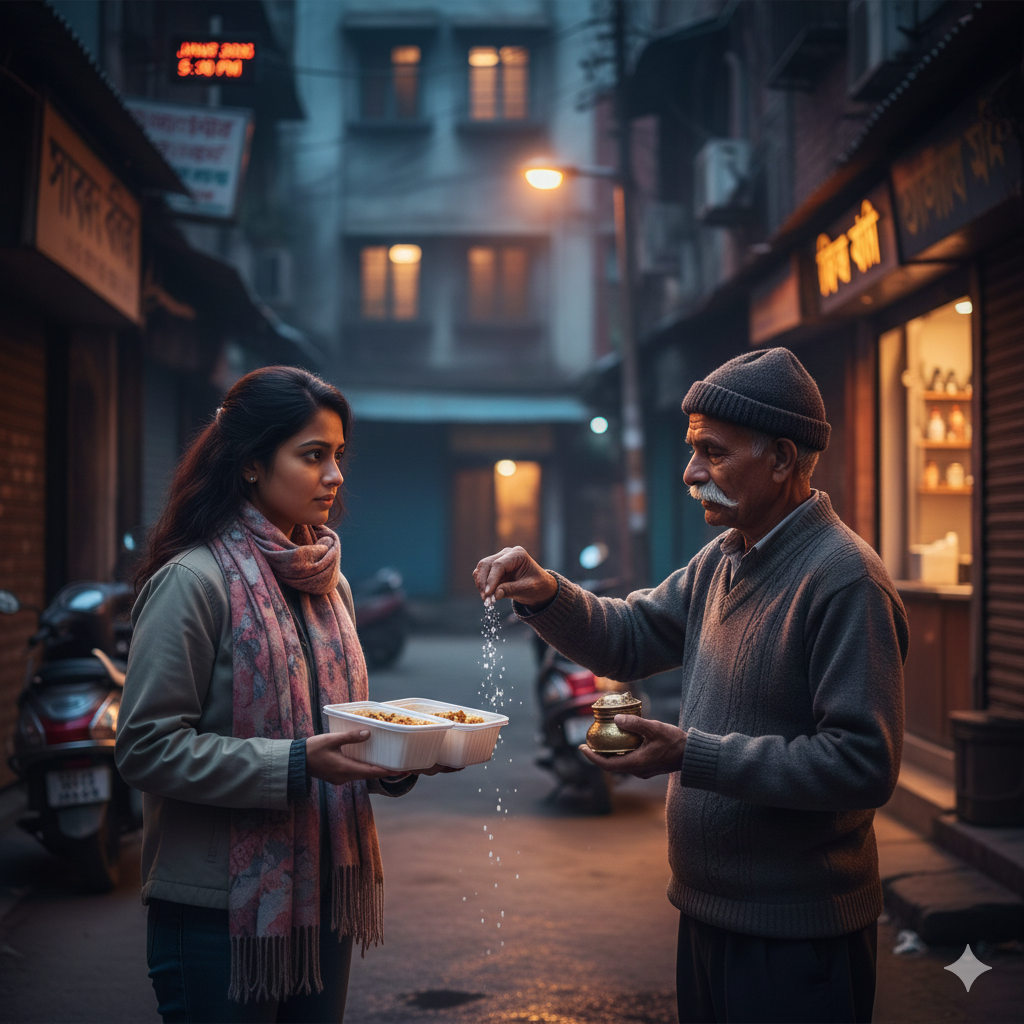
“You shouldn’t carry meat or fish after dark,” he warned. “The scent attracts spirits. Salt wards them off.” It’s a belief that’s still prevalent, even though the younger generation remains oblivious.
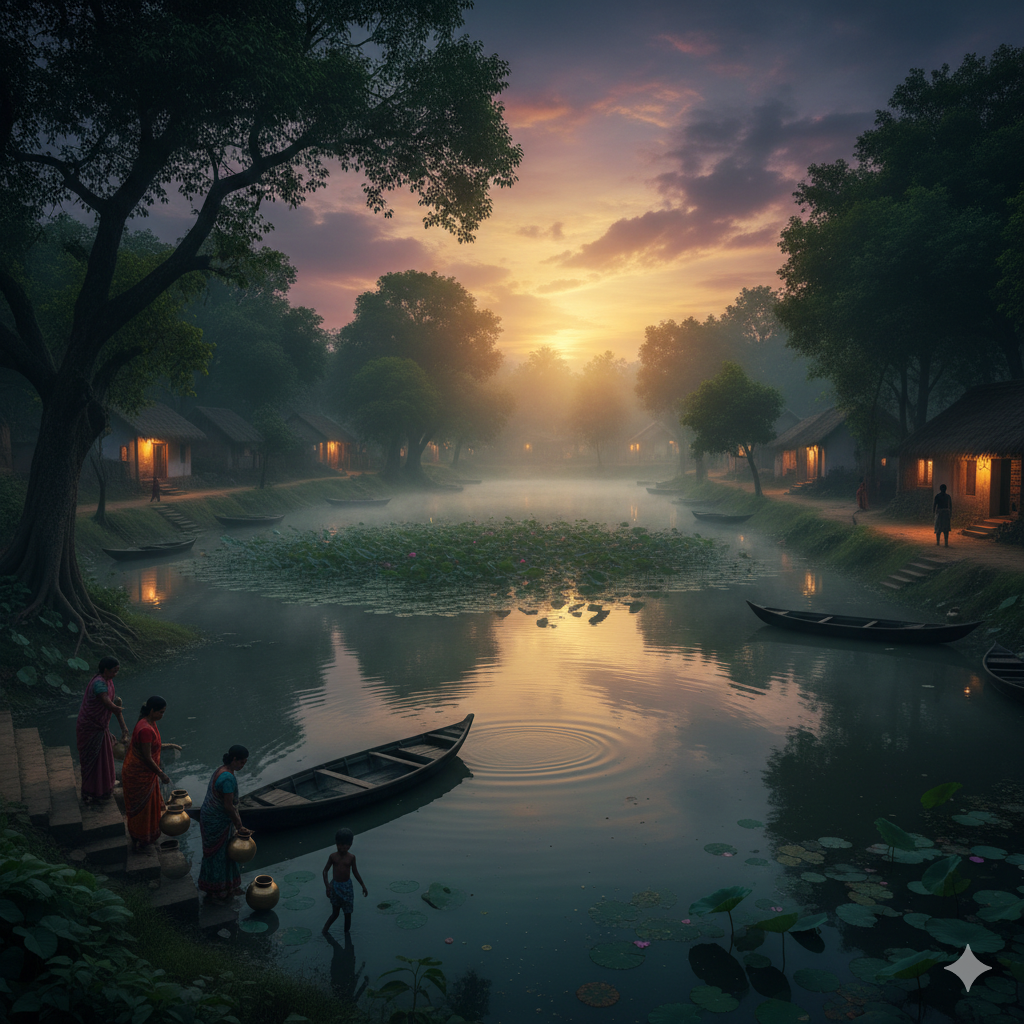
Common lore holds that spirits and ‘creatures of darkness’ emerge as the sun sets. Once the light fades, negative energies are unleashed. Not just carrying fish, old superstitions warn against bringing anything from the water into the home after dark. It is believed that the spirits of the drowned linger near the shore, and bringing items home invites these restless energies inside.
The Meccho Bhoot, or fish-eating ghost, is said to be the spirit of those who drowned and were never found. Driven by an insatiable craving for fish, they dwell near the water’s edge. They lurk in the depths, waiting to pull the living inside or following anyone carrying the scent of fish after dark. Many fishermen claim to have been haunted by one.
Water as a portal
A prevalent belief in many cultures is that waterbodies act as portals. Whether it is a lake, a river, or the vast ocean, they are considered gateways that connect the physical world to the realm of spirits. Water is an element of transition, and is thought to help in bridging the gap between the two entities.
Folklore and Social Safety
Beyond the folklore, if we let our analytical mind wander, we will note a social safety mechanism at play. Before the era of electricity, there were no streetlights or safety infrastructure. Villages were often centered around waterbodies like ponds or lakes. Such open waterbodies were treacherous after sunset.
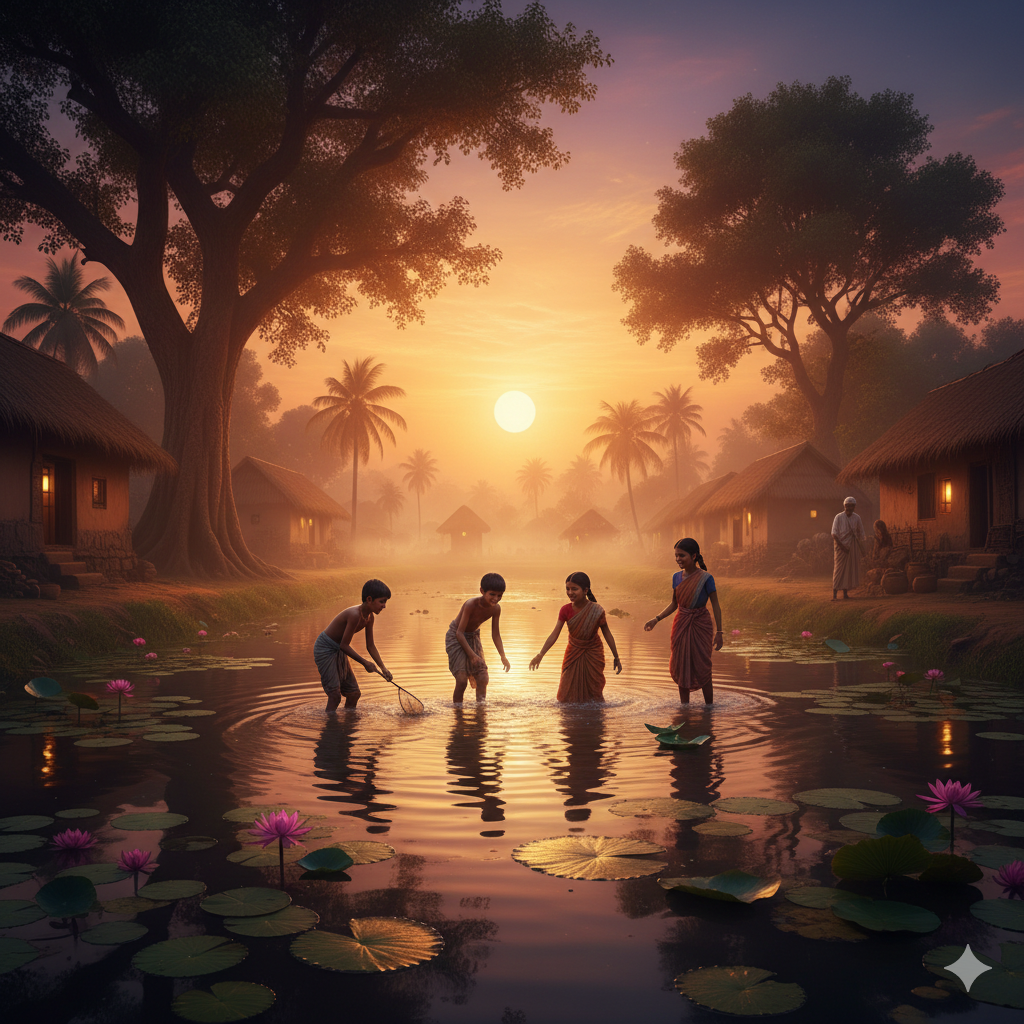
To prevent children and adults from wandering into the water and falling victim to accidents, these stories were likely invented as a deterrent. Fear of the unknown is a powerful guardian. It only took one accidental drowning to give birth to the legend of the Meccho Bhoot, transforming a physical hazard into a supernatural warning.
I hate to break the myth of the Meccho. But these stories served a purpose. They planted the seed of fear in every mind, ensuring that the fishermen hurried home, rather than lingering in waters that turned murky and treacherous after dark. Children would also stay far from the shore. That one simple question of what if was enough to keep the community safe. They didn’t just fear the stories. They feared the shadows they created.
Besides the danger, there was a practical, domestic side to the story. What woman wanted to be stuck descaling and cutting fish late into the evening? It was a gruelling task and the lingering stench of raw fish was hard to get rid of. This was a task everyone wanted to avoid, especially in the evening. The legend of the Meccho Bhoot ensured that the workday ended when the sun went down. No wonder these stories flourished as fear was enough to enforce these boundaries.
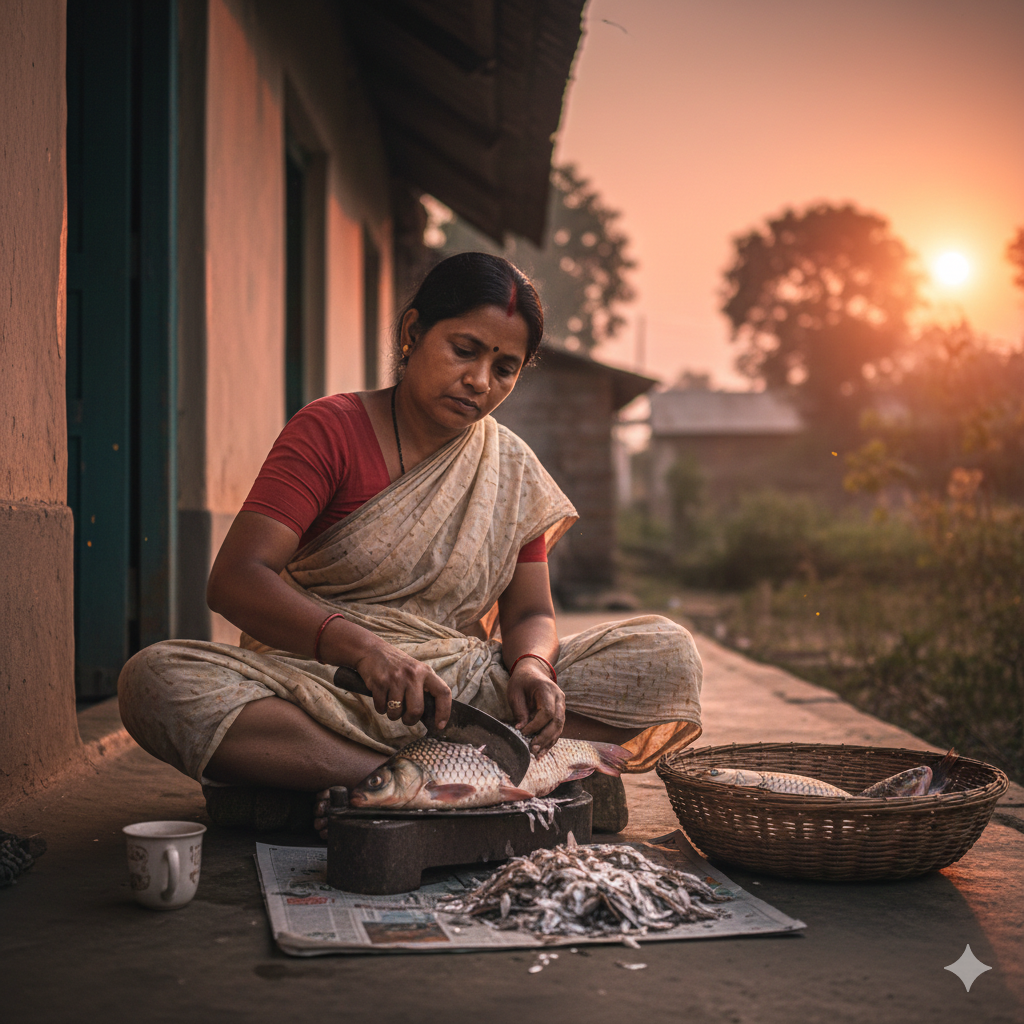
Now, whenever I step out with meat or fish after sunset, I sprinkle a pinch of salt. It is not out of belief, but of respect for a fading tradition. It is a nod to the ancient safeguards our ancestors built to protect us. While the legend of the Meccho Bhoot has faded, the story remains a proof of how folklore once unified a community and maintained the boundaries of safety.

By Sreemati Sen
Sreemati Sen holds a Masters in Social Work from Shantiniketan. A Development Professional,
she has specialized in Psychiatric Care of Differently-abled children. Years of experience in
Social and Consumer Research are also a part of her portfolio. Her stories have been featured in
various anthologies.
She can be contacted at Sreemati123p@gmail.com.