







There comes a moment in many women’s lives when love, however romantic, begins to feel less like a blessing and more like a pending clarification. Not a dramatic collapse or an impulsive declaration. Just a soft, private recognition that something in the way we love may no longer be serving us and requires thorough revision.
Most of us are initiated into love through stories- cinema, poetry and music where longing is elevated and waiting is treated as virtue. We grow up admiring women who linger by windows, who forgive silences and convert uncertainty into hope. We learn our earliest lessons from refrains that settle quietly into memory:
“Sajna aa bhi jaa…” or “Raina beeti jaaye…”
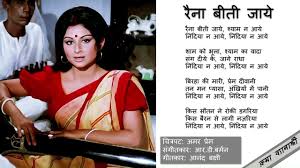
We are taught with impressive consistency that patience is the proof of love, endurance is devotion and if one loves with sufficient depth and purity, the beloved will eventually turn back. These ideas are not entirely false. But they are dangerously incomplete. Or even better. Underqualified.
Romantic culture often insists that great love must involve great suffering leading to longing that is evidence of intensity. The truest heroine is the one who feels the most, waits the longest, forgives the deepest. We are moved by tales of lovers who abandon reason, renounce the world, sometimes even die for love; as though the gold standard of devotion lies in the willingness to disappear.
“Hum tere bin ab reh nahin saktein, tere bina kya wajood mera”.

Over time, this becomes the curriculum. Almost without noticing, many women learn to equate love with uncertainty or mistake waiting for strength. To read silence as mystery.
And so, we grow into adults conducting the emotional audit on our phones, measuring seconds and symbols, over thinking replies, counting emojis, and analysing the spaces between messages. We smile at our own absurdity. And yet, somewhere beneath the humour, we are still waiting. For the call. For the text. For the reassurance that we are chosen.
Even when technically, we are in the relationship, there is a particular loneliness that comes not from abandonment, but from being loved incompletely. Not rejected or forgotten, but emotionally unattended.
The kind of love that offers communication without intimacy, consistency without safety, affection without presence. In such spaces old reflexes return and we negotiate, soften, lower the volume of our own needs and reduce the brightness of our expectations.
“Phir le aaya dil, majboor kya keeje…”

The heart returns helpless, but the helplessness is not fate, but conditioning.
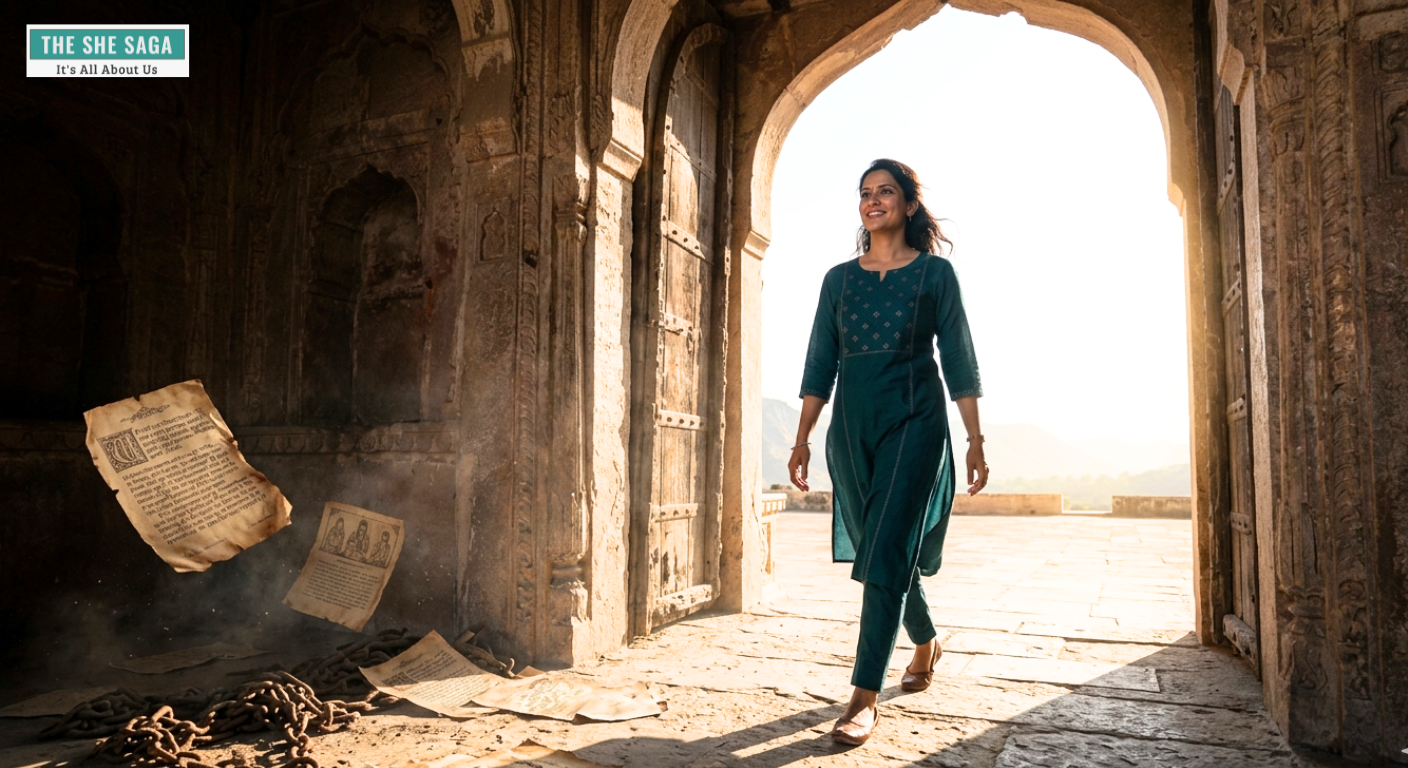
When one consults the older narratives, especially those preserved in the ancient Indian scriptures, a quieter, sterner syllabus emerges. These stories are not merely celebrations of devotion but case studies on boundaries. The leading ladies were women who loved wholeheartedly and then exercised the radical option of “leaving”.
Urvashi left Pururavas when the pact of her marriage was violated. Ganga did not negotiate with King Shantanu when her freedom was compromised. Rather she chose to walk away. Sita chose earth over humiliation. Even Parvati left Kailash time and again, whenever she was dismissed and not fully respected.
These women were not indifferent to love. They diverged from purchasing it at the cost of themselves. They did not confuse endurance with virtue or mistake emotional bankruptcy for sacrifice. They understood something we have largely forgotten, that, for a woman, the longing to be loved must never outweigh the responsibility to remain whole. The scriptures never glorified self-abandonment. They honoured boundaries and examples of women who recognised the moment when devotion began to resemble self-betrayal. Women who were cognizant about the fact that dignity is not preserved through patience, but through discernment.
And yet, this is not a lecture on moral excellence. It is a proposal for mercy. Perhaps the lesson is not that women must always choose correctly, leave at the right moment and protect their dignity without ever faltering. Perhaps the deeper lesson is kinder. That , women are permitted to misjudge and linger or hope unwisely and love without an armour.
As dignity is not an inheritance.
It is an understanding we grow into. Sometimes slowly, painfully and often after long seasons of unlearning.
Unfortunately, there is another truth we rarely reflect. A woman must not wait for any man to confer legitimacy upon her. Affection and approval may come from them, but worth does not. She does not become complete by being chosen but when she acquires the skill of choosing herself. Family may follow. Society may adjust. Relationships may realign. But the first allegiance must always be inward. For, the moment she permits another to define her value, she relinquishes the only territory no one else has the right to govern, her sense of “self”.
Longing, of course, is human and confusion is inevitable. Even loving the wrong person qualifies as advanced coursework in emotional intelligence. What is no longer mandatory is the repeated desertion of oneself in the name of love and affection.
Probably the new ideal of love for women is not flawlessness. It is awareness; not the absence of error but the courage to recognise it sooner, not the refusal to fall in love but the refusal to vanish while doing so. It is the quieter, braver achievement of creating an emotional home within oneself and coming back to that inner nest at the end of the day, with honesty, compassion and with the steady strength to begin afresh.
For every woman deserves not only a meaningful relationship with another but a lifelong, patient, forgiving relationship with herself.

“Ye hausla kaise jhuke, Ye aarzoo kaise ruke…”
Bahnika Sen

4 Responses
Wow, a wonderful piece , usage of lyrics made the piece worthy. I resonated with your piece.
A wonderful piece with the use of lyrics. Resonated with your article. You explained every aspect beautifully.
This is something that we always see but you wrote it down so precisely. Well written..
This is something that we always see but you wrote it down so precisely. Well written..