





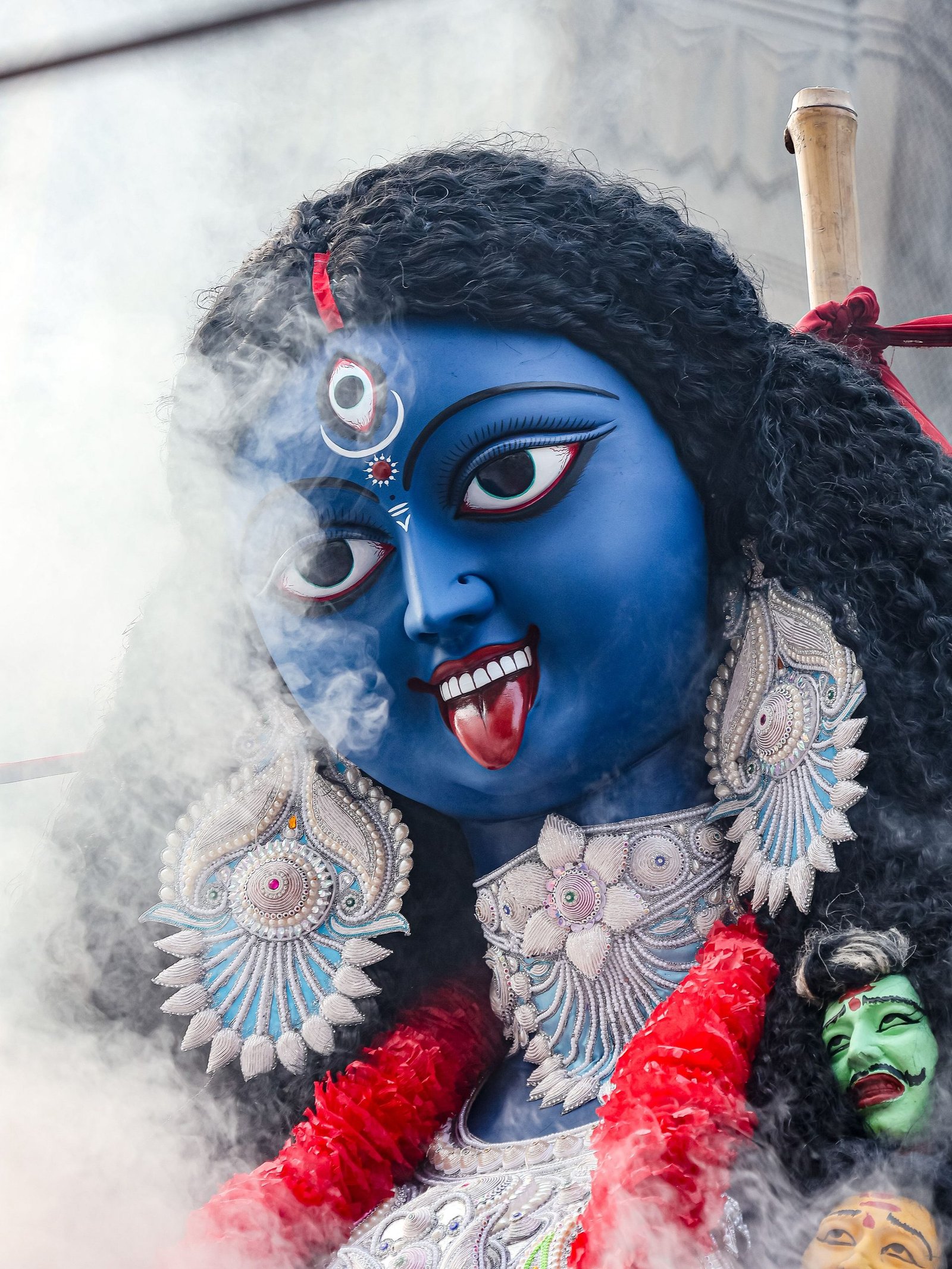

As we all gear up for Deepavali celebrations, we often miss out on another festival that is equally worth mentioning – Kali Puja. Coinciding with the popular festival of lights, Deepavali, Kali Puja is mainly celebrated in West Bengal, the adjoining state of Odisha, and parts of Assam. Just as a thousand lamps are lit on Diwali, Kali Puja is also celebrated with similar fervour, with thousands of lamps being lit and crackers being burst.
Who is Goddess Kali?
The word Kali is derived from the Sanskrit word kaal, which encompasses three main concepts – time, darkness and death. Kali is represented as the consort of Lord Shiva and is most often depicted standing on his body. Since the Goddess is associated with ferocity, she is portrayed as fierce and dark. She has four hands, and a garland of human skulls adorns her.
According to Hindu mythology, two demon brothers, Shumbha and Nishumbha, began creating havoc on earth and even in heaven, disturbing the peace of Lord Indra. Over time, the demons became so powerful that Indra had to seek the help of Lord Shiva and Parvati. It was then that Kali emerged from Durga’s forehead. Accompanied by her two attendants, Dakini and Jogini, Kali set out to destroy evil. The garland of skulls she wears is believed to represent the souls slain by her.
However, in her mission to destroy all evil, Kali became so consumed by her rage that she lost control and began slaying whoever came in her way. That was when Lord Shiva intervened. When Kali unknowingly stepped on him, she regained her senses.
What Does Goddess Kali Represent?
Goddess Kali stands among the most profound and arresting figures in Hindu religious tradition. She embodies time, mortality, the dissolution of ignorance, sacred power and transformation. Within the Shakta tradition, she is also cherished as the Divine Mother, whose ferocity and compassion flow from the same source. Her meaning varies across scriptures, devotional lineages and artistic traditions, and no single interpretation can capture every facet of her presence.
- Time, Death and Impermanence
Kali’s name is intimately connected to kāla, the Sanskrit word for time, which in many contexts also signifies death. Through this association, she reminds us that all worldly forms are fleeting: whatever is born must change, decline and ultimately pass away. In devotional and philosophical reflection, she also points to the limits of human control over existence, inviting contemplation on mortality and the transient nature of material life. The finer theological nuances of this connection vary from one tradition to another.
- The Dissolution of Ignorance and Ego
In several devotional traditions, Kali’s weapons and her triumphs over demonic forces are understood as the conquest of ignorance, delusion and harmful tendencies. The sword she wields, so often depicted in her imagery, may signify resolute power against destructive forces. In certain philosophical interpretations, it also represents the clarity of discernment that severs false identification and misunderstanding. Such symbolic meanings enrich the mythological narratives, though they should not be mistaken for the literal details of every textual account.
- Shakti: Sacred Power and Transformation
Within Shaktism, Shakti denotes the divine power often worshipped through the Goddess, and Kali is revered as one of its most potent manifestations of the Divine Feminine. Her fearsome imagery expresses a divine energy that confronts destruction directly rather than turning away from it. In many theological interpretations, this power is transformative: what is established may be brought to an end so that a new order can arise. Yet not every image of Kali conveys the same philosophical idea, and her attributes are best understood within the context of the particular text, tradition or artwork in question.
- The Tenderness of the Divine Mother
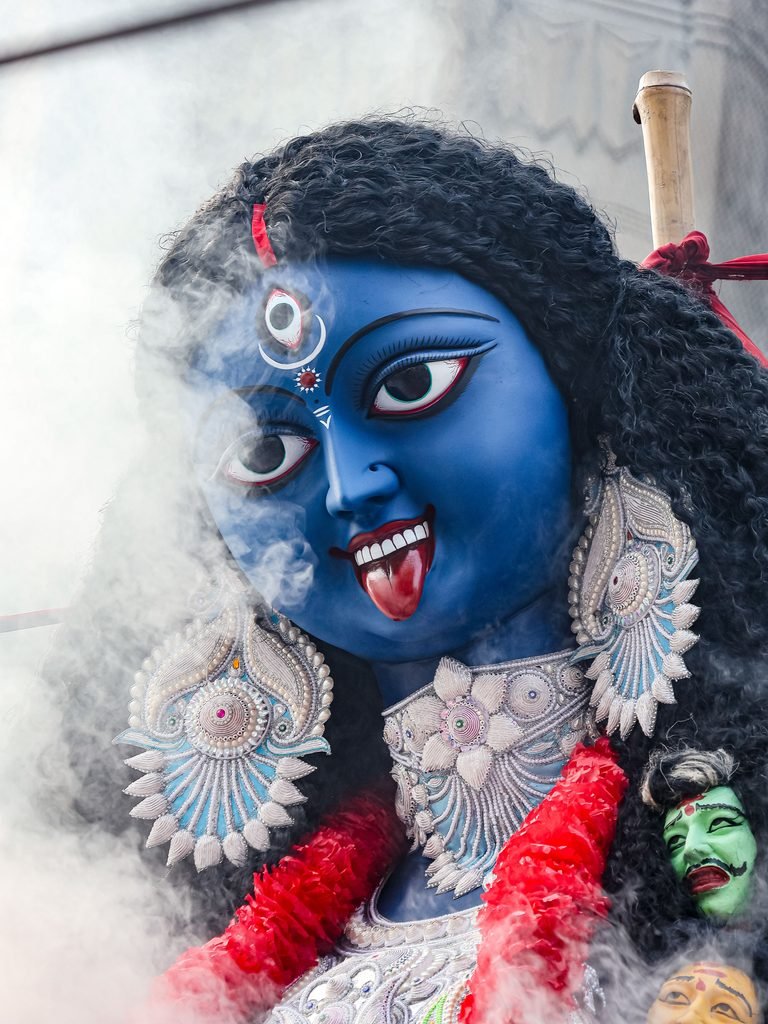
For all her formidable appearance, Kali is deeply beloved by countless devotees as Maa Kali, the Divine Mother. Her fierceness and motherhood are not opposing qualities. Her strength is seen as protective, while her maternal nature offers compassion, intimacy and refuge. This harmony of power and tenderness is especially important in appreciating devotional art. A depiction of Kali with weapons, a fierce countenance or a garland of severed heads may proclaim divine might, yet she is a Goddess approached not with dread but with love and trust.
Worshipping Goddess Kali
Traditionally, Goddess Kali has been associated with fierce forms of worship, including Tantric practices. Some accounts also associate her worship with indigenous and tribal communities. Over time, the Bengali Brahmin tradition incorporated the worship of Kali. To date, Goddess Kali continues to be worshipped by Tantrics. Her worship is traditionally performed at night, and it is prescribed that a devotee of Kali meditate through the night until the early hours of dawn.
The worship of Goddess Kali was gradually incorporated into Bengali Brahmin religious practices. However, Kali Puja was further popularised by socio-religious figures such as Ramakrishna Paramahamsa and his wife, Sarada Devi. The temple at Dakshineswar remains a revered religious destination.
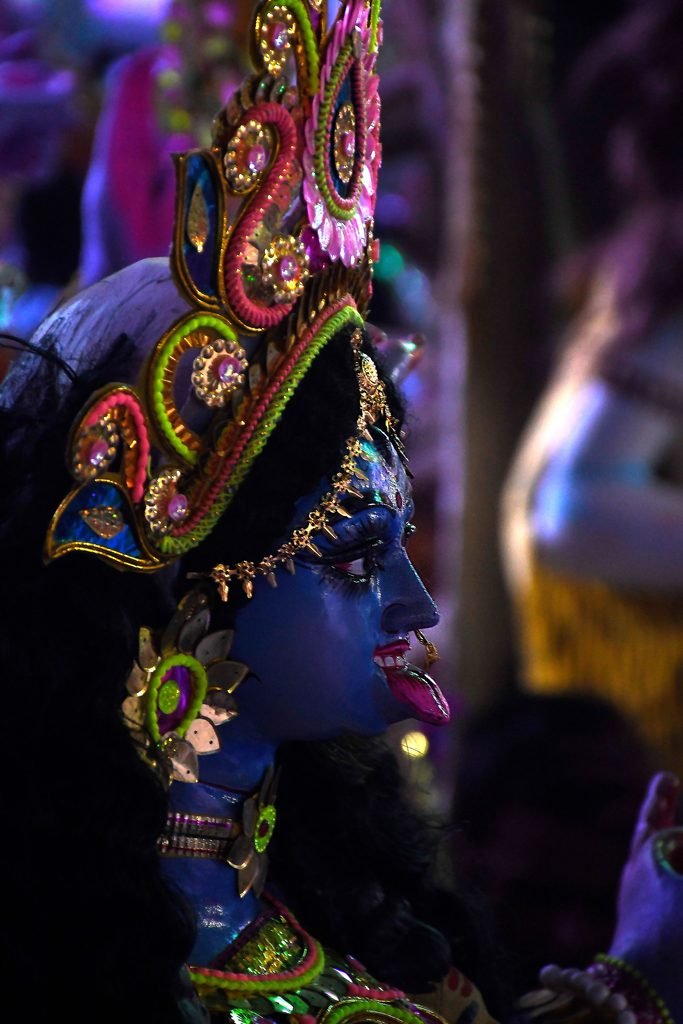
Bamakhepa, a 19th-century Tantric priest from Bengal, was an ardent devotee of the Goddess. He lived in the cremation grounds of Tarapith, in Bengal, and worshipped Shamshan Kali, a more ferocious manifestation of the Goddess.
However, with the passage of time, Kali has increasingly come to be associated with the benevolent Mother Goddess – the mother who destroys all negativity and restores peace.
Believed to be a manifestation of Supreme Power, Goddess Kali is worshipped across the country, with the eastern states of West Bengal, Assam and Odisha being among the regions where her worship is most prominent. Major temples dedicated to Goddess Kali include the Kalighat Kali Temple, Dakshineswar Kali Temple and Belur Math, all in and around Kolkata, as well as the Kamakhya Temple in Guwahati.
A few factual points worth checking before publication:
- Shumbha and Nishumbha: The commonly accepted spelling is Shumbha and Nishumbha. However, in the Devi Mahatmya, Kali’s emergence and the battle involving these demons have a more elaborate narrative. The original account has been simplified rather than substantially rewritten.
- Autistic tribal communities: I have removed this phrase because it appears to be an incorrect use of the word autistic. If you meant Adivasi or indigenous tribal communities, the revised wording captures that possibility without making an unsupported historical claim.
- Belur Math: It is primarily the headquarters of the Ramakrishna Math and Mission, rather than a temple dedicated exclusively to Kali. You may want to reconsider its inclusion in this list.
- Kali as Shiva’s consort: This is one interpretation found in devotional traditions, but Kali’s theological identity is more complex, particularly in Shaktism.

By Sampurna Majumdar
Sampurna Majumder is a communications professional born and raised in Kolkata. Fascinated by creativity from a young age, she has a deep love for music, literature, and world cinema. An avid reader and traveler, she holds a Master’s degree in Literature from the University of Delhi.