




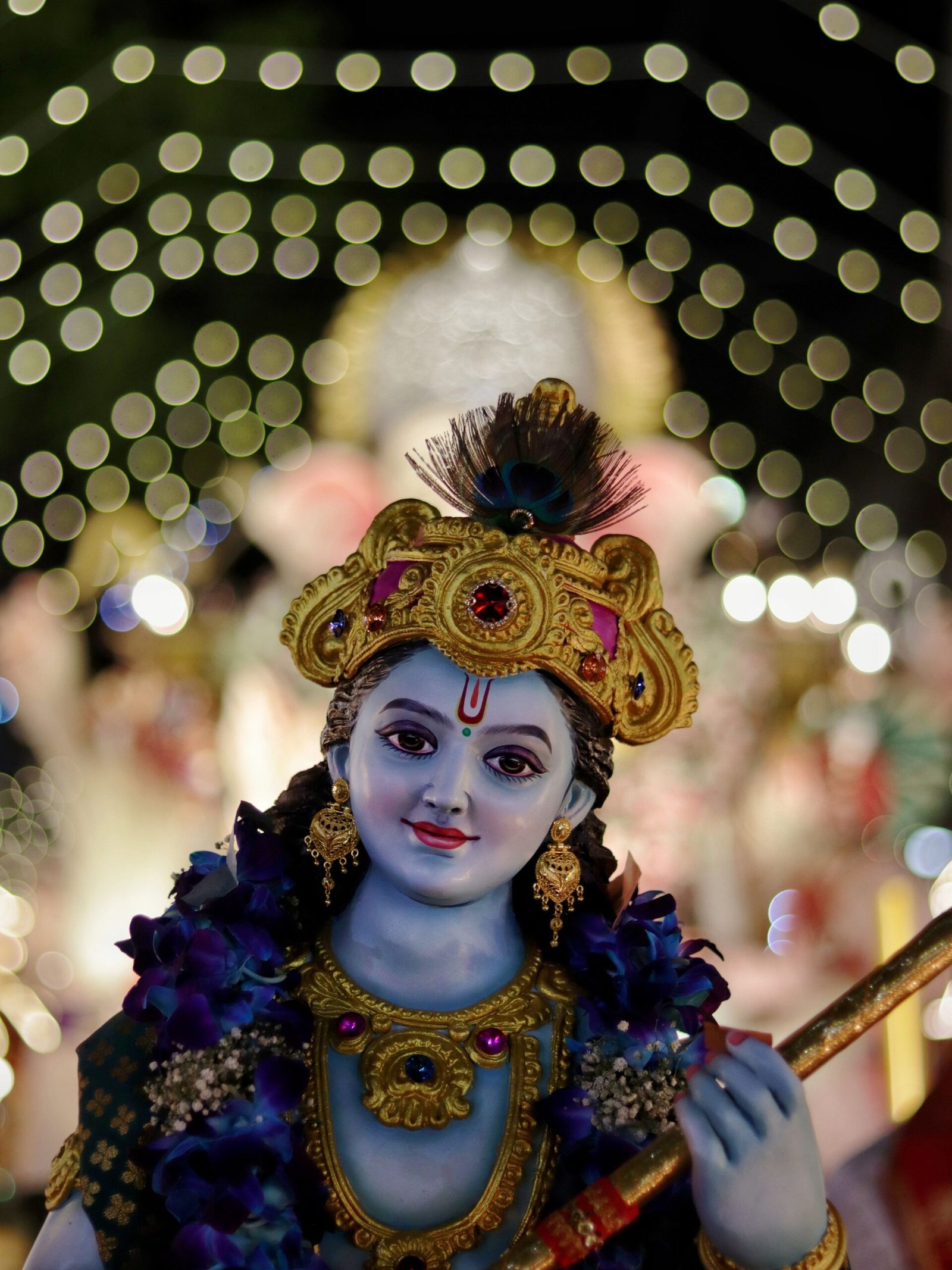

Last month, Indians celebrated Janmashtami, the birthday of a beloved deity, Lord Krishna. We Indians find the dark-skinned Krishna cute and divine… little idols of him dressed up, garlanded, fed butter and sweets, photographed a hundred times before the day is out.
But when a kid is born dark-skinned, somehow the same nation that adores its dark God turns around and offers unsolicited advice, comments, comparisons. Saffron milk. Turmeric paste. Whitening creams. Beauty treatments. What not.
Why the double standards?
I don’t have a clever answer to that. What I have instead are two pictures that are very close to my heart, and a couple of tiny, life-altering incidents connected to. I want to share them with you today, because I think they say more than any argument I could make.
Pic 1: Maakhan Chor
The first image is of Krishna as a mischievous child – Maakhan Chor, the butter thief – caught red-handed with his fist in a pot too high for him, cheeks smeared, eyes wide with practiced innocence.
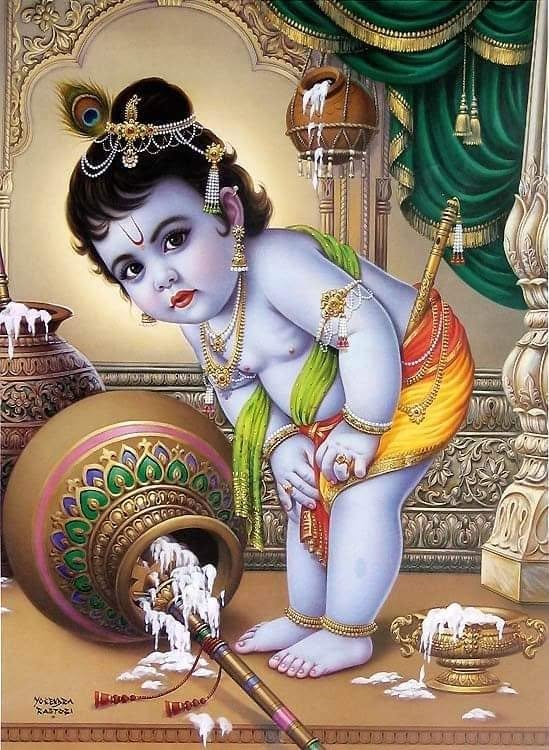
When I was pregnant, somebody told me that the baby would resemble the person whose face I see the most, every single day. I don’t know if there’s any science to that, but I wasn’t taking chances. I got a poster of this very image stuck on the wall right across from my bed, so that the first thing I saw every morning, and the last thing every night, was this divinely cute, dark, mischievous little face.
And true to those words, my baby did grow up exactly like him. The same naughtiness. The same cheerful restlessness that never sat still anywhere. The same love for milk. And the same affection towards everyone, stranger or family.
She even looked like him – chubby and sweet, with all the dark-skinned glory of the “Syamavarnan” (which in Malayalam means, the rain-cloud complexioned one). Her name Megha even means rain cloud. I named her before I knew what she’d become, and then she went and became exactly that.
Pic 2: Chakadola
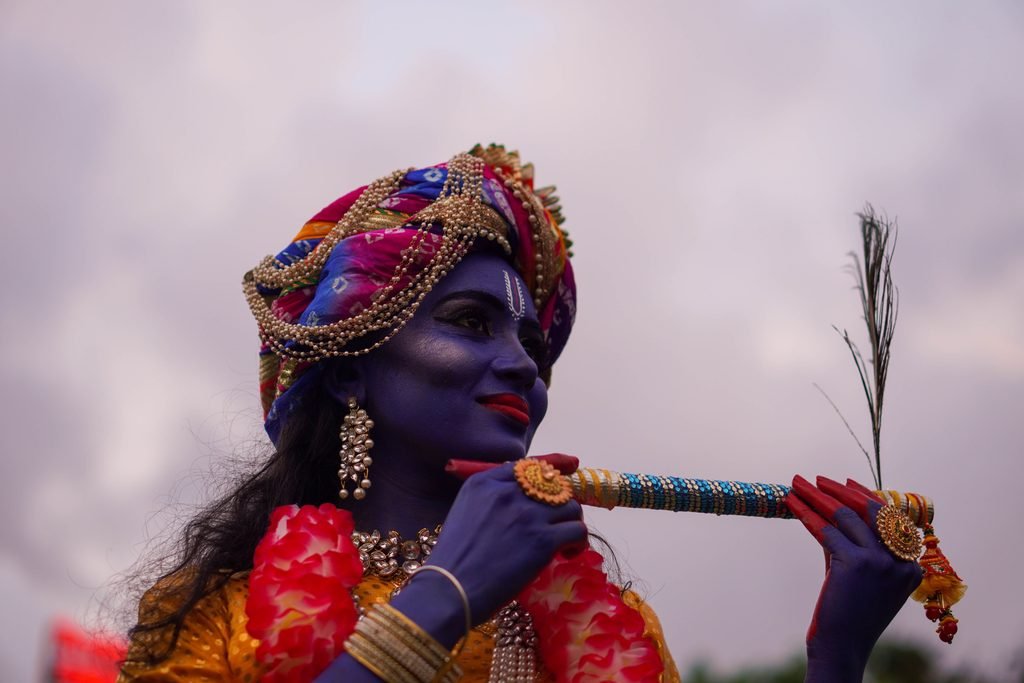
The second image is of Lord Jagannath — worshipped in Puri, in Odisha, as the Darubrahman form of Krishna. That bold black face with the huge, round eyes has a name of its own: Chakadola. If you’ve never seen it, it can be jarring the first time – it doesn’t look like the soft, sweet Krishna we are used to seeing. It’s bolder, stranger, blacker… and magnificent.
When we moved back to India, to Odisha of all places, Megha was just eight years old. For context, she had spent her early childhood in Ethiopia, learning in an American International school with kids from various nationalities.
Eight is not an easy age to be uprooted. She had to adjust to a new city, a new culture, make new friends in a language she wasn’t yet comfortable in. She stood out among the fair-complexioned kids in her new school – not only for her skin colour, but for her foreign accent and her Western way of dressing. Everything about her announced “different” before she’d even opened her mouth to say hello.
One day she came back from school crying – the inconsolable kind that scares a mother. Apparently, some kids had been calling her “Gorilla” – because she was dusky, because she’d come from Africa, because her arms were a little more hairy than theirs. (Children can be astonishingly cruel with astonishingly little effort.)
I was shaken. Badly.
I need to tell you why that moment shook me the way it did – more than most mothers, perhaps. At the risk of sounding like a victim card case file…
I grew up with severe confidence issues because of my own dusky skin, and my mixed heritage. My mother was very fair, my father was dark, and close relatives found this endlessly funny. As a small child, I remember being told, of course ‘jokingly’, that I had actually been “bought from a fisherwoman called Patricia at the fish market” ! Because, how else could such a fair mother have such a dark daughter? That joke, repeated and laughed at, over the years by one relative or another, left something behind. Invisible lesions on the heart. Small invisible chunks taken out of a child’s self-confidence.
I was called other names too, as a young woman, that today would be recognised as “soft slurs”. It took me until my mid-twenties to genuinely love myself in the colour I was born with. That is a long, long time for a young girl to walk around not liking her own reflection. I know exactly what that road feels like, every pothole on it, because I walked it myself.
So when Megha came home in pieces that day, something in me went very still, and then very fierce. I could not – WOULD NOT – bear the thought of my own daughter walking that same long road, carrying the weight I had carried for so many years. And a mother protecting her child from a pain she knows intimately – that is a different, fiercer creature.
So I sat her down, and I asked her:
“What is the colour of Jagannath? It is black. Just like yours.”
“Why do you think he made YOU in his own colour? Because he considers you special. More special than anyone else. Closer to his heart.”
“So should you be crying? All these people pray to him, and HE chose YOU to be like him. So if anything, THEY should be the ones feeling bad – that they’re not the privileged ones.”
I told her to never, ever forget that. And to give that exact reply to anyone who ever tried to bully her about her complexion again.
I believe – rather, I hope – that was a life-changing moment for her. It gave her the confidence to be comfortable in her own skin, years before I had managed the same for myself. She grew up to become one of the most popular girls in her school. A pet of all her teachers, a role model for her juniors and peers, known for her smart, carefree attitude, her sense of responsibility, and her excellent dancing skills.
Today, she is pursuing her long-cherished dream of becoming a fashion designer. In an industry that runs on image and appearance more than almost any other, she walks in exactly as she is. Dark, and unbothered, and thriving.
Even today, when I read this story back – and I have read it a hundred times by now – I still tear up. My hands still shake a little. That is how deeply this one moment shook me, and how fiercely it turned me into the protector I didn’t know I had in me until that day. If you ask me for the proudest moment of my life as a mother, it isn’t a graduation or an award or a milestone photo. It’s this. A conversation on a bed, on an ordinary afternoon, that I hope rewrote something in her before it could ever take root.
Epilogue, of sorts
I’m happy that a good part of her childhood was spent in Ethiopia, where her honey-brown skin was simply considered beautiful. She was made to feel special from a very young age.
But even in Ethiopia we did face some colourism – surprisingly, from fellow Indians! Because we carry these biases with us, wherever we go – don’t we? I remember an Indian friend of ours there, joking to Megha, “You were born during a power cut, that’s why you are black.” Said lightly, as if it meant nothing. I don’t think that friend ever knew how long it took me to settle myself again after.
But I’m proud, that I raised her to value her complexion rather than be deterred by the fair-skin obsession that so many Indians still carry.
We worship Krishna dark. We worship Chakadola dark. We build temples for that colour, sing songs for it, wake up every morning wanting to look at it.
The least we can do is let our own children believe they’re just as divine.
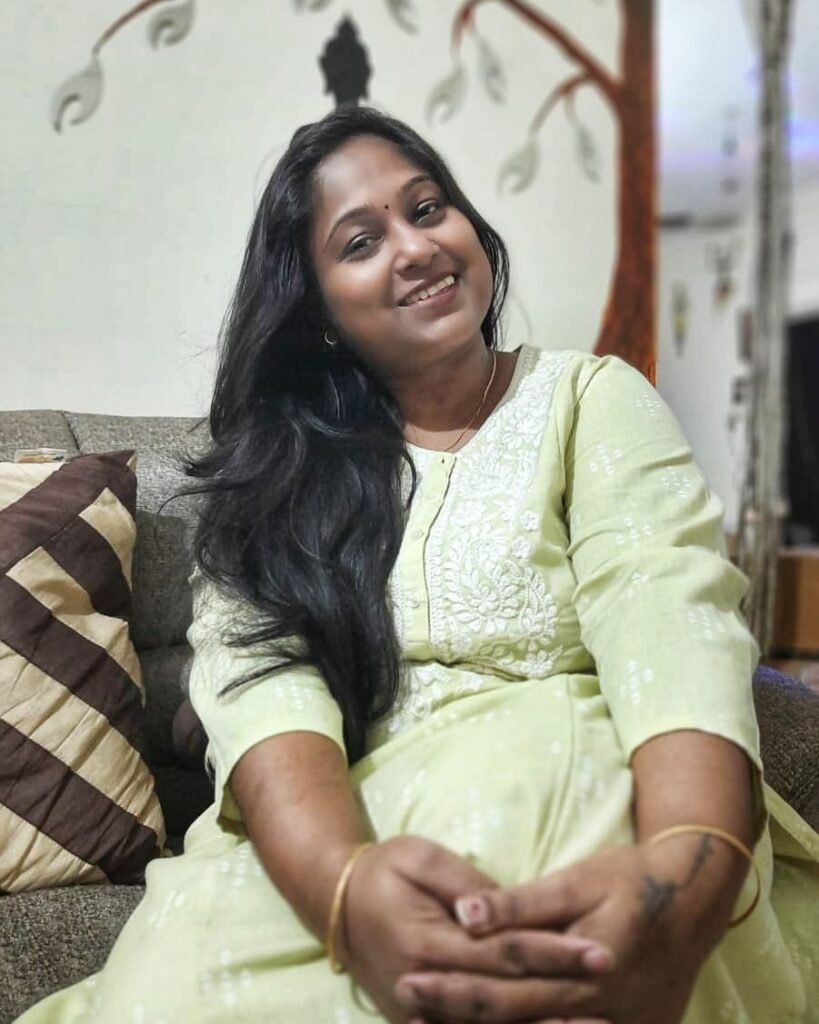
By Deepa Perumal
Deepa Perumal is a Management professional, and a passionate advocate for women’s empowerment. As a career mentor, entrepreneur, and multilingual author, she shares her insights through blogging and writing features on history, world cultures, travelogues and memoirs. Contact her at deepabperumal@gmail.com