





There are some festivals that remain dates on a calendar, while others become deeply woven into the fabric of our memories, returning years later through the faintest of triggers—the fragrance of an incense stick, the sound of a factory whistle, the sight of a decorated bicycle, a particular taste of food or even a familiar road that suddenly takes us back to a time we thought we had left far behind.
For me, Vishwakarma Puja has always belonged to the latter.
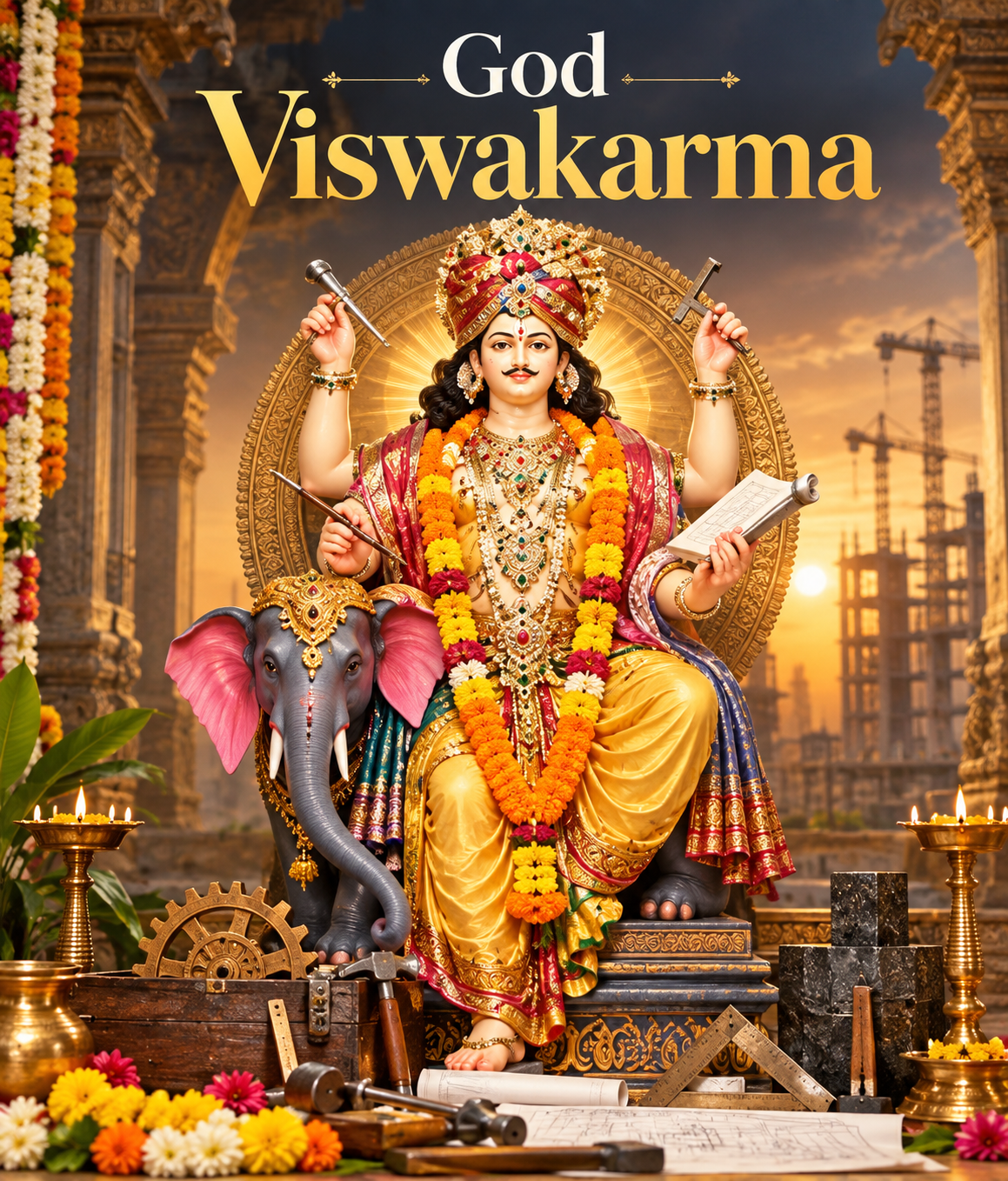
Vishwakarma, revered in Hindu tradition as the divine architect and craftsman, is considered swayambhu, the creator of the world and the maker of magnificent cities, palaces and celestial weapons, and is also remembered as the divine carpenter, making the festival particularly meaningful to those whose lives revolve around machines, tools, engineering, craftsmanship and the countless forms of human labour through which the world around us is built and maintained.
Growing up in Namrup, an industrial township, I think I absorbed the spirit of Vishwakarma Puja long before I understood its mythology.
Perhaps every Namrupian has a different version of the festival tucked away in some corner of childhood, because this was the day when we were allowed into the fertiliser factory, a place that normally belonged to the adults and appeared to us children as an enormous, fascinating world of machines, buildings, whistles and mysterious activity.
The morning at home would begin with the cleaning of our bicycles and scooters, because motorcycles and four-wheelers were still a luxury and rather scanty to spot in the township in those days, with the elders taking care of the washing while we, the younger ones, were assigned the equally important task of fetching water, after which we would take a quick shower, put on our best clothes and decorate our vehicles with whatever little we had, usually a garland of thermocol circles and a few incense sticks.
Nothing elaborate was required, because the excitement came from the occasion itself.
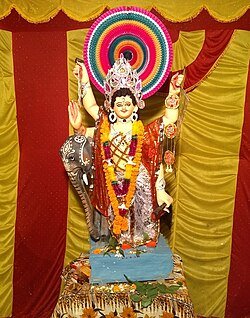
Then I would accompany my father on his scooter to Nogadolong, where entering the BVFCL factory felt like being given access to a secret kingdom, and although I know today that it was a struggling factory with modest remuneration and limited opportunities for promotion, none of those realities existed in my childhood imagination because I only remember the towering structures, the machinery, the familiar faces and the peculiar comfort of being part of something much larger than ourselves.
At my father’s unit, we would be greeted with boondia-bhujia, raw mogu and coconut, often wrapped in old newspaper, and I still remember how festive those humble offerings felt, while the decorations consisted largely of multicoloured crepe paper cut into little inverted triangles and suspended from strings, fluttering above our heads as we ran around and swirled our frocks beneath them. Next to the idol of Vishwakarma Baba, will the mechanical weight machine, which was equally decorated and worshipped. We would carry rubber balloon and inflate them with hydrogen gas only to release them to see them fly up higher and higher. Bingo, they are out of sight in a flash of moments. What a feat accomplished!
The whistles from the factory would occasionally be so loud that they frightened us, and the industrial noises could be deafening, yet those very sounds have become precious with the passage of time because they belong to a world that I experienced before I knew enough to question it.
When it was time to leave, we would take a little boondia-bhujia home for Maa, and if we encountered a friend on the way, the journey would inevitably become longer because a chance meeting demanded a conversation, while a particularly fortunate day might reward us with a snake balloon or one of those wonderful spiral balloons that seemed infinitely more exciting than anything we could buy today.
My memories followed me into Kendriya Vidyalaya,Namrup where Vishwakarma Puja meant sitting on benches and eating steaming hot khichdi, watching girls arrive in sarees and suddenly appear much older than they were, while the excitement of dressing up, meeting friends and sharing a meal somehow transformed an ordinary school day into something memorable. Physics and Chemistry labs would come to life that day.
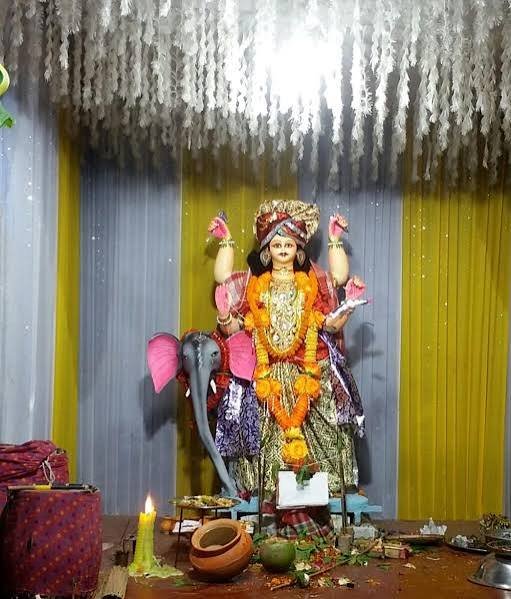
Later, during my medical college years, the festival acquired another chapter, worshiping the operation theatres, the deep cleaning preceded, the Boyle’s apparatus being the deity, putting on red vermilion, with pandal hopping through the hostels and departments of Assam Medical College, meeting friends along the way, eating whatever had been prepared, posing for photographs and walking around until our feet hurt, while I particularly remember the pleasure of collecting money, making a modest budget and figuring out how we could put together a Puja and lunch with whatever resources we had.
Looking back, there was an innocence in those celebrations that I did not recognise at the time.
We were not trying to create an experience worthy of a photograph; we were simply experiencing it.
Then life changed, as it does for all of us. We travel in cars, luxury fancy cars .
I left college, started working and gradually began seeing Vishwakarma Puja from the other side of the celebration, through the eyes of a doctor who could no longer look at a festive day without also seeing what happened in emergency rooms when celebration crossed the line into recklessness.
The festival began bringing with it road traffic accidents, trauma, alcohol-related injuries and frightened families, and the contrast was difficult to ignore because outside there would be colourful clothes, decorated vehicles and music, while inside the hospital the consequences of speed and intoxication would unfold in blood, pain and anxiety.
Perhaps that is one of the strange transformations that medicine brings into a person’s life; experiences that once seemed entirely innocent acquire another dimension when you have repeatedly witnessed what can happen after a moment of carelessness.
I still remember the joy of seeing a decorated bicycle, but today a racing bike passing at dangerous speed can make my heart skip a beat.
I still love the festive atmosphere, but I cannot entirely forget the emergency room.
I still enjoy seeing people celebrate, but I have become increasingly conscious of the thin line between celebration and recklessness.
At the same time, the festival itself has changed around us.
Decorations have become more elaborate, balloons have taken over gateways, food has become more extravagant, outfits are carefully planned and the expectation of making everything look impressive seems to have become part of the celebration, while social media has added another layer by allowing us to see hundreds of versions of the same festival before our own celebration has even begun.
Perhaps that is where we have unconsciously altered the meaning of festivals.
We are no longer satisfied with experiencing a celebration; we also want to present it.
A beautiful outfit, an elaborate decoration, an impressive food spread, a carefully arranged family photograph and a perfectly edited reel can sometimes become more important than the quiet moments that originally made the festival meaningful.
We begin adopting ideas because they are popular, buying things because they appear essential in someone else’s celebration and following rituals or trends without always stopping to ask whether they have any personal meaning for us.
There is nothing wrong with change, because traditions have always evolved, but there is a difference between allowing a tradition to grow naturally and allowing an algorithm to tell us how we should celebrate it.
Perhaps that is why I find Vishwakarma Puja particularly relevant even now, because beneath all the decoration lies a very simple idea—the acknowledgement of work and the people whose knowledge, skill and labour keep everything functioning.
The mechanic who repairs a vehicle, the electrician who restores a connection, the technician who maintains equipment, the engineer who designs a system, the factory worker who operates machinery and the craftsman whose hands carry years of knowledge are all part of the invisible network that allows the visible world to function.
Medicine has made me especially aware of this interdependence, because a surgeon may perform an operation, but an operating theatre works only when nurses, technicians, anaesthesia staff, attendants, laboratory personnel, biomedical engineers, electricians, cleaners and countless others perform their roles with equal precision, and when everything goes right, most of these contributions remain unnoticed.
Vishwakarma Puja gives us an opportunity to remember them.Not merely the machines, but the people behind them.Not merely the finished product, but the labour that produced it.Not merely the spectacle, but the skill and effort that made the spectacle possible.
And when I look back at my own journey, from that little girl entering the factory with her father to the woman who now walks through hospital corridors during the same festival, I realise that my understanding of Vishwakarma Puja has changed as much as the festival itself.
As a child, it was the excitement of entering the factory.
As a student, it was hot khichdi, sarees, friends and pandal hopping.
As a young doctor, it became another busy day at work.
And now, perhaps, it has become a meditation on how much the world around us has changed and how much we ourselves have changed with it.
I miss the bright idols, the colourful clothes, the crepe-paper decorations fluttering in the air, the smell of incense, the hot khichdi, the little balloons, the packet of boondia-bhujia meant for Maa and those long walks that left our feet aching, but what I really miss is the absence of pressure – the feeling that a celebration did not have to be bigger, better or more beautiful than someone else’s.
There were no carefully curated expectations, no need to document every moment and no anxiety about whether our festival looked impressive enough.
We simply belonged to it.
And what I am searching for when I say that I miss those days—not necessarily a return to the past, because the past had its own limitations, but a return to the uncomplicated feeling that a festival is meant to give us.
Today, when the fragrance of incense drifts through the air during Vishwakarma Puja, it carries me back to that scooter ride with my father, the factory gates, the sound of machinery, the colourful paper decorations, the taste of ladoos and the strange excitement of being a child in a world that seemed enormous and safe.
The world is certainly different now, and perhaps I am different too.
Maybe I am getting old and outdated, or perhaps the world really is moving too fast.
I honestly do not know. 🤔
All I know is that I sometimes long for a festival that does not ask us to impress anyone, a celebration that leaves enough room for conversation, laughter, food, memories and perhaps even a little silence.
Because years later, it is rarely the grandeur that we remember.
It is the feeling.
And that is perhaps what Vishwakarma Puja still gives me—the chance, for a brief moment, to return to a time when a garland on a bicycle, a few strips of coloured paper, a packet of sweets and a ride with my father were enough to make an entire day feel magical. ❤️
Am I getting too old and outdated, or is the world really moving too fast? 🤔
Share your Vishwakarma Puja stories too… would love to read them. 😊❤️
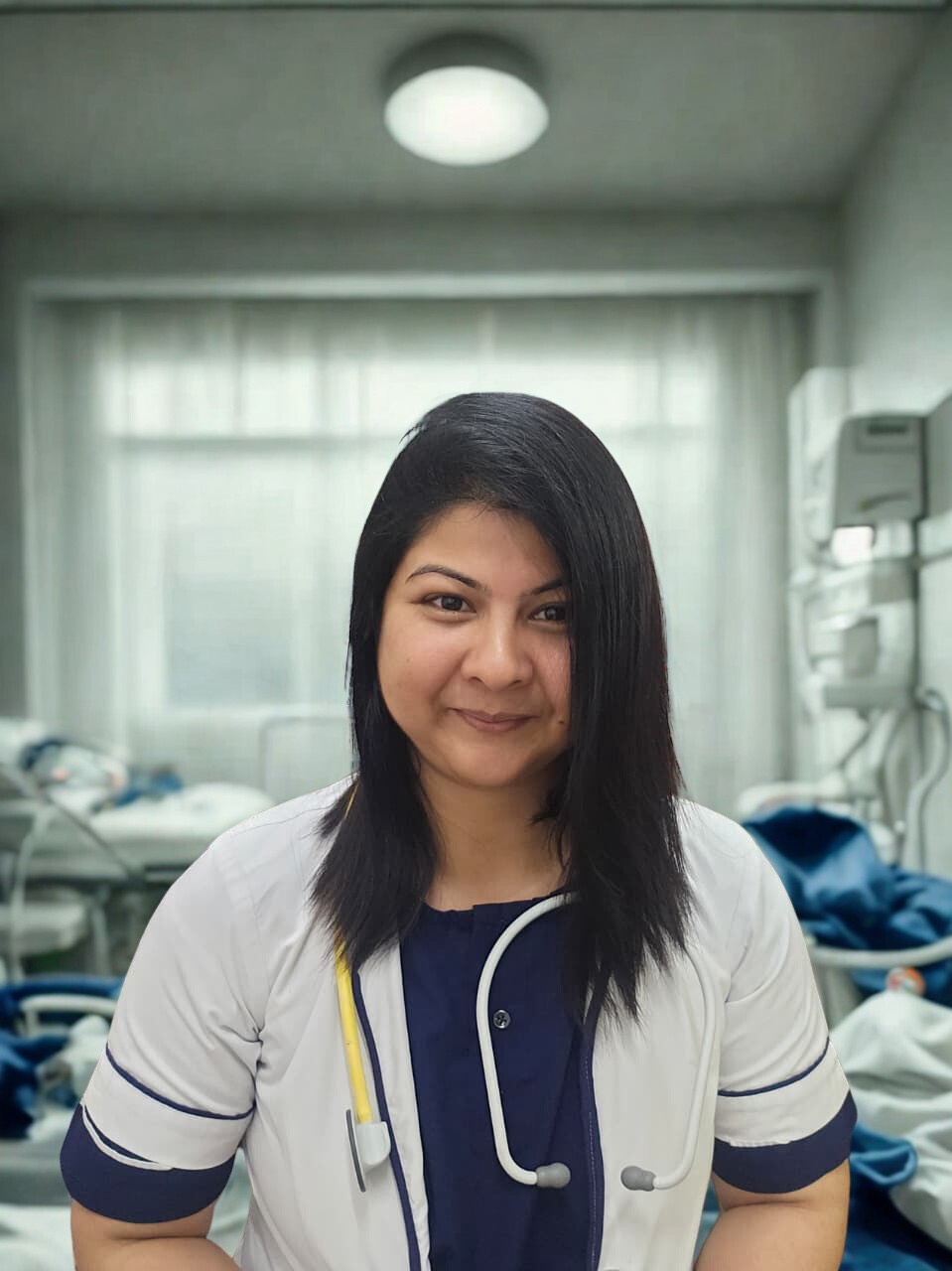
By Dr Nirza Saikia
Dr. Nirza Saikia is a medical professional, writer, and researcher with interests in women’s health, medical ethics, public policy, and the intersection of technology and society. Her work explores how systems—from healthcare to artificial intelligence—shape lived experiences, particularly for women and marginalised communities She can be reached at nirzasaikia@gmail.com.