





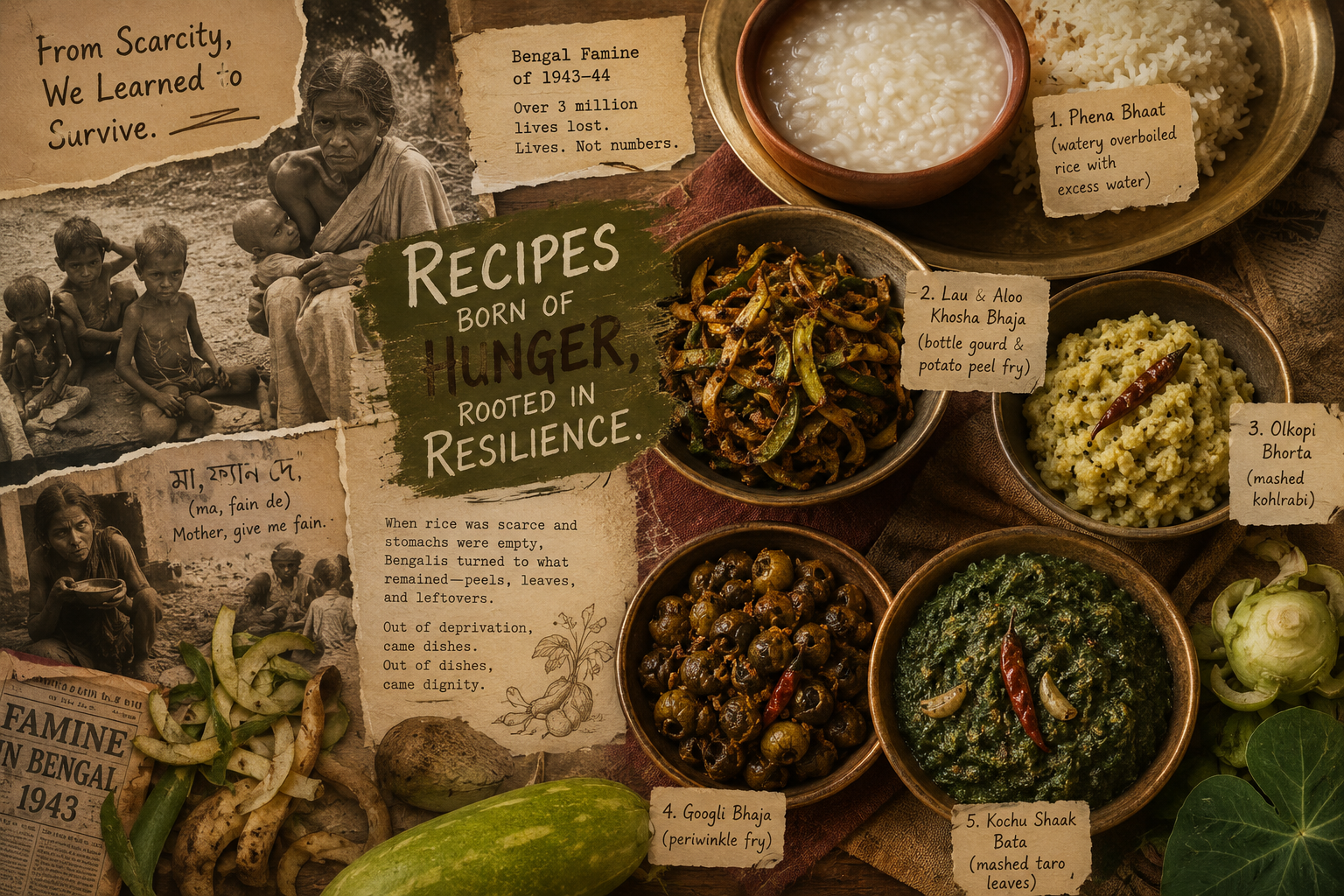

For a long time, I have been a fan of a simple Bengali dish. It is called lau-er khosha bhaja (fried bottle gourd skin). The alienness of this dish may sound off to anyone outside Bengal, of course, because who would want to eat veggie skins? The seriousness of the dish is, however, often overlooked.
The Bengali kitchen may seem like a place where anything goes. But history has taught us well, and it has in fact been a cruel lesson. So, if you find yourself eating banana stem, banana flower, pumpkin flower or more fried veggie skins, then chances are that it was a common practice during the Bengal famine. Utilising everything, every bit of the produce to create a dish.
Bengal has experienced several major famines during the colonial era from 1757–1947, but one that continues to live on in collective memory is the Bengal Famine of 1943.
Between 1943 and 1944, well over three million people died from starvation. The causes of the famine are widely debated. Still, man-made causes, particularly Winston Churchill’s policies, are often alluded to in academic work (Amartya Sen’s work on the entitlement theory is illuminating and recommended for perusal).
A history of deprivation and lack of access to food led Bengalis to innovate, making the most of their ingredients and producing dishes that would otherwise be considered waste.
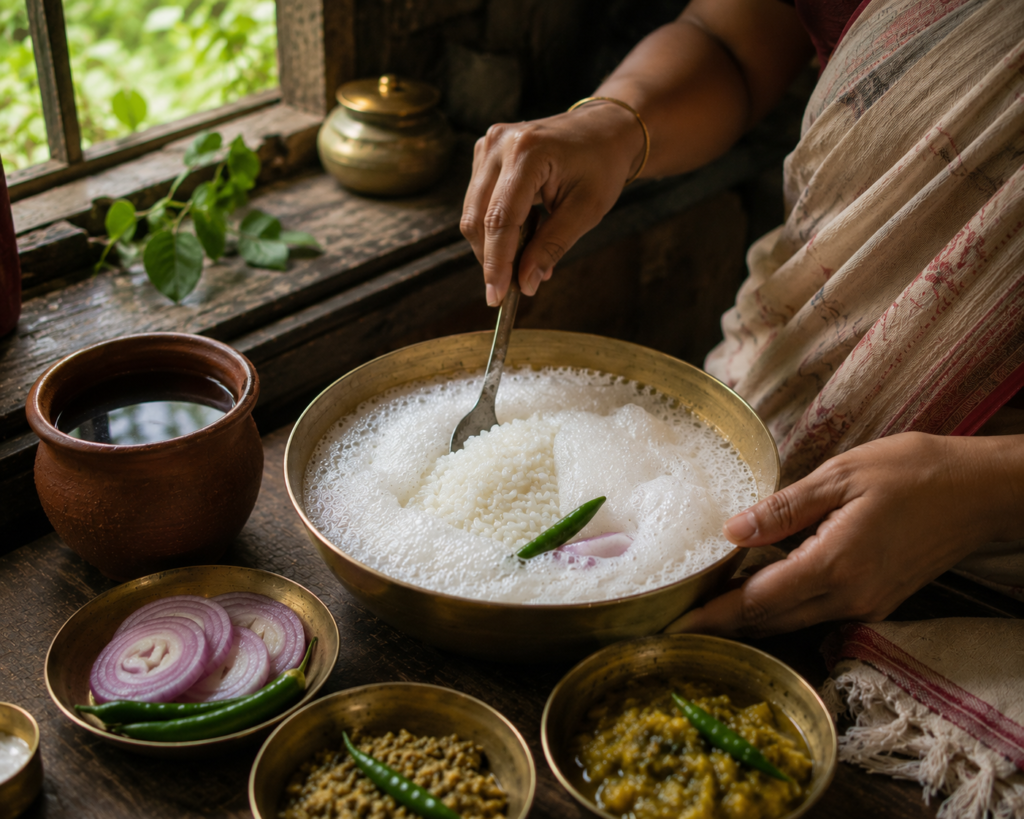
People died without food, which in today’s time of fast food and gourmet attractions seems so unnatural. Not to mention, one of the worst ways to die. At that time Bengal’s starved population found themselves begging for something as strange as fain. The word simply means rice water. The starch that is left over from cooked rice. Modern folks might find it amusing that the phena bhat (watery rice) they so identify with in reminiscence of their roots was not always so charming. The cries of “ma, fain de”, or mother give me fain, from rural Bengal might have eroded with time, but its sentiments sure echoes (silently enough) from every morsel of rice Bengalis eat today across the world.
Some historians and experts also believe that the famine taught Bengalis how to eat atar ruti or what the North Indian would simply call roti. Due to scarcity of rice, wheat was given preference, and ruti took over. To be honest, Bengalis on both sides of the border are terribly afraid of ruti. That is why a Bengali grandmother will only ask you the following, “bhat kheyecho?” Or, “have you eaten rice?” Which basically means that she wants to know whether you have eaten lunch or dinner. Only rice can complete the meal. But in the scarcity of rice, the Bengal famine saw Bengalis take up aloor torkari or potato curry. Then there were muri, or puffed rice, and a personal favourite of mine, the kochur shak, or leaves of the taro plant.
Growing up, some of my favourite dishes were made of vegetable peels. The tough outer layers of plantains and ridge gourd mashed into a paste and eaten with rice is a dish I remember fondly.
Several traditional methods of Bengali food preparation fit into what influencers now call “scrappy cooking.” Bengali meals prepared and served at home will often include a vegetable dish and another preparation made of the peel or “scraps” of the same vegetable; it most commonly comes prepared as a bhaja or bata.
Khosha refers to peels of vegetables, widely considered to be waste products of cooking in most cultures. Bhaja means fried, and bata refers to making a paste out of something. Popular peels to fry include peels of bottle gourd (lau), pointed gourd (potol) and potato (aloo). Bata is often made from ridge gourd (jhinge), the thick skin of plantain or green bananas (kanch kola), lau and aloo. In addition to vegetarian dishes, trimmings of goat meat, periwinkle (googli) and fish innards are all eaten even today.
Needless to say, the victims of famines remind me to be resourceful, economic, and grateful for all that I enjoy.
Some dishes from “famine” include
1. Phena Bhaat (watery overboiled rice with excess water)
2. Lau and Aloo Khosha Bhaja (Bottle gourd and potato peel fry)
3. Olkopi Bhorta (Mashed Kohlrabi)
4. Googli Bhaja (Periwinkle fry)
5. Kochu Shaak Bata (mashed taro leaves)

By Sampurna Majumdar
Sampurna Majumder is a communications professional born and raised in Kolkata. Fascinated by creativity from a young age, she has a deep love for music, literature, and world cinema. An avid reader and traveler, she holds a Master’s degree in Literature from the University of Delhi.









This is an amazing insight into the resilience and creativity of the Bengalis when they faced the famine.
Thanks a lot Richa
This was nostalgic and insightful at the same go…and made me a little gloomy and a lot grateful too!
By the way, I’m in love with these batas and bhajas as well…
Thanks Promita