






Sandese ate hain …Humein tadpate hain…Ki chitthi ati hain …To pucche jate hain … Ki ghar kab aoge…Ki ghar kab aoge?…Likho kab aoge…Ki tum bin yeh ghar soona soona hai.
(Messages come, they make us writhe, letters come, and the question is asked: when will you come home, for the house is empty without you)
This song from the iconic film Border summarizes the power of handwritten letters in a time when means of communication were few and far between.
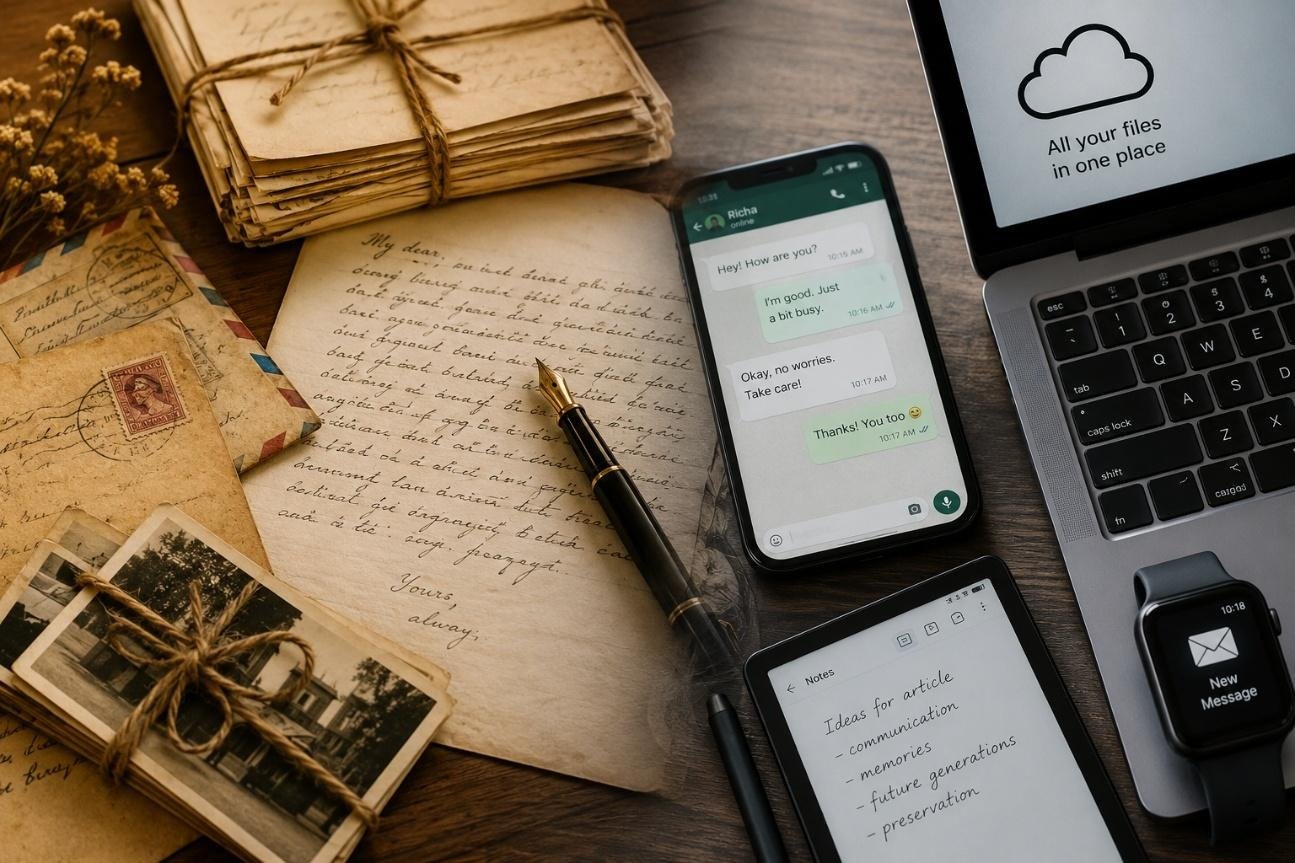
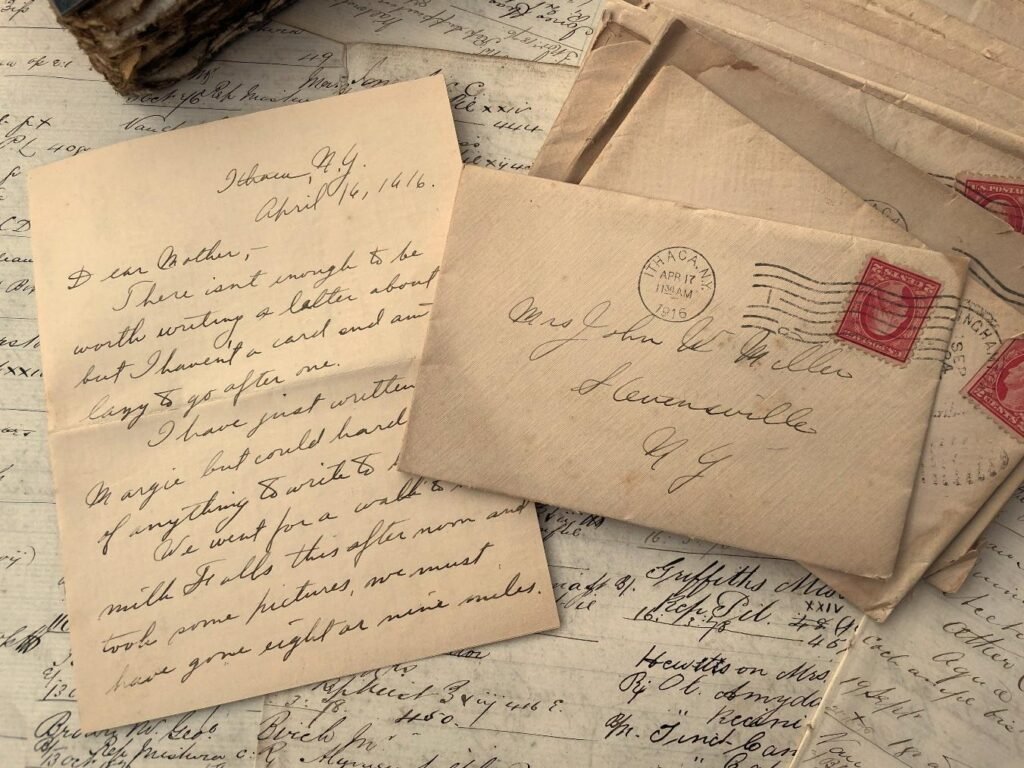
Each letter had a personality – the plain white paper conveying the mature, no-nonsense attitude of the writer. The nib of the pen dabbled in ink, in cursive writing or otherwise, disclosing the character of the writer, the seal on the envelope, displaying the logo of the sender, and the stamps themselves, telling the story of the letter’s travels.
We could not simply write a letter and get an instant reply. There were days the letter took to reach its destination, to be read with great anticipation by the receiver. We were taught etiquette by our parents quite early on – not to read the letters meant for someone else. Then there would be some days of deliberating upon the letter, about the answers; then the reply would be sent by return mail. By the time the first sender received the letter, some 15-20 days would have passed. The process itself taught us the value of patience.
And usually, the letters were wrapped up along with their envelopes and tucked away somewhere secret as a treasure trove, to get back to whenever the whim struck. They had sepia-tinted memories.
The sepia-tinted memories are no longer available in the world of smartphones and social media, which run on instant gratification. If I write an email, a reply is expected within 24-48 hours. If I send a message on WhatsApp, the turnaround time is even less – as soon as the receiver sees the message. If the blue ticks are seen but no reply, our minds hurl in different directions, building various scenarios as to why the reply was late. The answer could be as simple as the receiver being busy.
Thus, the value of patience and waiting is being eroded. Now everything is available at the tip of our fingers. But have we ever realised that everything can also be lost at the tip of a finger? Suppose we press the wrong icon – all data gone. Suppose there is a cyberattack – systems fail. It is difficult to retrieve the lost data. It is not as difficult to retrieve a bundle of letters.
Have you ever imagined what will happen to our writing or intellectual work, so much of it is in cloud computing? I am not talking in terms of our demise. I am talking in terms of the destruction of the whole mankind as we know it today. Since most of the information about our generation is stored on the computer system, with a systemic failure it would appear as if there was no civilization at all – that there was a civilizational vacuum.
We harp on soft copies, but we should do well to have hard copies stored somewhere physically, too. So that when the future civilization (in whatever form may be resurrected) will have something concrete as evidence to build up the value base and achievements of their ancestors.
We may consider handwritten letters not merely as relics of a bygone era. They are tangible repositories of emotions, memories and history. Modern gadgets have made communication faster and more convenient, but speed has been granted at the cost of permanence. We need to preserve the best of both worlds. If digital communication keeps us connected in the present, handwritten letters ensure that our stories, values and legacy reach generations to come.

By Richa Verma
Richa is an online English teacher, independent blogger, voracious reader, movie buff who is smitten with wanderlust, and a homemaker. She can be contacted through her email address richavermamh@gmail.com







I can relate to every word. I leave handwritten notes in my daughter’s tiffin everyday, have greetings cards from college days still preserved in folders, i still write letters on special occasions. Emails or texts,they need the support of emojis to emote. handwritten letters are self sufficient in itself.
That’s amazing 😍. You are carrying on a legacy by writing those notes. Your daughter will thank you one day. 🤗
Handwritten letters have their own charm no one replace them very nicely written
Thanks Sampurna, you are right. Handwritten letters have their own charm.
Can absolutely feel what you’ve written…
Handwritten letters have more than mere words in them…
They carry the worlds of the senders for the receivers to inhabit in them!
Hai na? I have some of the most important letters still saved. ♥️