







“Nainaaaa…! Ghost, ghost!”
A blood-curdling shriek tore through the stillness of the night in the quiet suburban village of Amlatara.
Shiuli collapsed with a dull thud. Dark silhouettes rushed toward the sound. A narrow beam of torchlight sliced through the darkness as they hurried toward the toilet at the far corner of the courtyard.
It was Damayanti’s wedding. She lived in a serene settlement not far from Kolkata, the famed ‘City of Joy.’ Four friends had come to attend her wedding – Shiuli, Basanti, Naina, and Damayanti herself, classmates who had studied Philosophy at Calcutta University.

Damayanti was the first among them to marry. Initially, the others had been hesitant. None of them had experienced village life before, let alone stayed overnight. But after much persuasion, a little emotional coaxing, and shared nostalgia, they agreed to come. The three girls, accompanied by Naina’s brother Utpal, arrived on the very day of the wedding.
The plan was simple: stay the night, celebrate the wedding the following day, and return to Kolkata by the local train the morning after. The shaadi-bari buzzed with activity, relatives arriving from different places, preparations for the baarati underway, laughter, instructions, chaos, all woven together in festive harmony.
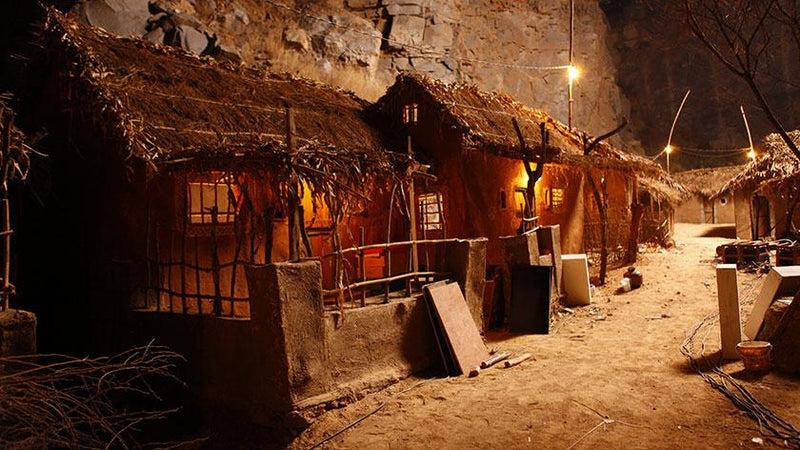
The weather was gentle. Winter was receding with grace, and spring was quietly making its presence felt. The village appeared lush and unspoiled. The girls relished the clean air, a welcome departure from the dust and congestion of city life.
After the gayein holud ceremony, where turmeric was applied to the bride, they indulged in photographs and laughter before preparing for the evening rituals.
It was, in every sense, a beautiful union, two lives converging into one shared journey. As the ceremonies concluded and the guests gradually dispersed, fatigue settled in. Arrangements had been made for the girls and Utpal to stay overnight at a neighboring farmhouse, as Damayanti’s home could not accommodate everyone. Some members of the groom’s party were similarly lodged nearby.
The girls were shown into a modest hall with neatly laid mattresses. The simplicity of the setup did little to dampen their relief; they were eager to rest. Utpal was assigned the adjacent room, sharing it with two boys from the groom’s side.
Montu, the neighbor’s youngest son, ensured their comfort. He placed a large jug of water in each room and carefully tucked in the mosquito nets. As he turned to leave, he reminded them to lock the door from inside. “It’s a new place,” he said, “and stray animals sometimes wander in at night.”
Then, almost as an afterthought, he paused. Turning back, he stepped closer and lowered his voice to a whisper.
“Didimoni… please don’t use the white washroom on the right end of the veranda. If there’s an emergency, use the one at the far end of the courtyard.”
Before they could question him, he was gone.
Late into the night, the house fell into silence. The girls slept deeply. Shiuli awoke with a sudden urgency. The rhythmic chorus of crickets filled the air, accompanied by the steady breathing of her friends.
She hesitated. The thought of stepping out into the darkness, of walking all the way to the far toilet, unsettled her. She waited, hoping the discomfort would subside. It didn’t. Finally, unable to bear it, she slipped off the cot and hurried out.
She moved quickly but realized she might not make it to the farther end. Without allowing herself another thought, she reached for the door of the forbidden washroom. The rusted latch gave way easily.
Relief came quickly. As she stood there, her gaze drifted upward to the small glass window. The moon hung faintly in the sky, partially veiled by drifting clouds.
Then, abruptly, the light shifted.
What she saw next froze her in place.
A face.

A woman’s face, pale, unnaturally so. Large, luminous eyes. A betel-shaped contour. And a smile, wide, unnatural, almost grotesque.
Shiuli blinked. She rubbed her eyes. The image vanished. The moon returned.
She exhaled, her heart racing.
But in the very next instant, the face reappeared.
Closer. Clearer.
Their eyes met.
Those eyes, large, bright, unblinking, seemed devoid of eyelids. A chill crept down her spine. The face lingered, watching her, before erupting into a shrill, piercing laughter that sliced through the silence.

Terror consumed her.
Shiuli screamed, loud, desperate, unrestrained, before stumbling out and collapsing down the steps.
By morning, when Shiuli regained consciousness, relief washed over those around her. Murmurs softened. Breathing steadied.
Montu stood nearby, a faint, knowing smile on his lips.
“It’s alright, Didimoni,” he said calmly. “That was Menaka—the eldest daughter-in-law who once lived here before we moved in.”
He paused, then continued.
“They say the toilet was still under construction when she arrived as a new bride. One night, in a moment of urgency, she stepped out in the dark… and fell into the construction pit.”
He lowered his voice.
“She died there.”
A silence followed.
“She means no harm,” he added gently. “But she appears… sometimes. Perhaps just to watch over women who unknowingly come there at night.”

By Bidisha Dutta
An avid traveller and a lover of literature, Bidisha Dutta works as an Editor with a renowned publishing firm. . Writing and reading is her second nature, and she just cannot sit in peace without these. She can be reached at bidishadutta2000@gmail.com.









Oh wow, a kind moonface. Good one.
Menaka the friendly ghost. Loved it
An interesting read! Subverts the horror and hysteria we associate with ghosts…