





Winter once knew how to knit.
It arrived without spectacle, settling into afternoons, leaning against windows, making room for the quiet. And with it came wool, not as fashion, not as a trend, but as a habit. Winter and wool shared a vocabulary: patience.
Have the days of wool truly gone? Or do they return, now and then, when winter asserts itself and old trunks are opened? Folded inside are sweaters that still carry the faint smell of neem leaves, naphthalene, and time. In a world that has moved too quickly since the nineties, hand-knitted woollens feel like small, stubborn time machines.
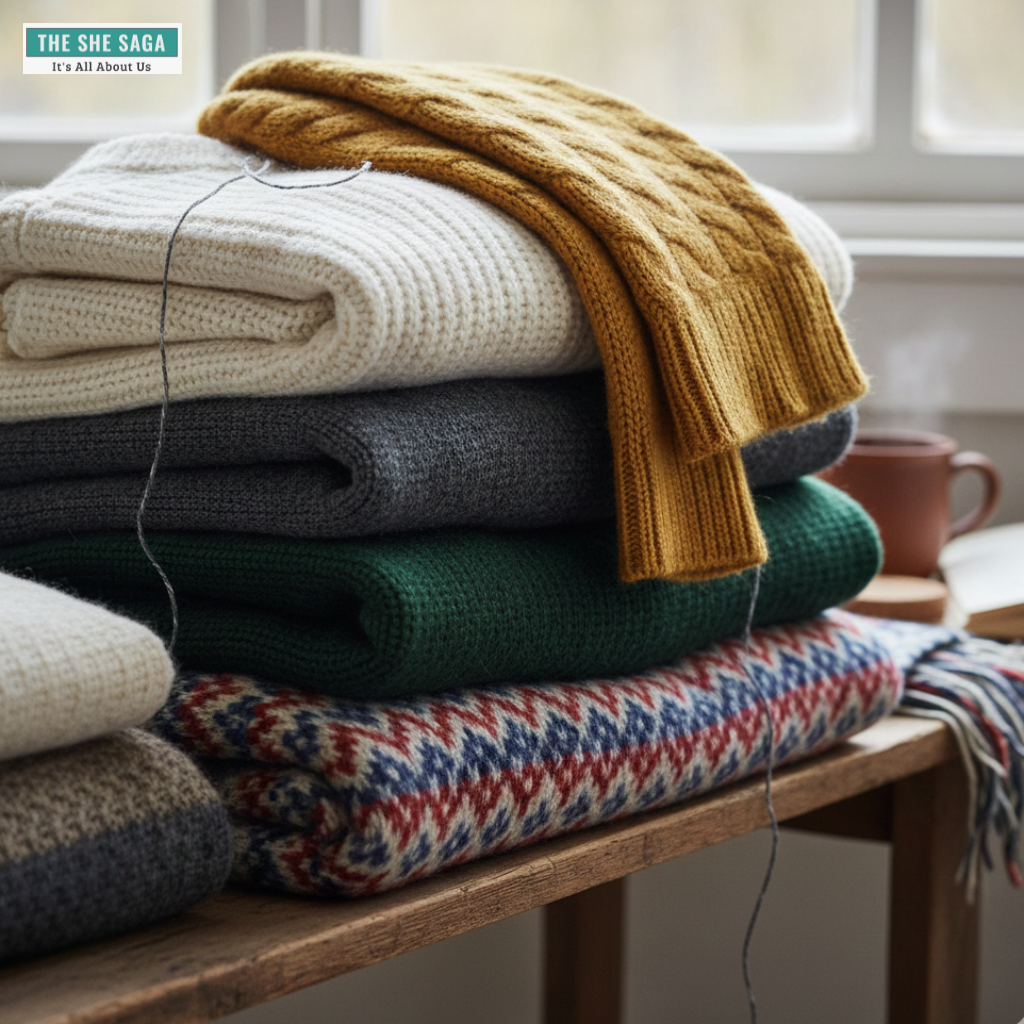
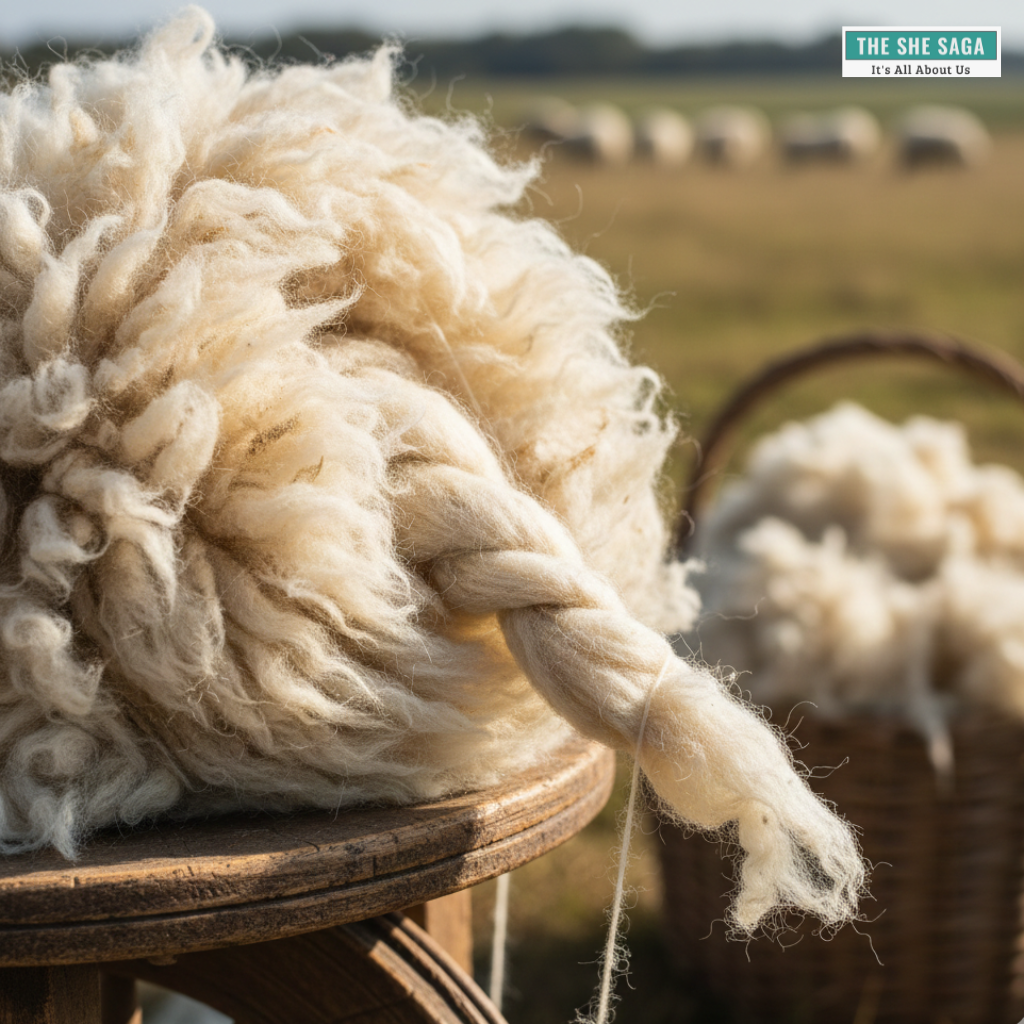
Wool remembers where it comes from. Sheep moving across cold landscapes, shepherds returning home at dusk, light thinning as the day gives up. Across cultures, the shepherd appears again and again, protector, guide, keeper of fragile lives. As winter deepens, such distinctions blur. Faiths overlap. Names dissolve. The cold makes us similar. Winter has a way of turning the world inward.
Wool is not neutral. It is born of bodies that lived and breathed. Some fibres are softer, some stronger, some meant to last longer than others. It resists speed. It demands attention. Once, someone took the trouble to knit a name into a glove, pausing at every letter. While that name took shape, the ball of wool rolled away across the floor, as if it had somewhere else to be.
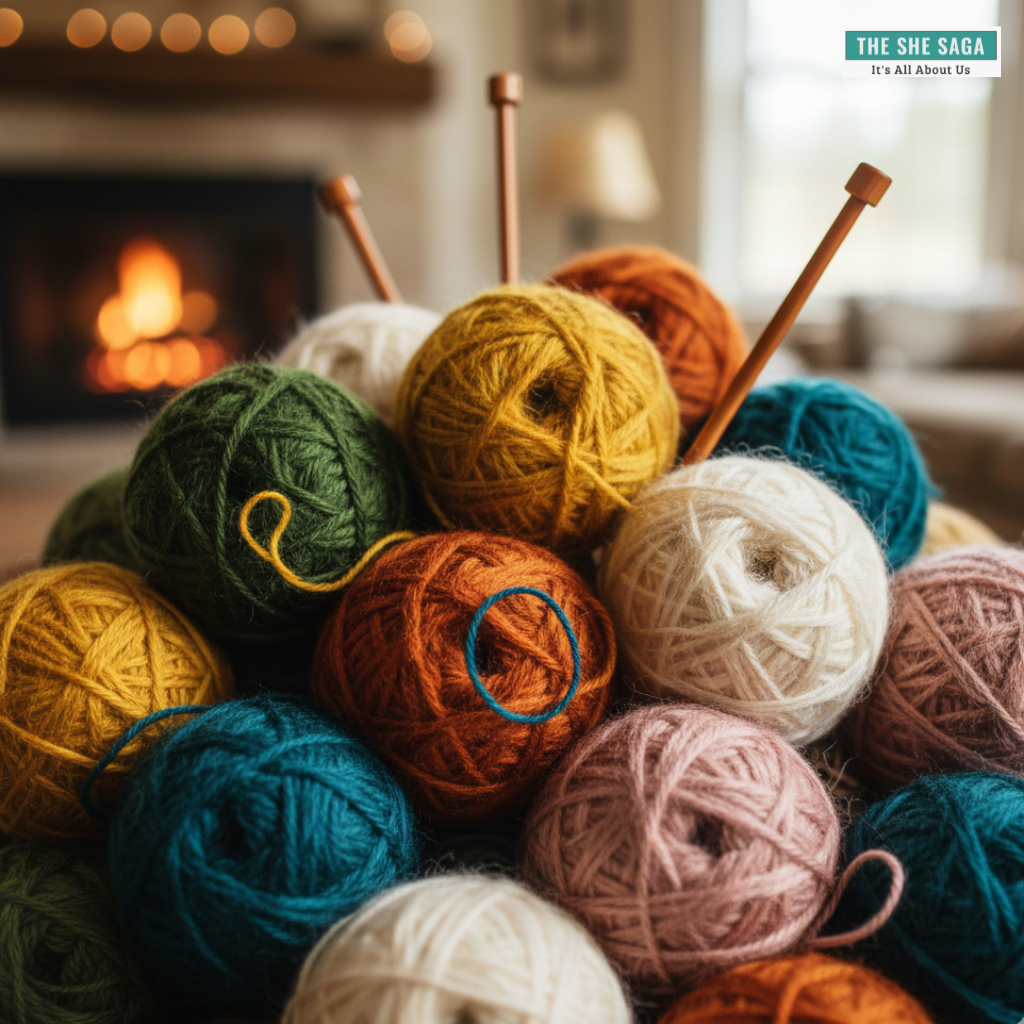
There was a time when winter afternoons belonged to knitting. Small shops stocked needles of every size. Wool balls, white and impossibly bright, sat stacked like restrained joy. Men returned from markets carrying colours they barely understood but trusted. Women sat in the sun, hair loose, talking as needles moved steadily. Lives were discussed, judged, and forgiven. By evening, sweaters, scarves, and gloves began to take shape, enveloping entire households within them.
On long train journeys, before phones learned to entertain us, women knitted with unwavering focus. The carriage swayed, stations passed, but their eyes never left the stitches. A dropped stitch was a quiet disaster, because it reminded you how easily order unravels. Wool taught consequence without instruction.
I once knew a grandmother who believed winter was incomplete without at least one new woollen. Each year, she chose a different grandchild. When a pregnancy was announced too early, she began knitting immediately: tiny sweaters, socks, caps, and even a quilt made from leftover wool. The child never arrived. The box remained full.
No one spoke of it again. But I often wonder if, on the coldest nights, she opened that box and pressed those soft things against her chest, borrowing warmth from a future that never came,
or from a past love already lost. Does wool distinguish between grief and memory? Or does it simply hold what it is given?
Wool, like love, is emotional and impractical in a practical world.
Today, winter dresses itself differently. Synthetic fibres dominate: brighter, cheaper, easier to discard. They ask for nothing. Wool asks for care – gentle washing, careful storage, and patience. In a life where people struggle to manage even themselves, wool has quietly stepped aside.
Hand-knitted sweaters resemble old lovers – sensitive, loyal, easily hurt. Synthetic clothes are brief arrangements: convenient, replaceable, forgettable.
And who knits now? The hands that once did are busy holding phones, proving relevance, chasing visibility. Old women sit alone, eyes tired, fingers stiff. Needles lie forgotten in drawers. Winter afternoons are no longer empty enough for wool.
So perhaps wool is leaving our winters.
Yet we need it now more than ever. In lives crowded with noise and thin with touch, we need warmth that takes time. We need fibres that remember bodies. We need love that cannot be rushed.
I imagine tossing a ball of purple wool – love-purple – towards you. Let it roll into your winter. Let someone, somewhere, pick it up and knit slowly. Even if I am not there, let the wool remember me.
Because wool does not disappear. It waits. For winter. For hands. For love.
Suchismita Bhattacharjee