




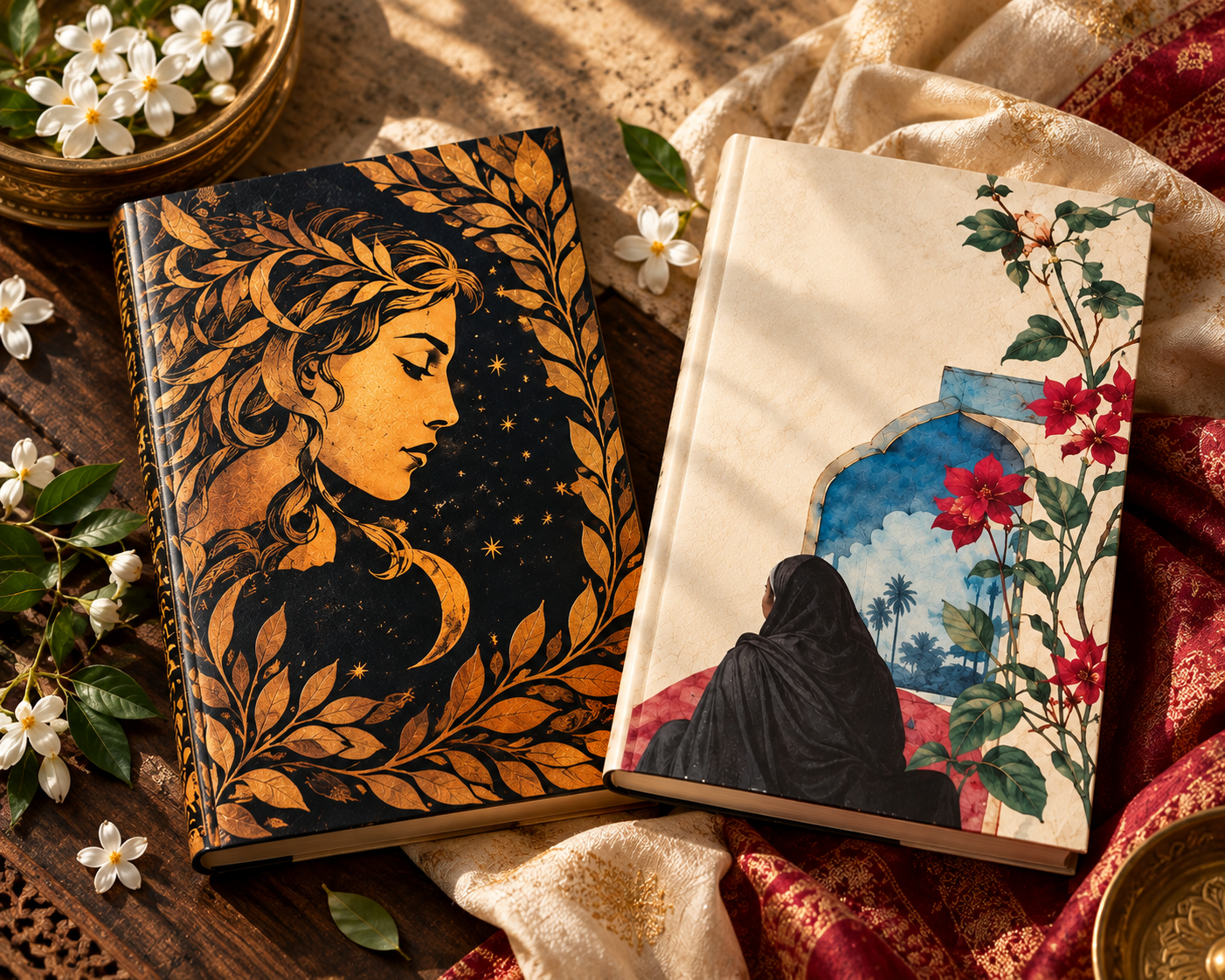
Today we delve into two books that I recently read and which are award winners in their own right. I am talking about Circe by Madeline Miller and Heart Lamp by Banu Mushtaq, translated by Deepa Bhasthi. Circe is a mythic fantasy, historical and literary fiction, a Greek mythological retelling of mythic tales from Circe’s point of view. Heart Lamp is a collection of 13 short stories based in realist day-to-day fiction, feminist and protest literature, exploring lives of Muslim women in Karnataka against dominant and patriarchal social structures. Without much ado let us dive into the details of each one.
Circe by Madeline Miller
Born in Boston and brought up in New York City and Philadelphia, Madeline Miller attended Brown University, graduating and post graduating in Classics. Having taught Latin, Greek and Shakespeare to high school students for over 15 years, she has a command over Greek mythology as was needed for her two novels The Song of Achilles and Circe.
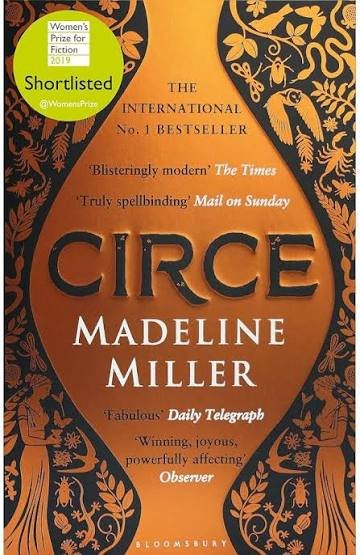
Awards won by Circe
Circe was a #1 New York Times bestseller, won the Indies Choice Best Adult Fiction of the Year, Indies Choice Best Audiobook of the Year, the ALA Alex Award, Elle Big Book Award, and Red Tentacle Award; also shortlisted for the 2019 Women’s Prize for Fiction. It is currently being adapted for a series with HBO Max. It has been translated into over 25 languages including Dutch, Mandarin, Greek and Arabic. Her essays have been lauded by the Guardian, Wall Street Journal, Washington Post, Telegraph, Lapham’s Quarterly and NPR.org
Themes of Circe
Power & its Consequences:
The novel critiques both divine and human abuse of power, and Circe’s evolving relationship to it. While the immortals abuse power in order to thrive, the mortals do so to survive. If one does not trample on others, he runs the risk of getting trampled on, whether he is a man or a God. In depicting Circe’s story, the novel shows power to be “a great chain of fear,” with each level abusing those beneath it.
Women, Power, and Misogyny:
Circe was a minor character in Homer’s epic The Odyssey becomes the protagonist in Miller’s retelling, in order to expose the misogyny of ancient Greek world, both mortal and divine. Being a nymph, women are exposed to violence and abuse from the gods and men alike. They are expected to hold power only through men. When women like Circe wield their power, they are called witches and exiled. Yet, in isolation, she learns to live on her own terms.
Change, Initiative, and the Self:
Circe is able to transform people and things into different kinds of beings. She dreams of transforming the world to make it less cruel. At the same time, she herself is subject to transformation when she transmutes from a nymph to a witch and later to a mortal out of love. Metamorphoses are not only something Circe enacts on the world, but something she embraces within herself.
Mortality, Fragility, and Fulfilment
Circe explores the differences between gods and humans. The novel follows Circe from her beginnings as a bullied nymph in her father Helios’s halls, to Aiaia, her island of exile, where she encounters gods and mortals alike. As the story progresses, Circe’s life becomes intertwined with mortals: she falls in love with mortal men, thwarts the attacks of mortal sailors, and even gives birth to a mortal child.
Heart Lamp by Banu Mushtaq
About the Author
“Human beings and their basic nature are the same everywhere,” Banu Mushtaq says in an interview to The Guardian. “That is the intention of my writing. The theme is woman, the theme is marginalised people, the theme is to be a voice to the voiceless community,” She is a bandaya (protestor) at heart.
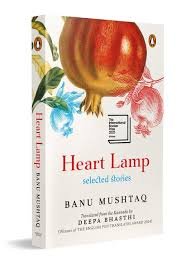
She is an Indian Kannada-language writer, activist, and lawyer from Karnataka. Among her works, Heart Lamp stands out. Banu’s short stories, a novel, a poetry collection, and an essay collection have been translated into Urdu, Hindi, Tamil, Malayalam, and English.
Awards won by Heart Lamp
Heart Lamp, originally written in Kannada, is the winner of the International Booker Prize 2025. It has been translated into English by Deepa Bhasthi. It is the first short story collection to receive this prestigious award.
Themes of Heart Lamp
- Power, Patriarchy, and Religion:
Mustaq’s stories expose the power structure exercised within families and communities through patriarchy and religion. For example, in the story Black Cobras women are muted and face violence until they collectively begin to resist.
2.Women’s Acts of Resistance:
Women in her stories exercise their agency despite living under layers of domination and oppression. In Black Cobras a woman decides to undergo tubectomy, thus voicing herself through bodily autonomy. Such women carve out small but powerful ways to push back against gender norms and expectations.
3. Class, Money, and Social Inequality:
Often there is a critique of poverty and class shaping relationships, morality and choices (or the lack of them). For example, in The Shroud and Red Lungi, the harshness of social structures and the compromises people are forced to make are exposed through the economic struggles they have to suffer.
4. Language, Humour, and Local Voice:
Mushtaq’s use of local expressions and words from Kannada, Urdu and Arabic itself is an act of defiance resisting sanitized literary norms, which ground her narrative in specific cultural milieu. Wit and authenticity add irony and sarcasm to her narrative trope.
5. The Politics of the Everyday:
“The personal is political”. This phrase popularized by Carol Hanisch during the second wave of European feminism is well depicted in Mushtaq’s stories. The final words of the character in Stone Slabs for Shaista Mahal are a kick under the belt of patriarchy. They reveal how oppression is often maintained through seemingly mundane details.
Conclusion
I would give 10 on 10 to both the books and recommend them as a must have for your sundry personal library collection!

By Richa Verma
Richa is an online English teacher, independent blogger, voracious reader, a homemaker, and a movie buff who is smitten with wanderlust. She has under her belt two published books, Richa’s Musings which is an anthology of quotes, and Pendulum, a novel. She can be contacted through her email address richavermamh@gmail.com