






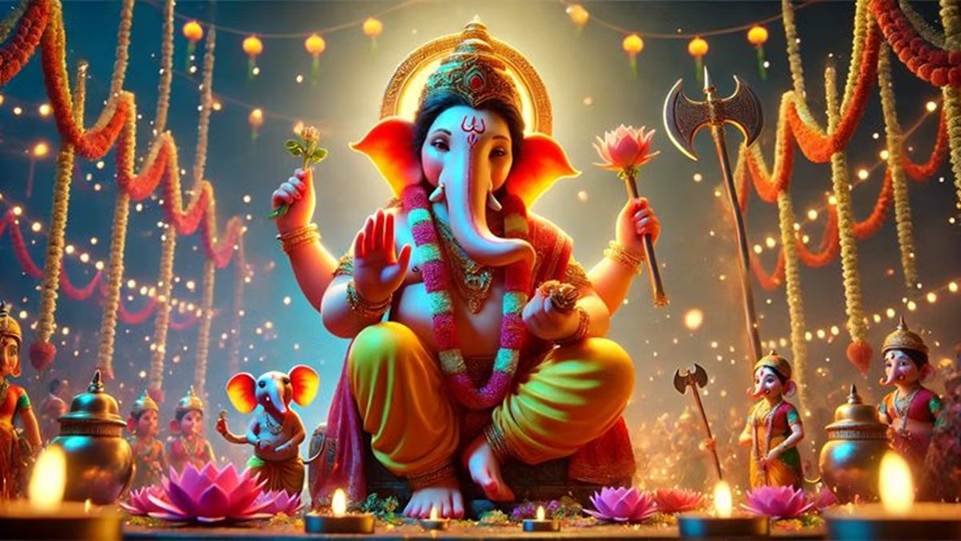
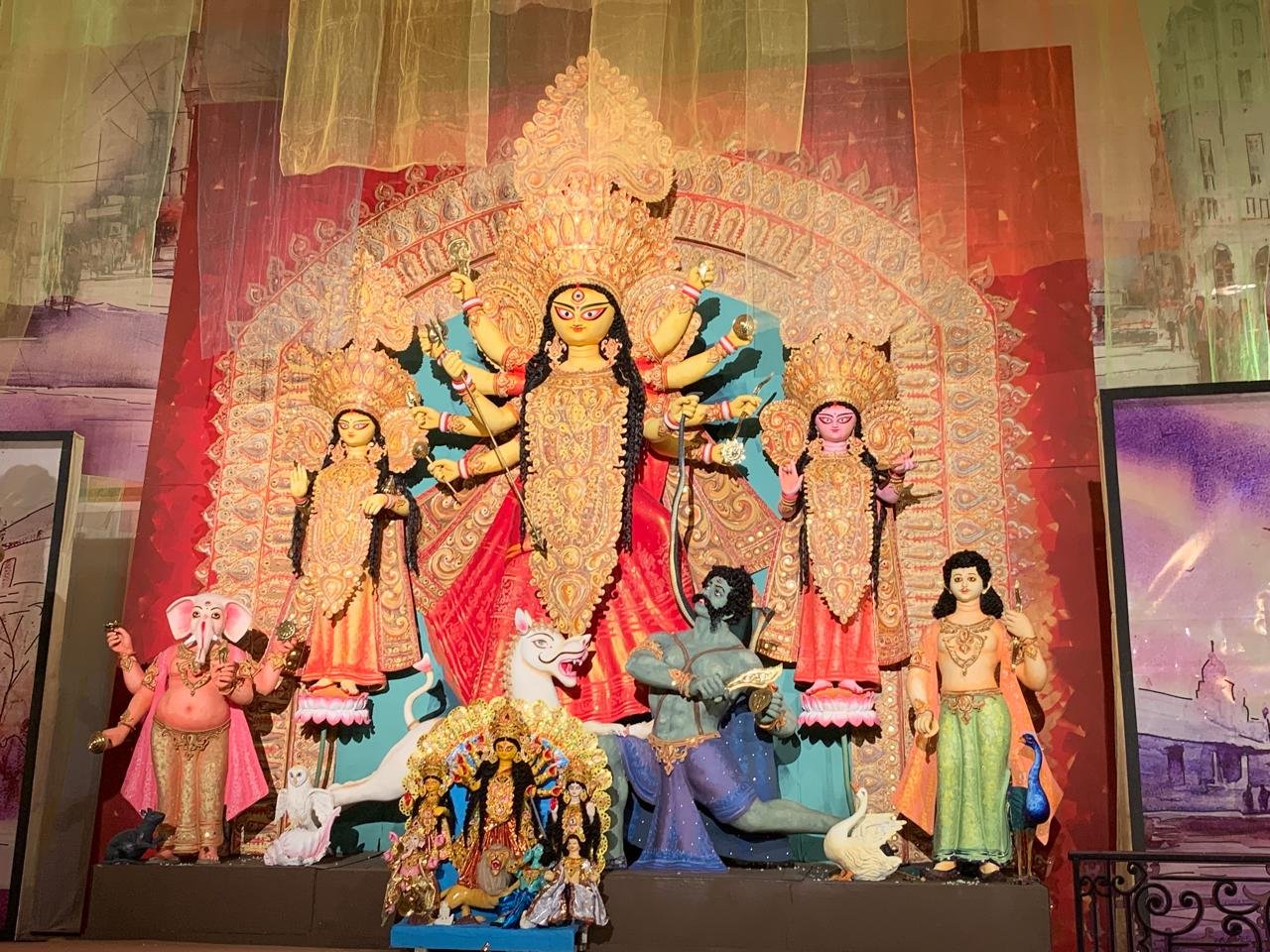
Ganesh Chaturthi is also known as Vinayaka Chaturthi, Vinayaka Chavithi, and Vinayagar Chaturthi. It is celebrated as the birthday of the Hindu deity Lord Ganesha, who is also known as Vighnavinashak (destroyer of obstacles) – he has 108 names. In Hinduism, worshipping him before starting something new is considered to be auspicious.
The festival begins on the fourth day (chaturthi) of the month of Bhadrapada (August–September), the sixth month of the Hindu calendar. In 2026, it is supposed to begin on 14th September. It then lasts up to 10 days. The idols are then immersed in water after 1 ½, 3, 5, 7, or 11 days from the festival’s beginning. This is known as visarjan.
It is observed throughout the Indian subcontinent by Hindus, especially in states such as Maharashtra, Madhya Pradesh, Gujarat, Uttar Pradesh, Karnataka, Odisha, Telangana, Andhra Pradesh, Tamil Nadu, Kerala, and Goa, as well as Sri Lanka.
Mythological Significance
According to Hindu mythology, goddess Parvati created a statue from the turmeric paste (ubtan) from her body. She needed a protector to guard her bathing space. With her divine powers, she breathed life into this creation, giving birth to a son who was absolutely devoted to her. He even refused to let in Lord Shiva, Mata Parvati’s husband into the guarded area. In fact, he attacked his father with his mace. An enraged Shiva killed Vinayak by severing his head with his trishul. In order to assuage the wrath of the goddess on her son’s death, Shiva placed an elephant’s head on the dead torso and brought it to life. Thus, the elephant-headed Ganesha came into being.
Political Significance
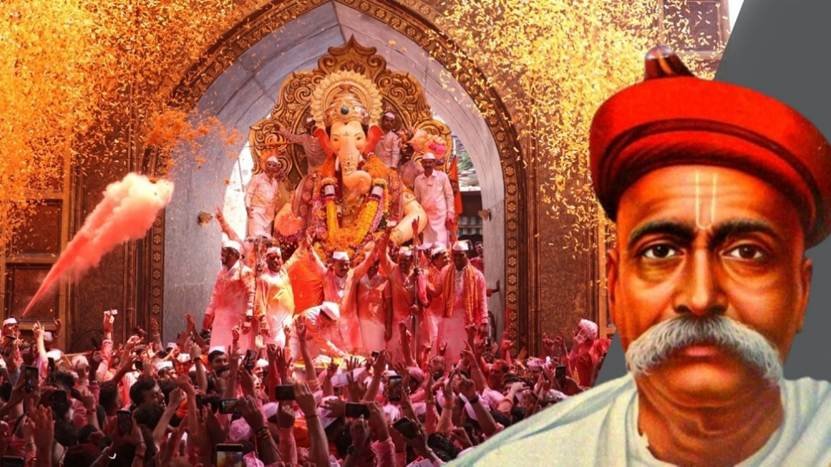
It may come as a surprise to many that this festival had anything to do with politics in yesteryears. Ganesh Chaturthi assumed the nature of a gala public celebration when the Maratha ruler Shivaji (c. 1630–80) used it to encourage nationalist sentiment among his subjects, who were fighting the Mughals. In 1893, when the British banned political assemblies, the festival as a large public event was revived in Maharashtra by the Indian independence leader Bal Gangadhar Tilak in defiance of the British law and to mobilize the Indian patriots.
Celebrations Galore
Rituals in Different Regions
Ganesh Chaturthi is celebrated across almost every part of India, yet the festival rarely looks quite the same from one region to another.
In Maharashtra, Ganesh Chaturthi is known for its enormous public celebrations. Elaborate pandals are installed by community mandals. There are cultural programmes running through the evenings, and the festival closes with grand visarjan.
On the other hand, Maharashtrian households also observe their own home traditions. They prepare ukadiche modak and welcome a smaller idol into the family shrine for a duration that suits their personal custom.
The festival is known as Vinayagar Chaturthiin Tamil Nadu. It is observed by installing clay idols of Ganesha at home or in temples and offering kozhukattai, a steamed dumpling closely related to Maharashtra’s modak. In Karnataka, the festival is called Gowri Ganesha, often preceded by a day dedicated to the goddess Gowri, Ganesha’s mother, before his own day of worship.
Andhra Pradesh and Telangana observe the festival with equal devotion, featuring clay idols, elaborate decorations and community immersion processions of their own, often on a scale rivalling the grandest celebrations elsewhere in the country.
In Goa, Ganesh Chaturthi is locally called Chavath. There is a strong emphasis on home tradition. Families place great importance on returning to their ancestral homes for the occasion. There are also distinct local customs around the idol and offerings.
Other states, from Gujarat to Odisha and parts of the Northeast, observe the festival on varying scales, often shaped by local Ganesha temples or growing Maharashtrian and South Indian communities within them. There are regional variations from district to district in the way the festival is celebrated which remind us that there is no uniform, fixed format in the way this festival is celebrated across the country.
Ganesha, the God with a Sweet Tooth
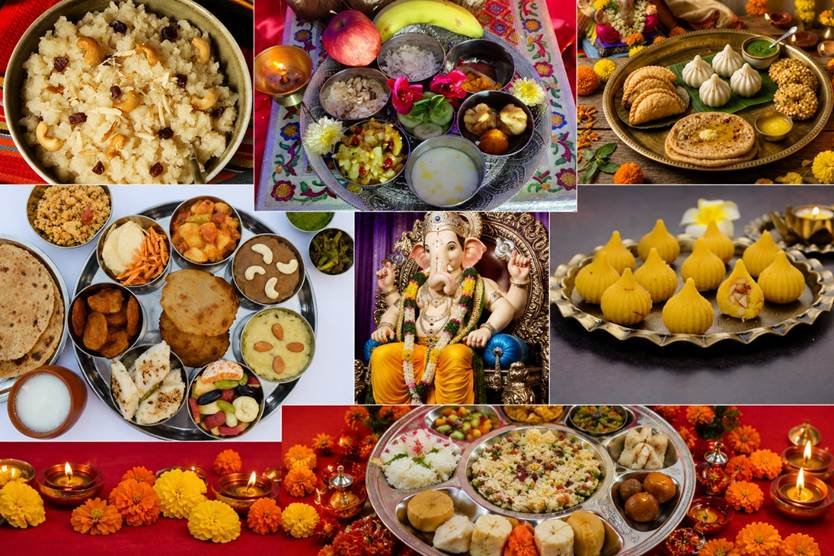
As in other festivals, food occupies an important place in Ganesh Chaturthi. As Lord Ganesha is believed to have a sweet tooth, modaks (sweet dumplings filled with jaggery and coconut) are typically offered to him.
Explaining the significance of modaks, Abhishek Tulaskar of The Maratha Kitchen, Mumbai, says, “When the Asurs and the Gods were fighting over the Amrut, during the Samudra Manthan, there were a lot of sweets prepared from the Amrut that arose from the oceans. One of these was modak, which all the Gods offered to Parvati. She then offered this to Lord Ganesha, who fell in love with it and hence, this is an offering on Ganesh Chaturthi.”
Another folktale narrates that Anusuya, the wife of an ancient Rishi Atri, presented Ganesha with a tray full of delicacies, which Ganesha went on devouring, but no dish could satisfy his hunger. She then thought of feeding Ganesha something sweet. Ganesha finally gave a loud burp, which indicated that his belly was satisfied. Lord Shiva also burped loudly 21 times. It made Goddess Parvati curious about the sweet that was offered to them.
Regional offerings also include laddoos, kheer, karanji, vundrallu (steamed coarsely ground rice-flour balls), panakam (a jaggery, pepper and cardamom drink), moong dal vadapappu, panchakajjaya – dried coconut powdered and mixed with cooked Bengal gram, sugar, ghee and sesame, Modakam, Kosambari, Gojju, Mosaru Bhajji, a variety of Payasams, halu holige or hal obbattu, patoleyo, and so on.
Eco-friendly Festival Celebrations
There is a deep connection between Ganesh Chaturthi and nature. Traditionally, Ganesha idols were crafted from shadu clay and painted with natural dyes. In contemporary times there has been a growing emphasis on celebrating an eco-friendly Ganesh festival. For this, clay idols and natural colours are used. Also, smaller idols are made so that they dissolve easily and cause less harm to water bodies. There have been initiatives like plantation drives, cleanliness campaigns, and water conservation efforts. These have become an integral part of modern Ganesh Chaturthi celebrations.

By Richa Verma
Richa is an online English teacher, independent blogger, voracious reader, movie buff who is smitten with wanderlust, and a homemaker. She can be contacted through her email address richavermamh@gmail.com





Very interesting and an informative piece. Thanks for sharing
Thanks for the lovely comment Sampurna!
Beautiful piece on Ganesha and the interesting anecdotes about him!
Thanks Promita 😊.