






If the empty spaces between the expressed words intrigue you and you like to pause and ponder on the possibilities of all that is not plated out by the author, FLESH by DAVID SZALAY is a book you cannot miss!
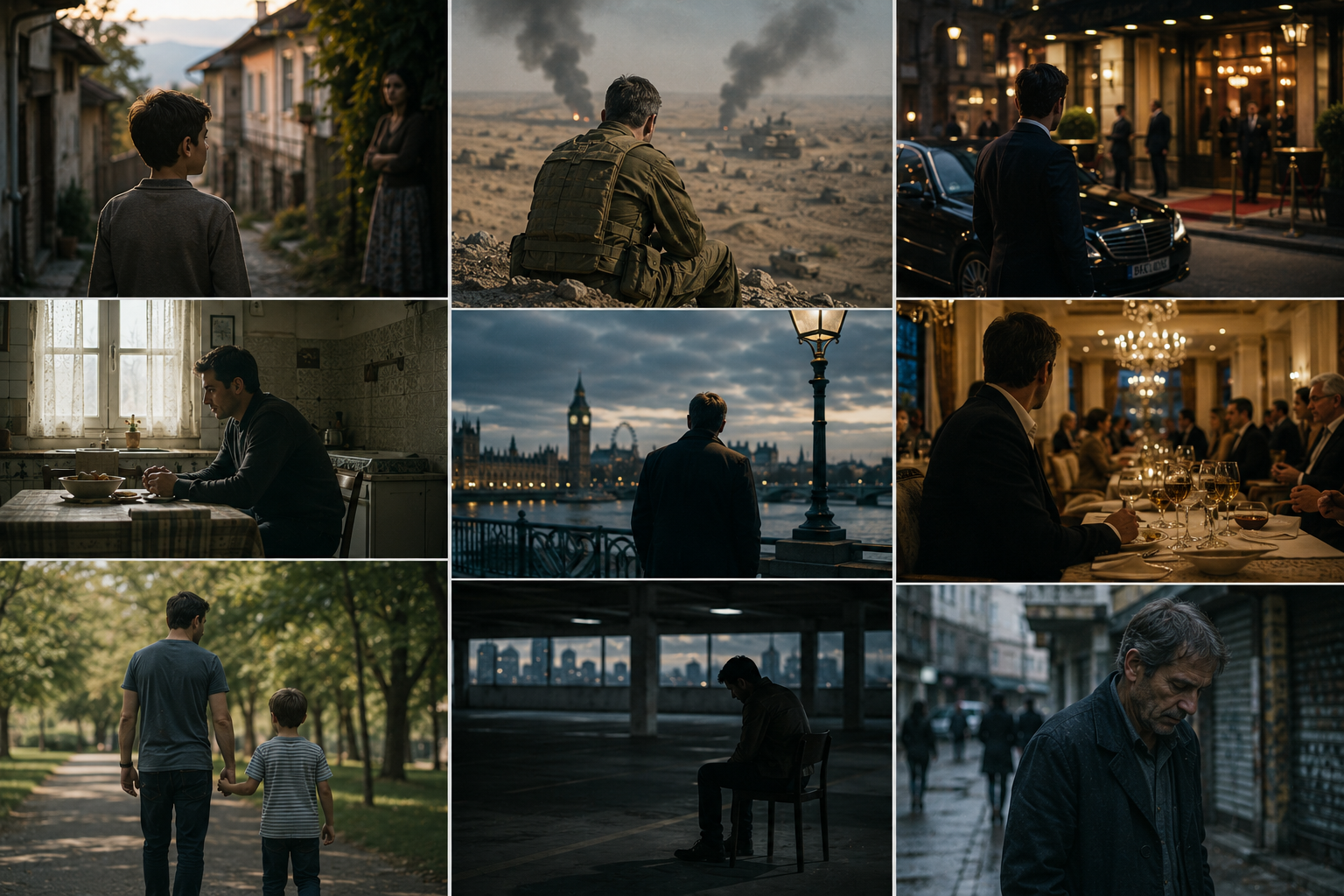
The narrative traces the literal and metaphorical growth of a Hungarian man, Istvan, from adolescence to near-old age and the experiences he encounters through the distinctive phases. Passive and in poverty, at the tender age of 15, he is drawn into an unusual relationship and ends up doing deeds that will dictate his future dealings with life and people.
The next episode is based on Istvan’s service in the Army till he relocates to London. Initially, he works as a private security guard and then takes up the job of a chauffeur in an extremely influential family. Life changes for Istvan as destiny favors him, and he is seen living a luxurious and lavish life with his wife and son. But the privileges are passing, and the latter half of the book is a witness to his drastic decline. Istvan is left lonely and lost, and the reader in me is found reflecting on issues of one’s roots and the randomness of things.
Flesh is an episodic novel and the narrative moves forward in the form of fragments, which are neither linear nor evenly spaced out. However, the five distinguishable episodes are Istvan’s adolescent phase in Hungary, his jarring encounters in the military, his upward movement in London, the rise and fall of fortune, and finally, devastation and despondency.

The pacing of Flesh is unconventional and distinctive. There are large gaps and time lapses in the narrative, which can only be filled by the reader’s interpretation and the way she chooses to piece it together. Again, there is juxtaposition of mundane everyday activities like sitting at the kitchen table or shopping with overwhelming occurrences like war situations and loss of loved ones. However, it is the pull towards the inevitable that keeps the pacing of the novel, fast and fascinating.
The novel is not confined to a singular setting although it begins in a town in Hungary. As the protagonist grows up, the setting shifts to Kuwait, Germany, Iraq and then back home. Next it shifts to London where it moves from shabby working-class surroundings to lavish locales, restaurants, parks, galleries and the haunts of the ultra-rich. Then there are mentions of other locations like Munich, Cambridge and a couple of others in the course of the narrative. The eclectic nature of the setting adds to the story by offering diversity in locations and ways of living.
The character of Istvan, the protagonist, is extremely intriguing, to say the least. As an adolescent, he is confused, awkward and barely responds with words. He is plain impulsive as far as his feelings and actions are concerned, and the author mentions with regard to a major incident in his adolescence that ‘it’s hard to say what his intention was.’ He is mostly detached and withdrawn but there is a vulnerable side to him as well, which gets reflected when he is dealing with trauma after witnessing the war.

The prominence of physicality in the character is evident all through his career in the army, as a nightclub bouncer and as a high-end bodyguard too. Also, sex plays a pivotal role in the relationships that he has with women, although there is an underlying lack of intimacy and attachment. So, while Istvan is propelled by physicality and exemplifies ‘a primitive form of masculinity,’ he is detached and mostly unavailable emotionally.
Though Istvan watches everything ‘with a strange feeling of detachment,’ he loves to spend time with his son, sometimes in the park and at times, giving him a ride on the quad back or going for long walks. However, destiny decides differently for his young son, Jacob, and his tragic end will leave his father with ‘a feeling of immense solitude.’
The other important characters in Flesh are Istvan’s female neighbor in Hungary, who seduces the adolescent Istvan and acts as the catalyst in the chain of events that follows; Istvan’s mother, who comes across as a pragmatic woman and a steadfast presence through the critical as well as the ordinary; Helen Nyman, the woman with whom Istvan has an affair before they get married and the only person with whom Istvan probably felt a connection, and Thomas, Helen’s son from her first marriage to Mr. Karl Nyman. As expected, Thomas detests Istvan as he thinks that his stepdad is ‘stealing’ from them, and he will ultimately be the cause of Istvan reaching the nadir of his life.
I found the characters credible with their flaws and in their flesh, and their evolution through the novel might bring back flashes of people who are around you and perhaps within you as well.
It is often through the development of the main character that the themes of the literary piece emerge. One of the significant themes of the book is dispassion and the inability to articulate oneself, which will, however, furnish the reader the opportunity to fathom what lies in the gap between the individual and his experiences and expressions. Connection as currency is another theme that the transactional nature of Istvan’s relationships manifests. In fact, it is the emotional void that turns relations into transactions for almost all the characters in the story.
Wealth and how it manipulates social mobility is a subject that the novel presents through the movement of Istvan from his humble background to a position of immense affluence and then back again to square one. Money and fate are mostly inseparable, and so unpredictability is the driving force behind the story.
I feel that the themes that the book explores offer a searing insight into the way we live today and how we are trying to come to terms with it.
The writing style adopted by David Szalay is minimalist, which is based on the principle of ‘less is more,’ the signature style of Ernest Hemingway. The language is simple, the sentences are short, sometimes just a word or two, and the delivery is direct. ‘Okay,’ is the only word that Istvan uses for most of his interactions with others. Descriptions are rare, and most of the sentences in the book are instances of ‘Show, Don’t Tell’. That makes the style either an illustration of an action or the offering of a blank, which the reader needs to fill in on her own.
Doing justice to the lean writing style of the book and the passive persona of the protagonist, the ending of Flesh feels earned and appropriate. It steers away from drama and delves deep into the existential reality of life with its absurdity and agony. Of course, that reminds me of Albert Camus and his idea that ‘life is inherently meaningless, yet humans endlessly crave purpose.’
If you are looking forward to reading a novel that makes sense through a sequence of understandable events, Flesh will surely disappoint you. But for those who can deal with the omitted chunks of a narrative and nourish the spaces with their own speculations, Flesh is a magnificent masterpiece!
For me, it was an endeavor to experience the ordinary in the lived moments and the lost magnitudes of life.

By Promita Banerjee Nag
An avid word enthusiast and content-churner, Promita is fuelled by novel writings, ideas and light-hearted banter. A teacher by passion, she treads the path of unequivocal learning with and through her students. Mother, music and ‘mishti’ mostly convince her. If you wish for a tête-à-tête, feel free to reach out to her at promita033@gmail.com.








You have made it interesting enough to make me buy the book 📚😃
Thank you Richa for your comment…
“reader’s interpretation and the way ‘she’ chooses” here the pronoun she deserves an applause. We are so used to using “he” in such context that we almost forgot that girls do read as well. About the write up, now I want to read this one. Ordering right awa.y
Thank you for appreciating my use of the pronoun…I use it wherever i can…and of course to deconstruct the stereotypical use of it…
Now that you want to read it… is sure a boost for book reviewing interests!